
Articles & Reports

The death of the US department store: 'very few are likely to survive'
The death of the US department store: 'very few are likely to survive'
Published by the New York Times on 21 April 2020

American department stores, once all-powerful shopping meccas that anchored malls and Main Streets across the country, have been dealt blow after blow in the past decade. But nothing compares to the shock the weakened industry has taken from the coronavirus pandemic. The sales of clothing and accessories fell by more than half in March, a trend that is expected to only get worse in April.
At a time when retailers should be putting in orders for the all-important holiday shopping season, stores are furloughing tens of thousands of corporate and store employees, hoarding cash and desperately planning how to survive this crisis. The specter of mass default is being discussed not just behind closed doors but in analysts' future models. Whether or not that happens, no one doubts that the upheaval caused by the pandemic will permanently alter both the retail landscape and the relationships of brands with the stores that sell them.
Full article below
Full article: The Death of the US department store: 'very few are likely to survive'

How fashion's post-pandemic future could be digital
How fashion's post-pandemic future could be digital
Published on Vice.com on 02 April 2020
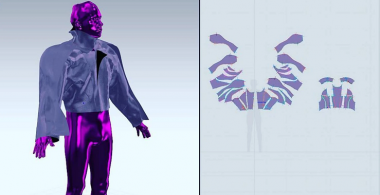
With the world on lockdown, a time when clothes are created, displayed and even 'worn' virtually may not be as far away as you think.
In the wake of the coronavirus pandemic, we've all been forced to turn to the virtual world. Fed up of Instagram Live feeds, home workout videos and Houseparty? Tough! Temporary as our quarantine may be, its impact on our lives will last far beyond these next few weeks. For better or worse, self-isolation seems to have been the final push the nation needed to fully embrace life dependent on digital infrastructures. But what does that mean for fashion?
In a week where high street mainstay M&S revealed they cancelled £100m in clothing orders due to coronavirus, and Burberry are said to expect sales in the final weeks of the financial year to fall by 80%, prospects for IRL fashion retail look pretty bleak. It doesn't take a genius to realise that [...]
Full article below
Full article: How fashion's post-pandemic future could be digital
The future of digital fashion brands in the era of coronavirus
The future of digital fashion brands in the era of coronavirus
Published by Financial Times on 8 April 2020

The path forward for digital natives is an uncertain one amid the ongoing pandemic.
At first glance, fashion brands born online might seem the best positioned during a crisis that has sent consumers into their homes for an indefinite period of time, unable to shop at stores in real life and desperate for connection with the outside world.
But the race to secure cash among retailers may have lasting implications for smaller brands, many of them digital upstarts that have been operating at a loss. It was the potential for growth, after all, that enticed investors to jump onboard, sinking massive amounts of capital into marketing and attempts to attract new customers. In troubled times, bottom line profits can become all that matters.
Full article below
Full article: The future of digital fashion brands in the era of coronavirus
Risk manager is suddenly a hot job
Risk manager is suddenly a hot job
Published by Bloomberg on 14 April 2020

Twenty years ago, corporate risk managers had near-zero public visibility. Most were back-office staffers who focused on securing insurance for environmental and real estate problems (tornadoes, fires, earthquakes, facilities breaches). Young people didn't aspire to be risk managers: There were just a dozen small academic programs in the U.S. focused on the career. The pandemic has catapulted the field into prominence almost overnight. "Risk management now has boards' attention and has been given a seat at the table for input and consideration," says Al Marcella, president of Business Automation Consultants LLC, a St. Louis-based security assessment firm. Boards are quickly creating risk committees focused on crisis planning and remote work data privacy—and they want a chief risk officer on speed dial.
Full article below
Full article: Risk Manager Is Suddenly a Hot Job
Nordstrom clocks fourth-quarter sales miss, Erik Nordstrom named sole CEO
Nordstrom clocks fourth-quarter sales miss, Erik Nordstrom named sole CEO
Published by Fashion Network on 4 March 2020

Nordstrom Inc forecast a 2020 profit largely below market expectations on Tuesday, after the upscale apparel retailer missed estimates for fourth-quarter revenue, sending its shares down nearly 8% in after-market trading.
The company also said on Tuesday that Erik Nordstrom would be its sole chief executive officer, as it moves away from its co-president structure.
The Seattle-based company, like other brick-and-mortar retailers, has been struggling to retain market share at a time of intense competition from online players like Amazon.com Inc and discount retailers like TJX Cos Inc's Marshalls and T.J. Maxx chains. [...] download full article below
Full Article : Nordstrom clocks fourth-quarter sales miss, Erik Nordstrom named sole CEO
Everyone loves sweatsuits and fashion is cashing in
Everyone loves sweatsuits and fashion is cashing in
Published by Business of Fashion on 9 March 2020

Over the past year, one very specific outfit has infiltrated all corners of the celebrity world: the sweatsuit. Sweatsuits, and their counterpart, the tracksuit, were sportswear staples back in the 1970s. Hip-hop culture helped catapult them into everyday attire in the 1980s, and the luxury sweatsuit emerged as a trend in the 1990s. Today's sweatsuits are fitted but not tight, and drape over the body without being oversized. They tend to be one colour, often pastel hues, with minimal branding.
In more recent years, sweatsuits started to blow up alongside the wider shift toward more casual dressing, with finance officers trading in their peacoats for puffer vests, women proudly wearing yoga pants outside the gym and designers putting sneakers on the runway. "They've gone from something you wore on the couch to an every-day, ready-to-wear must-have," said Shefali Shah, chief merchandising officer of the athleisure boutique Bandier, which has seen double-digit growth in its sales of sweats.
Plus, bright sweatsuits are the perfect Instagram bait. And for the Netflix-and-chill generation who subscribe to the belief that staying in is the new going out, a fashionable sweatsuit that is both comfortable and photogenic is a must.
Read full article below
Full Article: Everyone loves sweatsuits and fashion is cashing in
The C-19 Files
The C-19 Files
The C-19 Files are intended as a resource for IADS members to use and share.
The IADS has gathered reports and articles which may be useful to members. Our preoccupation is what may have lasting impact on our businesses, rather than a day-by-day report on the progress of the epidemic which is available elsewhere.
Please send us anything you have found useful or think is important so it can be shared.

general

Risk management

customers
supply chain

human resources / organisation

finance
Coronavirus crisis may impact Italy's fashion industry business until 2021
Coronavirus crisis may impact Italy's fashion industry business until 2021
Published by BCG on 27 February 2020
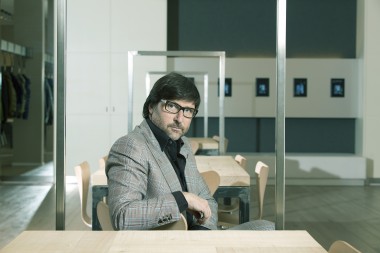
MILAN — Even though the whole country has been placed on lockdown, and increasingly more stores are closing — including Giorgio Armani's flagships, hotel and restaurants in Milan, as revealed on Tuesday — the Italian textile, fashion and accessory manufacturing industries are not stopping.
Reached by phone on Tuesday, Claudio Marenzi, president of Confindustria Moda, the association that groups more than 65,000 companies operating in the fashion industry, and chief executive officer of outerwear brand Herno, took stock of the sector's current status, focusing on companies' reaction to the coronavirus crisis, which might have a negative impact on the industry for more than a year. [...] download full article below
Full Article : Coronavirus Crisis May Impact Italy's Fashion Industry Business Until 2021
US department stores and working capital crunch
US department stores and working capital crunch
Published by TMFGemHunter on 26 March 2020

Department stores already faced plenty of challenges -- most notably, ever-rising competition from e-commerce and off-price retailers -- before the COVID-19 pandemic started to sweep across America. Now, with non-essential businesses forced to close and many consumers at risk of losing their jobs at least temporarily, their problems have multiplied enormously.
See full article below
Full article: US department stores and working capital crunch
Forced cancellations jumpstart virtual fashion technology
Forced cancellations jumpstart virtual fashion technology
Published by Vogue Business on 17 March 2020

Amid a moratorium on events and calls for more sustainable practices, tech that facilitates virtual fashion presentations is thrust into the spotlight.
Key takeaways:
- Videos are the most developed vehicle for viewing fashion shows remotely, but there is opportunity for more creativity and exploration.
- Virtual showrooms, which make use of 360-degree imagery, allow for better data and communication between brands and buyers.
- Additional technologies, like virtual reality and haptic gloves, are in development but are not yet as accessible.
Read full article below
Full Article: Forced cancellations jumpstart virtual fashion technology
Bonus: Fashion and beauty brands are taking AR more seriously
With the backing of big tech, augmented reality is becoming table stakes for fashion and beauty brands.
Key takeaways:
- Augmented reality is driving sales on top of engagement for fashion and beauty brands that are investing in the technology, either through social media platforms or on their sites.
- On e-commerce sites, viewing 3D models in AR increases conversion by up to 250 per cent.
- While AR skills are still nascent, tech platforms are investing in tools to make it more accessible.
full article: Fashion and beauty brands are taking AR more seriously
Global textile apparel sector hit by virus
Global textile apparel sector hit by virus
Published by WWD on 4 March 2020
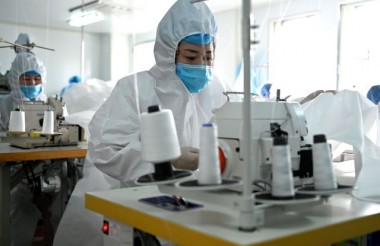
GENEVA — The dramatic reduction in manufacturing output in China in February due to the COVID-19 outbreak resulted in an estimated loss of exports of global value chains worth $50 billion, including more than $1.5 billion in textiles and apparel affected industries, due to shortages in intermediate inputs, a U.N. report said.
"It's clear the global effects are going to be significant, and even if the COVID-19 is retained within China, which it hasn't been, it will still have a continuous impact because of China's impact into the overall value chains of world production," Pamela Coke- Hamilton, director for international trade at the U.N. Conference on Trade and Development, said Wednesday. The most significantly affected region, she said, was the European Union, with $15.6 billion, followed by the U.S. ($5.8 billion) and Japan ($5.2 billion). [...] download full article below
Full Article : Global textile apparel sector hit by virus
UK retailers launch post-virus plan
UK retailers launch post-virus plan
Published by WWD on 5 March 2020

LONDON — As the British government braces for a full-scale coronavirus epidemic with up to 20 percent of the workforce potentially ill or under quarantine, retailers here are pondering a post-virus world — and how to make up for lost business.
On Thursday, the newly formed Association of International Retail plans to present an action plan to the British government aimed at helping the sector recover economically once COVID-19 has been contained.
The group, which counts Harrods, Selfridges, John Lewis and Global Blue, industry organizations Walpole and New West End Company, property owners Cadogan and Shaftesbury, and the tourism body UKInbound, among its supporters, is focusing on luring back Chinese tourists in particular. [...] download full article below
Full Article : UK retailers launch post-virus plan
How has Bangladesh evolved?
How has Bangladesh evolved?
Published by Le Journal du Textile on 17 March 2020
original article: How has Bangladesh evolved? (in french)
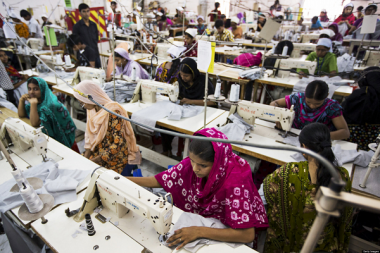
Today's Bangladesh is no longer the same one that we remember from Rana Plaza. Seven years after the tragedy, the country has made huge efforts to develop its industry. Non-compliant factories have closed, others modernised, and management practices have evolved. Incomes have also increased, even though they still remain among the lowest worldwide. But lately, concerns have arisen. Should we fear a return to the old practices? No, say the country's industrials. The reconstruction of the Bangladeshi industry will be strong enough not to fear a step backwards. And the upgrade the country is attempting should complete the process. Already the second apparel producer worldwide, Bangladesh wishes to step out of its role as subcontractor. The deep questioning that followed the Rana Plaza tragedy would have at least had this beneficial effect.
Since the collapse, in April 2013, of an apparel factory building near Dacca that killed 1 100 people, Bangladeshi producers and buyers have put in place initiatives to develop the industry. Established three months after the Rana Plaza incident, the Accord on Fire and Building Safety in Bangladesh united some 200 international purchasers, trade unions and NGOs, under the guidance of ILO -International Labour Organization. Thanks to these collaborations, safety programmes have been established, health and safety inspectors have been trained and thousands of inspections have been conducted across the country's factories. The Accord covered 92 % of Bangladeshi companies. The Accord, which should have initially ended in 2018, has been extended for three more years. In the meantime, the development of a new structure has been decided. The Readymade Garment Sustainability Council (RSC) is a council in charge of the sustainable development of the ready-to-wear industry. The RSC was unveiled in January 2020 and has a transition accord has been signed that should satisfy all parties involved (including trade unions and NGOs). Therefore, the council has a three-party profile made up of brands, trade-unions and local industrialists, all led by a CEO. According to the agtreement signed in January, the RSC will take over all documents, policies and protocols established by the Accord.
Factory closures
So today, Bangladeshi industrialists need to reassure customers that, once emotions subside, the good practices set up these past years will not be abandoned in favour of the bad habits of the past. Over this past six years, 1 800 factories have closed because of non-conformity. The country now has a modernised infrastructure and social issues have improved.
After the tragedy of Rana Plaza, manufacturing companies have modernised and the work force are now claiming pay rises. Minimum salaries have risen from EUR 61 a month in Jan. 2018 to EUR 87 a month in Jan. 2019, representing a 43 % rise in a year.
Transparency
However, in September 2019, minimum wages in Bangladesh were still second to last out of 23 sourcing countries located in Asia and the Euromed area. Sri Lanka ranked last, while China was sixth. Turkey occupies the first place.
Nevertheless, this increase in wages, even though still low, allows the Bangladeshi industry to improve its image. But for the industry, it is also about starting a true repositioning. Even though exports have risen these past years, it has not been followed by a shift upmarket. On the contrary, the price for Bangladeshi clothes sold to Europe has decreased by 3.6 % over the last 4 years.
Diversify the offer
To turn this trend around, Bangladeshi companies want to diversify their offer to step out of their role as 'basic product' suppliers. From now on, Bangladesh seeks to offer more technical products such as tee-shirts made from other material than cotton, bras, windcheaters or parkas. The country also wishes to develop athleisure items, and feminine blouses made from synthetic fabrics like polyester and viscose. These efforts to diversify are starting to show some success. Bangladesh, historically specialising in knitted garments, has managed to rebalance its exports and now bras have become their seventh most exported product. It also sells more and more suits.
Thanks to this range upgrade, could Bangladesh profit from the coronavirus crisis that has paralysed Chinese factories? "Bangladesh could, as Vietnam or other Asian sourcing countries have, benefit from the situation in China, if the Chinese factories keep delivering fabric" says Gildas Minvielle, director of L'Observatoire Economique de l'Institut Français de la Mode.
Dependency
Coronavirus could also affect Bangladesh. The country's textile industry is self-sufficient in knitted garments, but it relies for 40 % on exported fabrics from China.
But the sanitary crisis could contribute to a change in buyers' orders. Whereas purchasers used to turned to Bangladesh only for basic items, they might now increase their purchases of more high-end products.
Bangladesh also wishes to extend its export destinations. Today 83% are focused on the U.S.A. or Europe. The country wants to enter new markets in Asia (Japan, Turkey) and in South America (Brazil, Mexico). In order to do so, Bangladesh wants to highlight another asset: the high number of 'green certified' companies. According to BGMEA (Bangladesh Garment Manufacturers and Exporters Association), Bangladesh is the country with the most LEED (Leadership in Energy and Environmental Design) certified companies. Bangladesh is really ahead of China when it comes to toxicology and adherence to regulations.
Weaknesses
Bangladesh is still behind when it comes to product development and rapid delivery time, the latter being a crucial element of sourcing.
The industry also needs to work on its productivity, which is still seen as insufficient. Factories need to deal better with their waste and should hire engineers. Also, they are still not using their full capability: designed to produce up to EUR 42 billion in products, they only produce EUR 31 billion today.
Lead your business through the Coronavirus crisis
Lead your business through the Coronavirus crisis
Published by BCG on 27 February 2020

The Covid-19 crisis has now reached a new critical phase where public health systems need to act decisively to contain the growth in new epicenters outside China.
Clearly, the main emphasis is and should be on containing and mitigating the disease itself. But the economic impacts are also significant, and many companies are feeling their way towards understanding, reacting to, and learning lessons from rapidly unfolding events. Unanticipated twists and turns will be revealed with each news cycle, and we will only have a complete picture in retrospect. [...] download full article below
Full Article : Lead your business through the Coronavirus crisis
Coronavirus Insights: US Survey Update
Coronavirus Insights: US Survey Update
Published by Coresight Research on March 2020
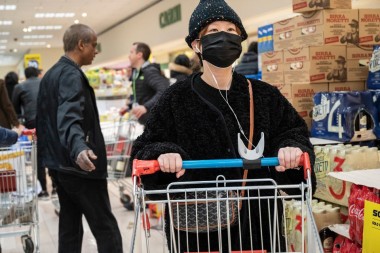
Our latest US consumer survey, undertaken on March 25, provides an update on consumer behavior and sentiment amid the coronavirus crisis.
- Almost half of US consumers (45.7%) are now extremely concerned about the outbreak, up 10 percentage points in just a week.
- Some 9.1% said they had already lost their jobs because of the coronavirus outbreak, up from 4.2% last week. Job losses peak among younger adults.
- We saw a big week-over-week uptick in the proportion saying they are buying less of certain categories, with close to half saying they are cutting back in some areas.
- Fully 95% of respondents now avoid public areas or travel, up from around 85% one week earlier.
See full article below
Full article: Coronavirus Insights: US Survey Update
Life and business after the virus
Life and business after the virus
As store closures and other specific developments continue around the world, we ask how the post-virus world will look.
First, it is clear that COVID19 is taking hold at very different rates in different places: not only is it developing gradually from region to region and country to country, but the different government measures are contributing to slowing the spread at very different rates. These can be characterized by a continuum with laissez faire at one end (with hopes of benefiting from "herd immunity") to authoritarian intervention ("for the greater good") at the other. Popular responses have varied similarly from cooperation (such as neighbourhood initiatives), to individual survival mode (with hoarding, or arms sales spiking in the US).
A number of commentators are speculating that we should expect changes in the future and that neither business nor life generally will return to "pre-virus" normal. We have been aware for some time already of trends developing to cope with uncertainty, volatility, unpredictability. These include developing agile structures and methods, flexibility, digitalisation, quick fulfilment and response, localism, and others. The recent virus outbreak and its impact has put the spotlight on another trend, fear, with a number of associated responses, such as security, privacy, wellness and sustainability as well as an acceleration of some of the already noted trends.

The Financial Times has argued that an already existing trend towards the "decoupling" of the global economy has been accelerated, and will speed up responses such as localism, with an associated risk to tech standards and communication across borders. The disputes over 5G and Huawei, and control over tech governance are a case in point.

A recent report by WGSN takes up a number of other trends:
- The search for security through, for example, "support" brands; and the renewed interest in privacy in view of the need for a degree of central control, which reopens the question of data trading.
- Digitalisation is accelerating as administrative and professional lives shift towards the virtual. This spike in demand has an impact on fulfilment, already a major issue which has perhaps not been sufficiently addressed yet; and the changing role of homes with home offices and the definition of borders between work and home.
- Sustainability has taken on even greater importance as pollution rates are seen to fall with confinement, thus opening the door to further potential measures in the future; and re-use out of necessity demonstrates how possible it actually is.
- Isolation, both emotional and physical, are also experienced as increasing temporarily and which can be compensated by cooperation and caring, leading to a search for more meaning, localism, and wellness in the broad sense.

These issues call for a different type of management and leadership. BCG in the Harvard Business Review make a number of suggestions:
- The importance of reactivity, reassessment and updating information as well as responses
- Keeping an eye on the big picture and not drowning in details
- Stick to evidence-based measures and beware forecasts
- Keep bureaucracy to a minimum
- Make sure responses are balanced and take all possible interests into account
- Ensure a flexible structure able to deal with rapid response
- And prepare for the future crisis (which will certainly happen), and learn the lessons from this one
Digital Innovation Supports the Fashion Industry During Coronavirus Outbreak
Digital Innovation Supports the Fashion Industry During Coronavirus Outbreak
Published by WWD on 27 February 2020

MILAN — With the coronavirus crisis hitting two of fashion's biggest players — China and Italy — the multifaceted potential of the digital world is emerging as a key tool to save the sector from a temporary blackout.
With the health crisis spreading across China in January, the Italian Fashion Chamber promptly reacted by creating the "China, we are with you initiative," which enabled Chinese buyers, journalists and consumers to digitally attend Milan Fashion Week. The week's runway shows and presentations, including behind-the-scenes content and interviews, were live-streamed on both the chamber's web site and Chinese online platforms Tencent and Weibo. [...] download full article below
Full Article : Digital Innovation Supports the Fashion Industry During Coronavirus Outbreak
How French Department Stores Court the 1 Percent
How French Department Stores Court the 1 Percent
Published by WWD on 25 February 2020

A night at the Paris Opera; a visit to the Louis Vuitton workshops near Paris; a helicopter ride to a Bordeaux vineyard : Paris department stores are pulling out the stops to woo highspending clients with the kind of exclusive experiences previously linked with the rarefied world of haute couture.
Private salons, personal shoppers and valet parking are par for the course these days at Galeries Lafayette, Printemps and Le Bon Marché. But for those with deep pockets, they are willing to go the extra mile: think tickets to fashion shows and private soirées at museums, or even organizing your surprise birthday party. Catering to that clientele, especially Europeans, is likely to be even more of a priority for the near future as tourism from the all-important Chinese consumer slides due to the ongoing coronavirus crisis, which is expected to have a significant impact on luxury goods spending over the next few months. "The idea is to give our customers access to things that are out of reach even to people with a lot of money," said Laurent Schenten, director of the customers and services division at the Printemps flagship on Boulevard Haussmann. [...] download full article below
Full Article : How French Department Stores Court the 1 Percent
Department stores. It is time for another reshuffle
Department stores. It is time for another reshuffle
Published by Global Retail News in February 2020
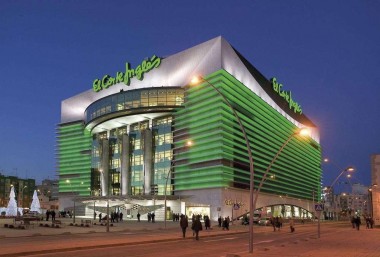
The department store sector is facing increasingly rough times across Europe in parallel with e-commerce growth. In the U.K., the British high street crisis has already hit department store operators Debenhams, House of Fraser and now even John Lewis, which is warning about potential closures. Operators in Europe are now worried too, as the trend is now spreading into Continental Europe. El Corte Inglés, Spain's leading department store retailer (turnover of €7.6 million in the first half of 2019), is facing difficulties. For the last financial year 2018-2019, only 47 of its 99 department stores generated a net operating profit. As El Confidential revealed, the retailer is engaged in a transformation plan, which objective is to adjust the sales units that show recurrent losses, many of which were opened by former C.E.O. Isidoro Álvarez. The plan involves the sale, closure or renovation of up to 25 El Corte Inglés department stores and shopping centres. According to different sources, El Corte Inglés already offered the Vista Alegre shopping centre for sale (in Madrid) to the supermarket chains of Auchan, E.Leclerc and Carrefour.
Meanwhile, Central Group (the Thai giant retail conglomerate) and Austrian property developer Signa are partnering into a joint venture to buy Swiss department store chain Globus (48 units, turnover of US$789 million in 2019, a fall of 5.6%). Both companies will take a 50%-stake. Globus, operated by Swiss conglomerate Migros-Genossenschafts-Bund, is valued at US$1 billion. The main commercial activity is the property portfolio, especially its Zurich department store building located on the busy Bahnhofstrasse. To boost the new Globus growth, Central Group and Signa are betting on synergies with the other department store chains they already control in several European countries. These include the German KaDeWe Group, the Italian brand Rinascente, the Danish Illum in Copenhagen (all controlled by Central) and Galeria Kaufhof, controlled by Signa. This is the second time that Signa and Central Group have teamed up. At the end of 2019, they signed an agreement to open a KaDeWe department store in Vienna (Austria) by mid-2023. The very upscale KaDeWe banner is expected to replace a Leiner furniture store in a 58,000 sq.m GLA building located on "Mariahilfer Strasse" and owned by Signa. This multipurpose project includes a 1,000 sq.m roof top and a hotel with 150 rooms. As a result, Central Group's European retail activity will expand from US$220 million in 2011 to US$2.2 billion in 2020. This organisation is chaired by Vittorio Radice, former Executive of Habitat, Marks & Spencer non-food division and also Selfridges. In Thailand, Central Group has confirmed an impending I.P.O. for its retail branch, expecting at least US$2.6 billion. It will be the largest fund launch in Thailand since 2013.
Never Mind the Internet. Here's What's Killing Malls
Never Mind the Internet. Here's What's Killing Malls
Published by The New York Times on 14 February 2020
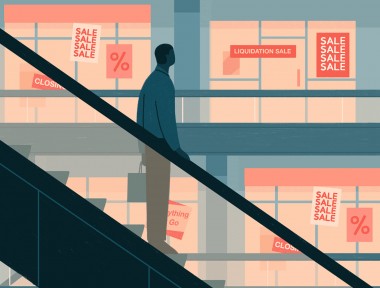
Despite a strong consumer economy, physical retailers closed more than 9,000 stores in 2019 — more than the total in 2018, which surpassed the record of 2017. Already this year, retailers have announced more than 1,200 more intended closings, including 125 Macy's stores.
Some people call what has happened to the shopping landscape "the retail apocalypse." It is easy to chalk it up to the rise of e-commerce, which has thrived while physical stores struggle. And there is no denying that Amazon and other online retailers have changed consumer behavior radically or that big retailers like [...] download full article below
full article : Never Mind the Internet. Here's What's Killing Malls
Collusion: the inclusive & exclusive line of Asos
Collusion: the inclusive & exclusive line of Asos
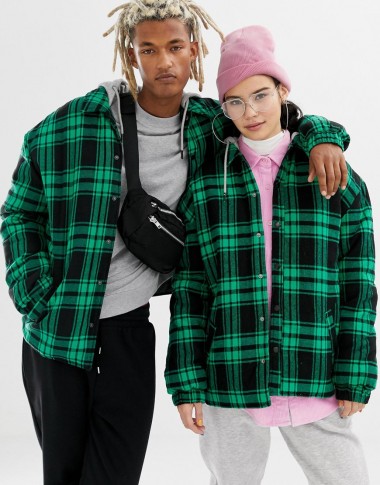
Designed in conjunction with six creative collaborators — students, stylists, activists, image-makers and authors — experimental clothing line Collusion is blurring the lines of shapes and gender.
Taking into consideration the results of extensive research into the non-negotiable values of Gen Z, the brand's price point starts at £5, the pieces are gender-fluid and size inclusive, the collections are animal-free and the majority of the cotton used is sustainably sourced.
Launched in 2018 and constantly evolving, a new lineup of diverse creatives will collaborate each season to create a collection that not only speaks to, but is for, everyone.
The collections are available exclusively at ASOS.com
https://www.collusion.com/about
Nordstrom: success lies in balance
Nordstrom: success lies in balance
At NRF 2020
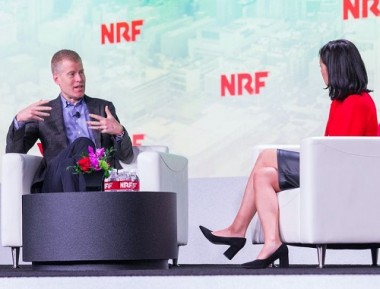
r5246_9_000386731_5_-_copy-2.jpg
Amid a rapidly changing retail landscape characterized by widespread store closures and the rise of e-commerce, Nordstrom has arguably managed to stay ahead of many of its competitors.
The Seattle-based retailer has often been lauded for its innovative concepts and omnichannel savvy, including its pioneering of the "buy online, pick up in store" service, a revamped loyalty program and experiential store offerings.
But even as the department store naturally ramps up its focus on digital, it's hardly scaling back on its brick-and-mortar strategy. According to Co-president Erik Nordstrom, success in today's highly competitive selling environment lies in balance.
"Over half of our store sales involve an online journey somewhere in the process, [and] over a third of our online sales involve a store experience. … Those lines are completely blurred."
Nordstrom offered a glimmer of hope for the retail industry in November when it posted third-quarter earnings per diluted share of 81 cents — besting Wall Street's forecasts of earnings per share of 64 cents. Profits were $126 million, compared with $67 million for the same period in 2018, and revenues decreased 2% to $3.67 billion but met analysts' bets.
The firm also noted improvements in its loyalty program, digital marketing efforts and merchandise assortment. In the past couple years, Nordstrom has invested more resources into BOPIS and curbside pickup, opened small-format stores and edited its brick-and-mortar footprint to account for falling traffic in some locations and better opportunity in others, not the least of which is its 320,000-square-foot women's flagship in New York City that debuted in October.
"We get a lift in our online sales when we add a store to a market," he said. "Manhattan is our biggest online market to begin with, so again that interplay [and] that synergy between the store and online is super important. The reason for a store has changed a lot, too: Stores need to be more experiential than before."
The seven-level store on 57th Street, which sits at the base of the tallest residential building in the Western Hemisphere, houses not only the womenswear and children's collections but also an array of services including a repair shop, a customization station, a stylists' lounge and a beauty space.
At the NRF panel, Nordstrom revealed his favourite part of the store: The footwear department, which spans three floors — the designer on the second level, women's on lower level 1 and kids' on lower level 2. "I grew up selling shoes," he said. "I'm a bit of a shoe dog, so I'm a little biased here."
At the centre of the shoe floor, one level below the street, is The Shoe Bar — one of the store's seven restaurant concepts. "It helps sell things," he added. "We think a lot about shoes; I don't know why it took us so long to put drinking and shoes together, but it's a great combination."
Rick Caruso and his California dream
Rick Caruso and his California dream
Published by Financial Time on 17 June 2019
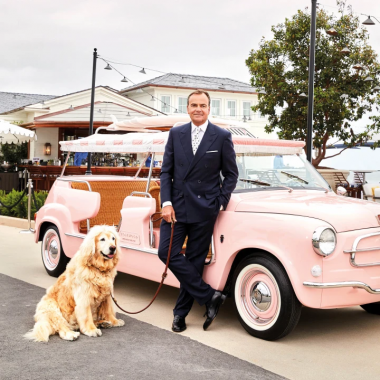
The past year has been a busy one for billionaire property developer Rick Caruso. He opened one of the most lauded shopping destinations in the US, moved into the luxury hotel business, was drawn into the US college admissions furore by a guest on his nine-bedroom yacht, and let it be known that he might like to be mayor of Los Angeles some day.
But right now the chairman of the board of trustees at the scandal-hit University of Southern California is upset about a doormat. Walking in from the well-staffed grounds of his Italianate mansion in the west Los Angeles district of Brentwood to a fireplace-warmed living room, he spots with dismay that the mat is not lined up with the door.
His eye for detail is "an uncontrollable thing", he says as Dodge, his dog, settles in at his feet.
It is the same at properties such as Palisades Village, the Nantucket-like cluster of boutiques he opened last year, where executives tell of Caruso ordering flower beds to be replanted to match a nearby cherry tree's blossoms. Up the coast in Montecito, where [...] read full article below
full article: Rick Caruso and his California dream
The big department stores in the world show what you could do better at Globus
The big department stores in the world show what you could do better at Globus

Even if Migros wants to sell Globus, that does not mean that department stores have no future. There are enough international
examples. But the business is tough.
Has the classic department store become obsolete soon? Do you have to worry about the future of Globus, Jelmoli, Manor or Loeb? Since the announcement of the Migros Group at the end of last week to sell their Globus department store business, this question should be in Switzerland in some minds.
Of course there is no general yes or no answer. It is clear that the department store business, like the entire stationary retail trade, has become much more sophisticated. Sales are shrinking, and even more so than other store formats.


