
How has Bangladesh evolved?
Published by Le Journal du Textile on 17 March 2020
original article: How has Bangladesh evolved? (in french)
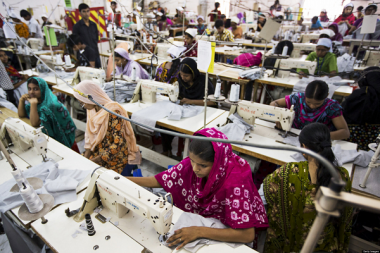
Today's Bangladesh is no longer the same one that we remember from Rana Plaza. Seven years after the tragedy, the country has made huge efforts to develop its industry. Non-compliant factories have closed, others modernised, and management practices have evolved. Incomes have also increased, even though they still remain among the lowest worldwide. But lately, concerns have arisen. Should we fear a return to the old practices? No, say the country's industrials. The reconstruction of the Bangladeshi industry will be strong enough not to fear a step backwards. And the upgrade the country is attempting should complete the process. Already the second apparel producer worldwide, Bangladesh wishes to step out of its role as subcontractor. The deep questioning that followed the Rana Plaza tragedy would have at least had this beneficial effect.
Since the collapse, in April 2013, of an apparel factory building near Dacca that killed 1 100 people, Bangladeshi producers and buyers have put in place initiatives to develop the industry. Established three months after the Rana Plaza incident, the Accord on Fire and Building Safety in Bangladesh united some 200 international purchasers, trade unions and NGOs, under the guidance of ILO -International Labour Organization. Thanks to these collaborations, safety programmes have been established, health and safety inspectors have been trained and thousands of inspections have been conducted across the country's factories. The Accord covered 92 % of Bangladeshi companies. The Accord, which should have initially ended in 2018, has been extended for three more years. In the meantime, the development of a new structure has been decided. The Readymade Garment Sustainability Council (RSC) is a council in charge of the sustainable development of the ready-to-wear industry. The RSC was unveiled in January 2020 and has a transition accord has been signed that should satisfy all parties involved (including trade unions and NGOs). Therefore, the council has a three-party profile made up of brands, trade-unions and local industrialists, all led by a CEO. According to the agtreement signed in January, the RSC will take over all documents, policies and protocols established by the Accord.
Factory closures
So today, Bangladeshi industrialists need to reassure customers that, once emotions subside, the good practices set up these past years will not be abandoned in favour of the bad habits of the past. Over this past six years, 1 800 factories have closed because of non-conformity. The country now has a modernised infrastructure and social issues have improved.
After the tragedy of Rana Plaza, manufacturing companies have modernised and the work force are now claiming pay rises. Minimum salaries have risen from EUR 61 a month in Jan. 2018 to EUR 87 a month in Jan. 2019, representing a 43 % rise in a year.
Transparency
However, in September 2019, minimum wages in Bangladesh were still second to last out of 23 sourcing countries located in Asia and the Euromed area. Sri Lanka ranked last, while China was sixth. Turkey occupies the first place.
Nevertheless, this increase in wages, even though still low, allows the Bangladeshi industry to improve its image. But for the industry, it is also about starting a true repositioning. Even though exports have risen these past years, it has not been followed by a shift upmarket. On the contrary, the price for Bangladeshi clothes sold to Europe has decreased by 3.6 % over the last 4 years.
Diversify the offer
To turn this trend around, Bangladeshi companies want to diversify their offer to step out of their role as 'basic product' suppliers. From now on, Bangladesh seeks to offer more technical products such as tee-shirts made from other material than cotton, bras, windcheaters or parkas. The country also wishes to develop athleisure items, and feminine blouses made from synthetic fabrics like polyester and viscose. These efforts to diversify are starting to show some success. Bangladesh, historically specialising in knitted garments, has managed to rebalance its exports and now bras have become their seventh most exported product. It also sells more and more suits.
Thanks to this range upgrade, could Bangladesh profit from the coronavirus crisis that has paralysed Chinese factories? "Bangladesh could, as Vietnam or other Asian sourcing countries have, benefit from the situation in China, if the Chinese factories keep delivering fabric" says Gildas Minvielle, director of L'Observatoire Economique de l'Institut Français de la Mode.
Dependency
Coronavirus could also affect Bangladesh. The country's textile industry is self-sufficient in knitted garments, but it relies for 40 % on exported fabrics from China.
But the sanitary crisis could contribute to a change in buyers' orders. Whereas purchasers used to turned to Bangladesh only for basic items, they might now increase their purchases of more high-end products.
Bangladesh also wishes to extend its export destinations. Today 83% are focused on the U.S.A. or Europe. The country wants to enter new markets in Asia (Japan, Turkey) and in South America (Brazil, Mexico). In order to do so, Bangladesh wants to highlight another asset: the high number of 'green certified' companies. According to BGMEA (Bangladesh Garment Manufacturers and Exporters Association), Bangladesh is the country with the most LEED (Leadership in Energy and Environmental Design) certified companies. Bangladesh is really ahead of China when it comes to toxicology and adherence to regulations.
Weaknesses
Bangladesh is still behind when it comes to product development and rapid delivery time, the latter being a crucial element of sourcing.
The industry also needs to work on its productivity, which is still seen as insufficient. Factories need to deal better with their waste and should hire engineers. Also, they are still not using their full capability: designed to produce up to EUR 42 billion in products, they only produce EUR 31 billion today.
Related posts

AI and the extinction of retail
AI and the extinction of retail
Heading 1
Heading 2
Heading 3
Heading 4
Heading 5
Heading 6
Lorem ipsum dolor sit amet, consectetur adipiscing elit, sed do eiusmod tempor incididunt ut labore et dolore magna aliqua. Ut enim ad minim veniam, quis nostrud exercitation ullamco laboris nisi ut aliquip ex ea commodo consequat. Duis aute irure dolor in reprehenderit in voluptate velit esse cillum dolore eu fugiat nulla pariatur.
Block quote
Ordered list
- Item 1
- Item 2
- Item 3
Unordered list
- Item A
- Item B
- Item C
Bold text
Emphasis
Superscript
Subscript

IADS Exclusive: Sustainability as financial discipline
IADS Exclusive: Sustainability as financial discipline
Heading 1
Heading 2
Heading 3
Heading 4
Heading 5
Heading 6
Lorem ipsum dolor sit amet, consectetur adipiscing elit, sed do eiusmod tempor incididunt ut labore et dolore magna aliqua. Ut enim ad minim veniam, quis nostrud exercitation ullamco laboris nisi ut aliquip ex ea commodo consequat. Duis aute irure dolor in reprehenderit in voluptate velit esse cillum dolore eu fugiat nulla pariatur.
Block quote
Ordered list
- Item 1
- Item 2
- Item 3
Unordered list
- Item A
- Item B
- Item C
Bold text
Emphasis
Superscript
Subscript