
Articles & Reports

How to survive the future of retail
How to survive the future of retail
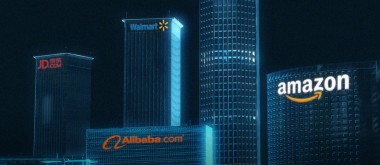
An indepth analysis from Retail Prophet's founder Doug Stephens, where he describes his 10 archetypes for future retailers. Interesting enough, when he mentions the appetite for online "Apex Predator" retail giants, the only parameter not taken into account in his analysis is to know who owns the goods. Marketplaces do not own the goods, which ultimately put pressure on brands, who have to finance their stock. One may wonder if this is viable on the long run for creativity and diversity of the offer.
Another point worth to note: among the many examples to illustrate the 10 archetypes, only 2 department stores are mentioned: Selfridges for its customer experience, and Nordstrom for their customer service. Where would you put your own department store in this list?
Read the full article below

Has covid-19 killed globalisation?
Has covid-19 killed globalisation?
Published by The Economist on 14 May 2020
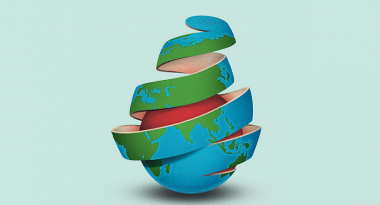
Even before the pandemic, globalisation was in trouble, damaged by the financial crash and the Sino-American trade war. Now it is reeling from its third body-blow in a dozen years as lockdowns have sealed borders and disrupted commerce. As economies reopen, activity will recover, but don't expect a quick return to a carefree world of unfettered movement and free trade. The pandemic will politicise travel and migration and entrench a bias towards self-reliance. This inward-looking lurch will enfeeble the recovery, leave the economy vulnerable and spread geopolitical instability.
Full article below
Full article: Has covid-19 killed globalisation?
Why all customers are influencers
Why all customers are influencers

This report from Internet Retailing highlights that the real influencers aren't those staring up from our phones in a flurry of emojis – they're the people standing right in front of us. 51% of consumers trust a recommendation from their friend or partner more than any other source of advertising. In contrast, just 3% trust an influencer's brand recommendation. But, as this whitepaper explores, 44% of retailers still see the latter as one of their top five most important marketing channels.
Full report below
full report: Why all customers are influencers
Experiential retail goes digital
Experiential retail goes digital
Published by Modern Retail on 27 May 2020

When Nordstrom opened its New York City flagship last October, it was the epitome of experiential retail. The seven-level store contained seven different bars and restaurants, a spa, a personal styling lounge, and lots of Instagrammable spots. The goal was clear: to get Nordstrom's most loyal customers to visit the store more often for a facial or a happy hour, which will lead them to spend more money. Now, all of those experiential elements that were supposed to make the store a must-visit may deter customers. Shopping in the age of coronavirus means that customers want to get in and out of the store as quickly as possible, which is exactly the opposite of the kind of activity experiential retail is supposed to encourage.
As people are hesitant about spending time in stores, retailers are now rethinking the purpose of experiential retail. The coronavirus has accelerated the shift of experiential retail to online. Virtual styling services will become the new norm. The goal of experiential retail will still be to win over customers' loyalty and get them to spend more money with the brand — but not by getting them to spend more time in-store.
Using digital to provide better service
For example: Chanel's Beauty Atelier store in Soho was meant to be a playground for beauty enthusiasts. There were different spaces throughout the store dedicated solely to testing out face cleansers, lipsticks and fragrances; customers were given the option to book a one-on-one consultation. While that store remains closed, customers can book a video chat consultation with one of Chanel's beauty specialists who will email a recap of what they talked about with clients — with recommended products saved to a Chanel account, making it easier to find in the store next time.
Showfields, the self-described "most interesting store in the world," is trying to take a similar approach. When Showfields reopens in NYC, it will encourage shoppers to download its app. Using NFC tags, Showfields' visitors can tap icons throughout the store to learn more about a brand, get a guided tour of the space, and checkout directly from their phone.
The summer weather could also provide opportunity for retailers to experiment with outdoor activations, which may hep get people more comfortable thinking about shopping again. But those retailers who invest now in digital experiences may be better positioned to win over shoppers when they are ready to spend more time in stores again, even if that is months away.
Full article below
full article: Experiential retail will get a digital facelift
Related item:
Has cash fallen out of fashion?
Has cash fallen out of fashion?
Published by WWD on 11 June 2020

Cash, once king, has become controversy.
Critics believe physical currency's days are numbered, especially as a possible vector for contagion in the coronavirus era. But now the protests going on in the U.S. could mean some retailers have no choice but to accept it.
Protests across the country over the killing of George Floyd by the Minneapolis police were marred on the sidelines by destruction and looting of businesses across the U.S. But even as the national conversation shifted from COVID-19 to the protests, the risks from the health crisis itself never actually went anywhere, except potentially up.
Full article below
Full article: Has Cash Fallen out of Fashion?
Economists and analysts give their views of the future
Economists and analysts give their views of the future
Published by Financial Times on 3 June 2020
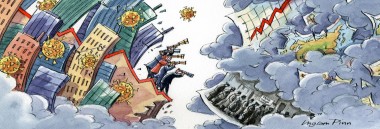
Economists and analysts give their views; sometimes quite different from one another. Are we heading to another depression, or a recovery? Whatever the answer, what will that situation look like? What are the opportunities? And what are the differences between Europe, Asia and the Americas?
Full article below
Full article: Economists and analysts give their views of the future
The end of Story at Macy’s
The end of Story at Macy’s
What: Rachel Shechtman, the founder of Story, is leaving Macy’s.
Why it is important: The acquisition of Story in 2018 was seen as an opportunity for Macy’s to learn and potentially to shift its business model. It does not appear to have used that opportunity.
Macy’s acquired Rachel Shechtman’s Story concept in New York. The concept developed in a single store revolved around the idea of a theme or story which would change frequently, and which would serve as the theme for the experiential store offer. There has been speculation that the acquisition by Macy’s constituted a step in the direction of rethinking the traditional department store model and learning from the “story-based” retail idea. Was the Story acquisition a mistake from the beginning or was it a missed opportunity for Macy’s? Why did Macy’s not take it further and see it as an opportunity for change?
Story founder Rachel Shechtman to leave Macy's
Department stores and the city
Department stores and the city
Published by The Economist on 7 May 2020
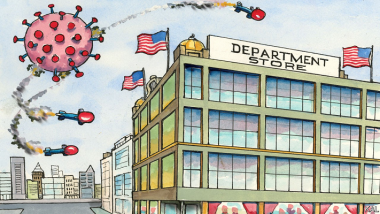
The impact of department stores on cities in the US and how these cities are likely to change following difficulties experienced by department stores. Wanamaker, Macy's, JC Penney and how some shopping malls are turning to entertainment.
Full article below
full article: Ode to the shopping mall
Related items:
- The cull of retail businesses spells the end for mediocre malls
- Debt and hubris: the demise of the US department store
- The death of the US department store: 'very few are likely to survive'
Will fashion ever be good for the world ?
Will fashion ever be good for the world ?
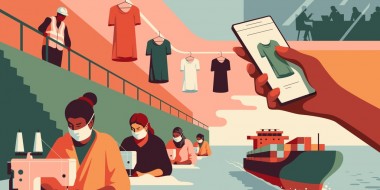
The Covid-19 pandemic has put financial pressure on businesses, threatening their sustainability agendas. But aligning profit and purpose and fulfilling responsibilities to the planet and communities of people beyond shareholders may matter more than ever to their long-term success.
Full article below
Will fashion ever be good for the world?
Debt and hubris: the demise of the US department store
Debt and hubris: the demise of the US department store
Published by The Financial Times on 7 May 2020

That combination of rare goods and exceptional service is what made department stores — a concept imported from Europe in the mid-1800s — a hallmark of sophisticated urban life. The names adorned on the stores — B Altman, Stern's, Marshall Field's, Lord & Taylor — were known in households across the country. And, for a time, these department stores came to dominate retail in America.
Even as shoppers began to turn to the internet, Warburg Pincus and TPG — who ultimately won the 2005 bid for Neimans — were willing to bet that the newly well-to-do would continue to turn to the merchandisers they had long trusted. In 2013, sharing a similar vision, buyout group Ares Management and the Canada Pension Plan Investment Board bought Neiman for $6bn.
Now Neiman Marcus, which carries $4.8bn of debt and missed an interest payment to its lenders, is on the brink of bankruptcy. Other department stores are likely to follow. People briefed on the matter expect the company, which operates 43 namesake stores, 22 off-price locations and two Bergdorf Goodman flagships in New York, to file for protection from its creditors and landlords in the coming days. It comes less than a year after its New York rival Barneys did the same, a move that ultimately ended in liquidation.
If there was ever an event to test the mettle of retail chieftains across the US, the coronavirus pandemic has been it. Malls have shut. Consumer spending has flatlined, with sales at department stores down a staggering 23 per cent in March from a year prior, the largest decline since at least 1994, according to data from the Census Bureau. And all the while rent and interest payments have been accruing.
How did we get here? The coronavirus is not entirely to blame for the problems presently facing Neiman Marcus and JCPenney; both were already suffering from bloated debt levels that left them little able to respond to the sweeping changes in American retail over the past two decades, including the rise of ecommerce and the migration of young people from the suburbs to cities after the financial crisis.
Full article below
Full article: Debt and hubris, the demise of the US department store
Will the fashion rental market ever recover from Covid-19?
Will the fashion rental market ever recover from Covid-19?
Published by Vogue on 17 May 2020

Much of the fashion industry is suffering under the coronavirus pandemic, but few areas have been hit as hard as fashion rental. It is in the unfortunate position where much of its value is made obsolete by quarantine, social distancing and the cancellation of events. But will coronavirus change our long-term attitude towards sharing clothes?
No events, no renting
Before the pandemic struck, renting clothes was seen as the ultimate solution to the damaging buy-once wear-once culture. But now that events have been put on hold and holidays seem like a distant dream, the future of rental looks far from certain. While some sites have encouraged people to continue renting items for all those Zoom meetings we've been having, it's a difficult sell considering the price point. "A lot of the items are still fairly expensive even though you rent them, but the idea would be you're going to a wedding or event," says Chana Baram, senior retail analyst at market research firm Mintel. "Why would anyone be renting clothes right now?"
Hygiene
Hygiene is also another major concern during the current pandemic. Clear health and safety guidelines are essential. Despite the strict protocols in place, customers may still be put off by the thought of sharing clothes with somebody else at the moment — a worry that rental sites will also have to address beyond the pandemic.
Hopes for the future
However, while rental has been hit hard during international lockdowns, there are already positive signs that the sector is recovering. YCloset in China has seen the numbers of people renting increase since lockdown measures were eased at the end of March. "With the gradual return to work, [renting] is also gradually picking up," says founder and executive director Mengyuan Liu.
Full article below
Full article: Will the fashion rental market ever recover from Covid-19?
Lotte (South Korea): Industry actions to overcome Covid-19
Lotte (South Korea): Industry actions to overcome Covid-19
Published by Asiasociety.org

Many Korean businesses are working in concert to help prevent Covid-19 from spreading. While working to protect its employees, customers, and partners, they are actively cooperating with various parties and organizations to stop the virus from spreading and restoring damage to the communities.
Asia Society Korea interviewed the executives at Lotte Group, South Korea's fifth-largest conglomerate, regarding their proactive protective measures to overcome Covid-19. Lotte Group is currently employing various measures to not only protect its employees and customers, but to help limit the spread of Covid-19.
Read the full article to learn more about their actions:
Full article: Lotte (South Korea): Industry actions to overcome COVID-19
Gary Cohn: Coronavirus is speeding up the disappearance of cash
Gary Cohn: Coronavirus is speeding up the disappearance of cash
Published byThe Financial Times on 30 April 2020

Many parts of our lives will change after Covid-19, including the places we go, the people we see, how we travel and how we pay for it all. For the past five weeks I have not touched a single coin or banknote, instead relying exclusively on electronic payments systems and credit cards that only I touch.
I am not alone. Online merchants such as Alibaba and Amazon are thriving, and more and more brick-and-mortar stores have shifted to systems where you order ahead, pay on the phone, and pick up kerbside. Even businesses that have resisted credit cards for decades — cash-only Frankfurt bakeries and cheque-based New York psychotherapists — are welcoming or even requiring digital payment.
Full article below
Full article: Gary Cohn: Coronavirus is speeding up the disappearance of cash
JC Penney holds some lessons for department stores
JC Penney holds some lessons for department stores
Published by WWD on 15 May 2020

A fascinating piece with comments by a number of experts including Allen Questrom, Paul Charron and Walter Loeb. This article holds a number of lessons of more general importance to department stores. It chronicles the history JC Penney from its origins to its present position, teetering on the edge of bankruptcy. Insights from Allen Questrom who successfully led the company for some years: the problem with Neiman Marcus is debt; the problem with JC Penney is that they haven't defined who is their customer today, what is their position in the market. A fair assessment of past leaders of JC Penney as well as a critique of the damages inflicted by private equities; there would appear to be general agreement that Penney will not survive.
Full article below
Full article: JC Penney holds some lessons for department stores
The cull of retail businesses spells the end for mediocre malls
The cull of retail businesses spells the end for mediocre malls
Published by The Financial Times on 20 April 2020

The cracks in the retail industry have been visible for a very long time. Disharmony around business rates, mall closures in the US, job cuts, decreasing footfall, empty units and ghost-town shopping centres. Pretty gloomy stuff — and that was before coronavirus struck a devastating blow to both supply and demand.
But most developed nations are still way overprovided with stores, even after the closures of recent years. In the brave new world that we are reaching for now, the quantity of stores will go down but quality is more likely to go up.
Full article below
Full article: The cull of retail businesses spells the end for mediocre malls
The tech behind 'social-distance selling'
The tech behind 'social-distance selling'
Published by Vogue Business on 26 May 2020
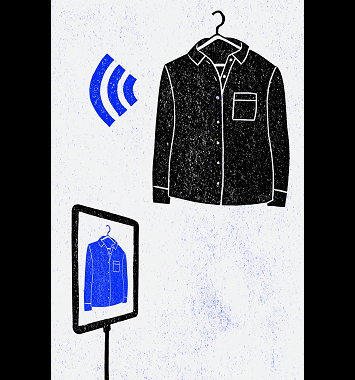
The pandemic has been credited for accelerating e-commerce, but as stores begin to reopen, tech is also pushing innovation in physical retail. Retailers are increasingly considering digital tools to navigate toward a "new normal" in which they can safely make sales to stay afloat. With e-commerce not making up the difference lost to lockdown, the technology offers a lifeline, especially for smaller, local stores that might not have a robust online presence.
New technologies can aid in "social-distance selling" by helping retailers limit physical contact, reduce time spent in stores, avoid large groups of people and even utilise stores to fulfil online orders. Some of these technologies are still unproven; others are in the early stages of adoption. But use cases suggest they can help retailers recoup sales and increase customer confidence.
Full article below
full article: The tech behind 'social-distance selling'
Saying goodbye to Jeffrey
Saying goodbye to Jeffrey
What: Nordstrom has decided to close down Jeffery
Why it is important: When Nordstrom acquired Jeffrey in 2005, it acquired a landmark brand. Why has the Jeffrey magic not leaked into the Nordstrom offer?
When Jeffrey opened in 1999, Jeffrey Kalinsky managed to contribute to the transformation of the meatpacking district of Manhattan into a trendy fashion hub. The three current stores in Atlanta, New York and Palo Alto are now set to close by the owners, Nordstrom, which acquired the business in 2005. The department store company also integrated Jeffrey founder Kalinsky into its organisation in the hope that he would rejuvenate the department store chain. He does not appear to have had the projected impact and is leaving at the same time as the stores close.
Pandemic's crushing retail impact: is there any light?
Pandemic's crushing retail impact: is there any light?
Published by Women's Wear Daily on 8 April 2020

Amid the health crisis, some retailers see pockets of positive shopping online and some enduring post-pandemic trends.
Consumer spending on fashion is way down, but not entirely shut down. While Walmart, Walgreens, Amazon, Target, CVS, Costco, Kroger, Trader Joe's and other "essential" retailers are in high gear to meet the rush for food, pharmaceuticals and protective gear, others despair over what to do with all their "nonessentials" lingering on the shelves of temporarily closed stores and backed up in warehouses. "Clothing and footwear is facing a crisis. This category sees the greatest number of consumers cutting spending, and the level of sales transfer to e-commerce is insufficient to offset the impact of store closures," according to Coresight Research.
Yet several retailers and industry experts contacted by WWD over the past week cited a few bright pockets in soft goods, in particular baby clothes, basics, bedding, pajamas, sweats, denim, and generally speaking, clothes for comfort, lounging and sheltering in. No surprise there.
Full article: Pandemic's crushing retail impact: is there any light?
What will stores look like when they reopen?
What will stores look like when they reopen?
Published by Business of Fashion on 28 April 2020
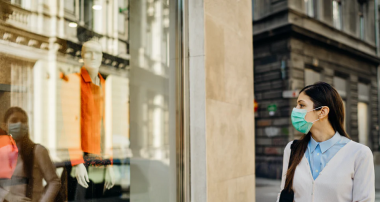
When the lockdown orders came, many retailers needed just hours to close their stores. Reopening them, and winning back customers, could take months. Some of the old rules still apply: give people a reason to visit and treat them well, and they'll open their wallets. Other emerging bits of conventional wisdom are brand new: services like curbside pickup and personal shoppers are going to be more common, and not just at luxury boutiques. For many brands, stores will now serve e-commerce operations rather than the other way around. Only one thing is certain: when people emerge from their homes to shop, the stores they visit will be radically different.
Full article below
Full article: What will stores look like when they reopen?
Luxury weathers the storm in South Korea
Luxury weathers the storm in South Korea
Published by Vogue Business on 15 April 2020

South Korea's response to the Covid-19 outbreak is regarded as a model for success, but its economy hasn't been spared. Notably, the country never enforced a complete lockdown, instead encouraging people to voluntarily stay home, work remotely and avoid crowded places. Bars, clubs, restaurants, gyms and department stores remain open under the condition that they ensure a safe distance between customers and enforce wearing masks whenever possible. (One exception is in the capital Seoul, where the mayor last week ordered the closure of entertainment establishments until 19 April.) This approach has yielded mixed results. South Korea has avoided major disruption to production and manufacturing and some segments of luxury retail in the country are seeing sales rebound. But external factors like a decline in inbound tourism, a sharp reduction in international demand and trade disruptions also wreaked havoc on duty-free sales and exports, which declined 18.6 per cent between 1 and 10 April, compared to last year.
The silver lining: duty-paid luxury sales. In February, the country's most important department stores, including Lotte, Galleria, Shinsegae and Hyundai, registered an increase in luxury sales between 2.4 and 17 per cent even as overall sales fell. In March, when social distancing measures became widespread, luxury sales for department stores dipped in the double digits, but sales rebounded in the first week of April. Overseas luxury brand sales were up 5.4 per cent and overseas watch and jewellery brand sales were up 27.4 per cent at Lotte. "[The drop in] tourism is impacting duty-free, but department stores are really about the domestic market and locals," says Lisa Hong, senior research analyst at Euromonitor International.
Even as department stores and retailers have been allowed to remain open, online sales are on the rise and companies are renewing focus on digital strategy. Even department stores, which have generally been slow to adapt to e-commerce in the country, reserving only limited stock options for their online channels, have stepped up their efforts. Aside from expanding their assortment online, they are hosting live streaming sessions on multiple online platforms. By moving the practice online, department stores are hoping to target millennials and older Gen Zs.
The prospects are different for duty-free sales, which have declined 40.5 per cent in February compared to a year previous. These are likely to see a similar decline in March. Two of Korea's largest duty-free operators, Shilla and Lotte, reportedly failed to sign a new 10-year lease to operate at Incheon airport, after asking for a renegotiation of the bids. Lotte, Shilla and Shinsegae duty-free have also closed stores and reduced operations. The decline in duty-free sales has been caused by a drop in flight trafic.
Full article below
Full article: Luxury weathers the storm in South Korea
What to do about rent
What to do about rent
Published by BOF on 2 April 2020
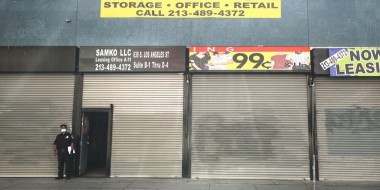
NEW YORK, United States — For millions of small business owners across the country, April's rent is officially past due.
Karina Lopez, whose Portland, Ore. lifestyle boutique, Darling Distraction, closed two weeks ago along with countless other businesses in response to the Covid-19 pandemic, said she's one of the lucky ones. Her landlord has offered to defer April's rent until the fall.
But she's worried even that won't be enough. Some Darling Distraction customers placed orders with the boutique's online store after it closed, but ecommerce sales have stalled. Business is down more than 70 percent.
"Right now, I'm relieved I don't have to pay for April," she said. "But if our sales continue to drop, I'll have to see if [my landlord] could let me pay in instalments… Everything is coming from my savings right now."
Thousands of small, independently-owned fashion vendors and retailers, and even some international chains, will have trouble paying the bills in upcoming months as Covid-19 continues to keep consumers on lockdown and the world economy in freefall. Under government mandate, non-essential stores across the world remain closed in order to curb the spread of the virus.
As the crisis unfolds, apparel and luxury retailers will take a massive economic hit. Already retail traffic in the US is down about 80 percent in the third week of March, compared with a year earlier, according to Morgan Stanley, and will likely drop further.
See full article below
Full article: What to do about rent
The Retail World 2020: retailing in a time of crisis
The Retail World 2020: retailing in a time of crisis

It seems incredible that barely a month ago, retail's focus continued to be around how to embrace the change being brought about by the digital revolution. And then came COVID-19 which hit China in January and then in a matter of weeks swept through Asia to Europe and the Americas connecting all countries of the world.
This is first and foremost a global healthcare crisis, a pandemic as classified quickly by the World Health Organisation. Doctors and nurses around the world have been battling with amazing skill and dedication and often in the face of unbelievable challenges together with emotional and physical pressures to save as many lives as they can. But what has made this pandemic so unique has been its far-reaching impact on the global economy where lockdowns and the closure of much of commercial life have brought with it the threat of recession.
Retailing around the world has found itself right at the heart of this global crisis. Great swathes of the industry have been forced to close stores and many thousands if not millions of people have either lost their jobs permanently or temporarily. Ecommerce has seen unimaginable growth figures matched only by what has happened in the food and pharmacy retail sectors. Panic buying around the world emptied shelves and supply chains have struggled to keep-up despite no lack of product availability. Retailing has had to learn and adapt with incredible speed and skill to fulfill its enhanced role in literally feeding populations.
Full article below
The Retail World 2020: retailing in a time of crisis-World Retail Congress
We must focus attention on our next steps
We must focus attention on our next steps
Published by Financial Times on 8 April 2020

A journey of a thousand miles begins with a single step. The journey through this pandemic is going to be long and hard. We cannot know where it will end, although it is hard not to speculate. What we must do instead is focus on the steps right ahead if we are to avoid falling off our narrow path into mass deaths on one side, or economic devastation on the other. If we do not avoid these calamities in the near future, we risk chaos ahead. Even if we do manage to do so, we will not return to the normality we took for granted until recently. For that, we must at least wait for a cure or vaccine. The economic and social damage will last even longer.
Full article: We must focus attention on our next steps
Coronavirus and retail: 11 actions to mitigate covid-19's impact
Coronavirus and retail: 11 actions to mitigate covid-19's impact
What's the current situation with Covid-19?
The answer to this varies depending on where you are in the world. However, it is widely agreed that this is not a quick fix problem. Many experts are saying that we could still be seeing the impact of coronavirus as far away as next year.
While work is underway on developing a vaccine, the reality is that these things take time to produce and test. That's before you get to actually distributing them.
In the meantime, governments across the world are implementing a raft of measures to try and minimise the percentage of their populations that are sick at the same time. These measures, such as self-isolating, social distancing, working from home and travel restrictions, are having an impact though on many countries' economies and productivity.
Full article below
Coronavirus and retail: 11 actions to mitigate covid-19's impact-Insider Trends

