
News

Fenwick chairman and CEO to leave
Fenwick chairman and CEO to leave
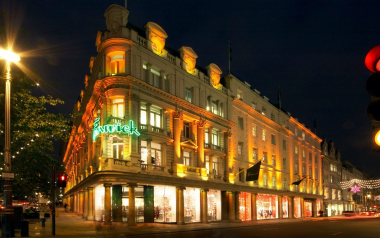
Fenwick chair Richard Pennycook and chief executive Robbie Feather are both stepping down as the business' founding family wrestles back control.
Pennycook, who became the first Fenwick chair from outside the family when he took the role in February 2017, has been replaced on an interim basis by non-executive director Steve Barber.
Feather, who was the first person from outside the family to be named chief executive in January 2018, will be succeeded by John Edgar.
Edgar has previously been finance boss at Selfridges and Harrods and was most recently as a senior adviser to Boston Consulting Group.
Fenwick said that, although Edgar has already joined, Feather will remain with the business for a month to "ensure a smooth transition".

Saks Fifth Avenue presses to change the product cycle
Saks Fifth Avenue presses to change the product cycle

The luxury retailer wants to implement buy-now, wear-now merchandising beyond what the pandemic has induced. Saks merchants, moving to implement changes to the product cycle beyond those imposed by the pandemic, have been in discussions with vendors to closely align the arrival of new seasonal product to its stores with consumer demand -the talks have been with 20 key brands in particular. It means that a fall cashmere turtleneck could be introduced in September instead of June; boots arrive close to cold months, and sandals arrive around spring. "It's a matter of what we can do now, through this health crisis, to accelerate the transformation of Saks Fifth Avenue," said Marc Metrick, the president of Saks. The company wants to lead so others follow. "We need this to be an industrywide thing. We are going to lead it, but everyone has a certain level of responsibility in the market," said Metrick. "It doesn't work if the consumer is seeing different products at different times. It's got to be something that changes [throughout] the industry."
For instance, Saks said there won't be as much fall product on the shelves to the degree seen in past years as pre-fall and fall merchandise will be received later than they have in previous years. Historically fall pre-orders could beginning in April but with most arriving by July. This year, fall orders will be received during the months of August, September and October. The reset for 2020 is due to the pandemic but the plan is for permanency. "The current situation has afforded Saks with an opportunity to reset the product lifecycle to better align with customer preferences, which is for more focus on buy-now, wear-now," said Metrick.
Full WWD article: Saks Fifth Avenue presses to change the product cycle
More on Saks Fifth Avenue:
Debenhams to file for administration
Debenhams to file for administration
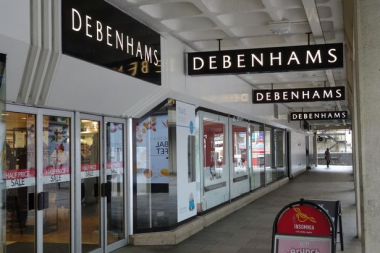
Debenhams will file for administration after the coronavirus lockdown forced it to shut its shops across the UK. It described the process as a "light touch" administration to protect it from legal action from creditors while its department stores are closed. Debenhams boss Stefaan Vansteenkiste said the circumstances were "unprecedented", but added it will allow Debenhams "to resume trading from our stores when government restrictions are lifted". However, he did not say how many of its 142 shops would reopen after the lockdown.
It will be the second time in a year that Debenhams has filed for administration. It has already closed 22 stores this year and plans to shut a further 28 in 2021.
The retailer said it is still trading online "normally" while its shops are closed.
full article: Debenhams to file for administration
Eataly Paris Marais supports hospital staff
Eataly Paris Marais supports hospital staff

Eataly Paris Marais [the Italian market Galeries Lafayette group has the exclusive franchise for in France] and its chefs have put together a special service that supplies the "Covid-19" unit at Paris' Bichat AP-HP Hospital with meals five days a week for the duration of the crisis. They take special care to ensure the meals are prepared in strict compliance with current health guidelines. Every day, the Eataly Paris Marais teams take it in turns to create traditional Italian meals that will brighten the days of the hospital carers. They use high-quality, seasonal produce and the recipes that have made the name of this unique concept and establishment. Through this initiative, Eataly Paris Marais and its teams want to contribute to the wave of national solidarity and demonstrate their deep respect for and immense gratitude to the hospital environment.
Feedback from IADS members: Measures to cope with coronavirus
Feedback from IADS members: Measures to cope with coronavirus
full report: Feedback from IADS members on measures to cope with coronavirus
Summary - 10 April 2020
Stores:
Most are closed. Non-food stores remain open. Exceptions are Sogo Hong Kong which are open but with very reduced traffic. SKP in Beijing and Xian have reopened after being closed.
E-commerce, where it is present, is operating well and is sometimes the only source of revenue for businesses. Home delivery has been instituted.
Offices:
Head offices are closed in cases where stores are closed. Staff is working remotely.
Staff:
Different solutions depending on the company and on the government assistance. From temporary lay-offs to furloughs…
Investment projects:
Most are on hold or postponed. Renovations postponed. Some top-priority projects are still alive.
Marketing:
Stopped or postponed. Only email, and social media remain in some cases.
Suppliers:
Reduced supply pipelines. Many orders cancelled or scaled back (especially SS20). For AW20 a range of measures such as reduction, minimum, cancelled etc. Replenishment only to web as appropriate. Some try to support suppliers through rent reductions…
Liquidity:
Will soon become a problem for some.
blog: More initiatives from IADS members during the covid-19 crisis
American Dream mall opens COVID-19 testing centre
American Dream mall opens COVID-19 testing centre
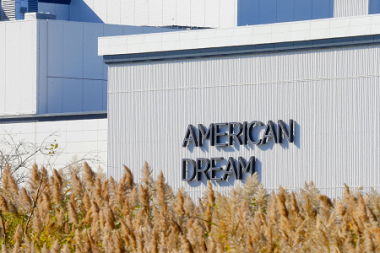
As the coronavirus pandemic delays American Dream's planned opening, the megamall is turning its facilities into a COVID-19 testing site. In partnership with Hackensack Meridian Health and Agile Urgent Care, the East Rutherford, N.J., complex has created an appointment-only drive-through testing center intended mostly for police officers, first responders and health-care professionals. Community members can schedule a telemedicine visit, and can be seen at the site if they meet certain criteria.
Prior to the coronavirus outbreak, American Dream was open with fairly limited offerings. A number of the mall's retail tenants were expected to open up shop last month, with a luxury section to open in September. However, American Dream has been entirely shut since mid-March because of the pandemic. According to its website, the mall will stay closed for shopping and entertainment "until further notice."
The COVID-19 CEO pay cuts
The COVID-19 CEO pay cuts
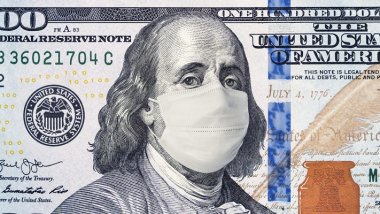
The coronavirus is shining a spotlight on the issue of executive pay. Many corporate leaders who are used to taking home multimilliondollar packages each year are personally adopting a new kind of austerity as they are forced to send tens of thousands to the unemployment line. The real-world impact of the changes are complicated: CEOs are definitely going to take a hard hit, but they don't face the same kind of existential dread felt by many workers who live with much less financial cushion. The coronavirus is a threat to everyone. However, the economic pain is only partially being shared. Some of the lowest-paid workers are now on the front lines — at times providing essential services without the essential protections — while the wealthy selfquarantine in vacation homes and uppermiddle-class white-collar workers log in from home. U.S. retail chief executive officers started delivering the bad news to workforces last week, furloughing store associates en masse as the COVID-19 shutdown forced them to keep their stores closed not just for a few weeks, but for the foreseeable future. And in the process, some made it clear that CEOs will not receive compensation for the duration of the crisis.
full wwd article: The COVID-19 CEO Pay Cuts
US Department stores suspend dividends and conserve cash
US Department stores suspend dividends and conserve cash

America's top three department-store operators have jumped into action to mitigate a working-capital crunch, as sales dry up from the COVID-19 pandemic.
Macy's closed all of its stores because of the COVID-19 pandemic. While it's continuing to sell merchandise online, e-commerce typically represents only a quarter of Macy's business. Moreover, online sales of apparel and footwear have plunged this month as consumers focus on buying essentials. That means very little cash is coming in the door. Meanwhile, Macy's still has to satisfy its payables obligations. This abrupt negative shift in Macy's working capital position could create a multibillion-dollar cash flow headwind over the next several months. Kohl's and Nordstrom face similar (albeit somewhat smaller) threats.
Department stores are taking a multipronged approach toward shoring up their cash positions. Macy's and Nordstrom both confirmed that they will temporarily stop paying dividends. Meanwhile, Kohl's and Nordstrom have paused their share repurchase programs. (Macy's hasn't bought back stock for several years.) Kohl's also said it is evaluating its dividend and may temporarily reduce or suspend it.
Macy's, Kohl's, and Nordstrom have drawn on their credit facilities to give themselves bigger cash cushions, borrowing $1.5 billion, $1 billion, and $800 million, respectively.
Also, all three retailers have slashed their spending plans for the year. For example, Nordstrom said it is "targeting further reductions of more than $500 million in operating expenses, capital expenditures and working capital." Kohl's and Macy's have outlined similar initiatives. These plans include offering bigger discounts to speed up sales of seasonal merchandise online. Macy's said that it is cutting future merchandise orders and extending payment terms. In other words, it is buying time to convert its current inventory into cash and working to prevent a future buildup of excess inventory.
Download the article below for more details:
Department Stores Suspend Dividends and Conserve Cash As Coronavirus Crushes Sales
Gémo presents its collection in 'Animal Crossing'
Gémo presents its collection in 'Animal Crossing'

Lockdowns have made it complicated for brands to showcase their new collections. However, French ready-to-wear and accessories label Gémo has come up with the innovative step of presenting its key models for the coming season in video game "Animal Crossing," a social simulation game centered around a fictional village. Gémo has joined forces with agency Rosbeef! to present the brand's latest silhouettes in "Animal Crossing," in which it has created a runway and a store. The agency Rosbeef! recreated clothing from the 2020 spring-summer collection in pixel art, enabling players to dress their avatars in the new pieces for different events and occasions. An ideal manner in which to discover the collection and to virtually integrate it in day-to-day situations. The video game features a runway show in partnership with French women's magazine madmoiZelle, and a virtual Gémo store offering new clothes in exchange for free download codes.
Pieces from high-end fashion brands (Comme des Garçons, Bape, etc) are also available in the Animal Crossings avatars' closets, but it presents no clear way for fashion to monetise its popularity just yet. Can fashion cash in on the Animal Crossing craze?
Read the article below, from Business of Fashion, to find out more.
article by bof: Can fashion cash in on the Animal Crossing craze?
Related news:
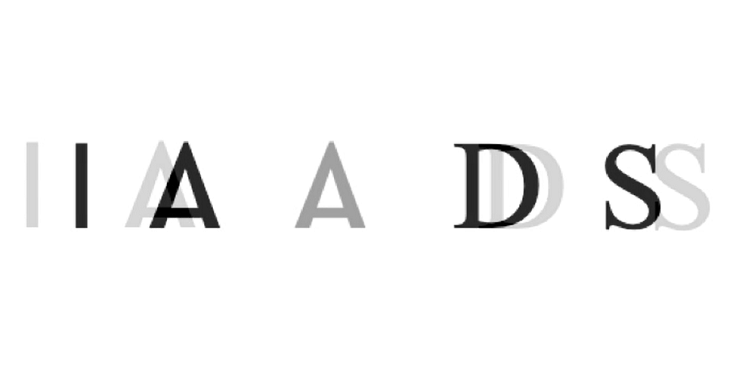
IADS, inpired by El Corte Inglés
IADS, inpired by El Corte Inglés
[](https://www.iads.org/files/pmedia/public/r563917logoshift.mp4)
Nordstrom cancels more orders and delays Anniversary sale
Nordstrom cancels more orders and delays Anniversary sale

Nordstrom Inc., further maneuvering to manage amid the coronavirus, has canceled more merchandise orders. "Similar to the April/May approach, the company has decided to suspend all full price orders for June/July," the company wrote in a letter to vendor partners. This concerns Nordstrom's department stores only, Rack off-price stores would be different merchandise orders.
In a similar move, the department store chain is moving its Anniversary sale from July to August. It's the company's biggest sale and volume event of the year. It is not a promotion or clearance as new fall merchandise is stocked just for the event, with buyers getting orders from vendors when department stores typically don't get them, and Nordstrom achieving a surge in volume in an otherwise soft sales period. It provides customers with the opportunity to buy new fall merchandise early at a discount for about two weeks. "We are reevaluating our needs for the event," Nordstrom wrote in the letter to vendors. "Only our absolutely best items at compelling prices will be part of the offer and a disproportionate amount of the funding will go to categories that have outperformed the average during COVID…home, cozy, beauty/self care, etc. This will certainly impact our original offer so we will discuss our proposed ideas on call."
Full WWD article: Nordstrom cancels more orders and delays Anniversary sale
More on Nordstrom:
NRF launches 'Operation Open Doors'
NRF launches 'Operation Open Doors'

With hundreds of stores preparing to reopen in the U.S. within days or weeks, the National Retail Federation has launched "Operation Open Doors" to help them do it as safely as possible and with consistent approaches.
It's an online solution center, on nrf.com providing operational guidelines and considerations for how to reopen stores that have been temporarily closed due to COVID19. The guidelines were developed with input from hundreds of retail industry leaders.
Inconsistencies have revolved around the use of PPE for customers and employees, hours of operations, regulating traffic into the stores, and other issues.
Matt Shay, president and chief executive officer of the NRF, noted that retail is the nation's largest private-sector employer, contributing $3.9 trillion to annual GDP and supporting one in four U.S. jobs, or 52 million working Americans.
Shay added that NRF's retail leaders are primarily focused on customer safety, employee safety, and store and facility environment safety. "Consistent guidelines across all levels of government — without overburdensome regulatory schemes — are critical."
Other national retailers, however, including Macy's Inc., have said they have no plans to reopen in those states for the time being given the continuing high number of cases of the coronavirus.
full article: NRF Launches 'Operation Open Doors'
Related item:
UK economy could shrink by 13%
UK economy could shrink by 13%

In the April-June period alone, economic output could plunge by 35%, with the unemployment rate more than doubling to 10%, the Office for Budget Responsibility said on Tuesday. A bounce-back may come later in the year if restrictions on public life to slow the spread of the coronavirus are lifted.
The OBR stressed it was not making an official projection, given the lack of clarity about the duration of the government-imposed shutdown which it assumed would last for three months, followed by a partial lifting over a further three-month period.
Separately, the International Monetary Fund said it expected Britain's economy to shrink by 6.5% in 2020, similar to contractions in other economies, before growing by 4.0% in 2021. But the outlook for Britain's public finances is stark.
The OBR said the hit to tax revenues and the government's huge spending plans meant the budget deficit could hit 273 billion pounds in the 2020/21 tax year — five times its previous estimate.
That would be equivalent to 14% of gross domestic product, higher than the 10% level hit after the global financial crisis that began in 2007. The country had gradually lowered the deficit to about 2%, mainly through a decade of spending cuts for many public services.
The Resolution Foundation, a think-tank, said it was plausible the economy could suffer a more sustained hit than outlined by the OBR.
More news:
Full article: UK economy could shrink by 13%
Belk prepares for reopening
Belk prepares for reopening
Belk department stores in South Carolina and Arkansas will reopen May 1 after being closed for weeks due to COVID-19. The maneuver makes Belk the first major retailer of the "nonessential" variety to announce a return to brick-and-mortar operation. Republican Gov. Henry McMaster of South Carolina issued an order indicating that nonessential stores could begin to reopen on 21 April. However he did put certain restrictions on the reopenings, insisting each store will be limited to five customers per 1,000 square feet of retail space or 20 percent of occupancy, whichever is less.
"To help protect our Belk community, we are following all recommended precautions from local health officials and the CDC [Centers for Disease Control and Prevention] as we begin the reopening process. Stores will begin by opening from 12 p.m. to 6 p.m. and we will be limiting the number of people in the store to ensure social-distancing standards are observed. We recently launched curbside pickup at select stores, including all stores that will be open in May, which offers an additional limited contact shopping option" Belk said in a statement.
The company added that stores will reopen by geographical area "based on local and state protocol and will continue to adhere to the guidance of the CDC and local health authorities. We anticipate additional store openings in more states the first week in May."
The 130-year-old, private equity-owned retailer operates 35 stores in South Carolina and seven stores in Arkansas.
Neiman Marcus advances bankruptcy preparations
Neiman Marcus advances bankruptcy preparations
Neiman Marcus Group is stepping up preparations to seek bankruptcy protection, after the coronavirus pandemic forced the debt-laden U.S. luxury department store chain to close its stores. Neiman began holding confidential discussions with bondholders about possible financing that would help the company continue operating while under bankruptcy protection, the sources said. The company has also started similar discussions in recent days with its lenders, one of the sources said. Even though these talks are advancing, the Dallas-based retailer is several weeks away from a potential bankruptcy, and it is still possible that it manages to escape it.
Neiman reached a deal last year with creditors to rework debt and avoid a bankruptcy filing, gaining more financial breathing room. But the coronavirus outbreak forced the company to close all Neiman, Bergdorf Goodman and Last Call stores it operates through the end of April, and furlough most of its 14,000 employees. The closures have resulted in a cash crunch just before significant interest payments on portions of its more than $4 billion of debt are due starting April 15.
article: Neiman Marcus advances bankruptcy preparations
El Corte Inglés joins the '200challenge'
El Corte Inglés joins the '200challenge'

Launched by the Shackleton agency, this challenge is a way for brands to join the fight against coronavirus. 200cm is the safe distance that public health authorities recommend people should keep from one another in order to avoid the spread of Covid-19. To help everyone remember it, this challenge suggests to brands everywhere on the planet the following small gesture: 'adjust the logo's tracking to ensure a minimum letter spacing of 200, add #the200challenge and share it.'
El Corte Inglés, Zara, and more than 500 other brands already joined in.
As virus tests management, change takes center stage
As virus tests management, change takes center stage

As the coronavirus outbreak continues to disrupt global business, c-level executives are having their mettle tested as they are forced into a crisis management mode, which changes day-to-day and requires a different set of skills. As part of a series of stories on change management, WWD speaks with industry consultants, investors and business leaders on what skills, tactics and strategies are needed to navigate this tumultuous time.
Read more in the article below
full article WWD article: As virus tests management, change takes center stage
Stockmann has decided to file for corporate restructuring
Stockmann has decided to file for corporate restructuring

Finland's iconic chain of department stores, Stockmann Oyj, has filed for debt restructuring amid coronavirus. The retailer lost a third of its market value after it filed for debt restructuring as the coronavirus pandemic wiped out demand for its wares. Stockmann was already struggling to revive its business before the virus hit. "The unprecedented situation caused by the coronavirus has led to an extreme decline in customer volumes, depleting the company's cash in hand," Chairman Lauri Ratia said, adding that online sales couldn't compensate for the drop in footfall.
press release: Stockmann plc has decided to file for corporate restructuring
full article: Finland's Best Known Department Store Sinks on Restructuring
What are IADS members doing on Facebook?
What are IADS members doing on Facebook?

UPDATE
During the global sanitary crisis due to the coronavirus, most of IADS members had to close stores but they remain active through social media. Here's a look at what your fellow members are doing on Facebook:
the iads members on facebook - second edition
Previous edition:
The IADS members on facebook - first edition
What are IADS members doing on Instagram?
What are IADS members doing on Instagram?

UPDATE
During the global sanitary crisis due to the coronavirus, most of IADS members had to close stores but they remain active through social media. Here's a look at what your fellow members are doing on Instagram:
the iads members on intagram - second edition
Previous edition:
The IADS members on instagram - first edition
Flexibility, risk management and innovation
Flexibility, risk management and innovation
IADS comments 27/04/2020

Retailers are by nature proactive. They anticipate the future, prepare to meet the ebb and flow of events, adapt to ups and downs. The current pandemic has caught us all by surprise: businesses, politicians, families, and indeed many scientists. The editor of one of the most important and respected medical journals of the world, The Lancet, has called the current situation "the biggest science policy failure in a generation".
This is particularly uncomfortable for retailers who have been reduced to reacting to the crisis. Closing stores, attempting to grow e-commerce, drastically cutting costs, managing orders and deliveries, and waiting for the moment when we can take back the control of our businesses and speak directly with customers.
Regaining control
The good news is that that moment is approaching, as different countries start planning the processes to end confinement. However, the good news is complicated by the fact that this process will be conducted under more or less strict conditions. We will have to adapt to customer needs in the face of a cycle of gradual openings and most probably of fresh restrictions. Furthermore, we will have to demonstrate huge creativity and innovation under circumstances of dire cash crisis.
For some, it will be too much to bear. The accelerator role of the pandemic, mentioned in previous notes, is likely to create an unsustainable burden for some companies. A recent New York Times article works through the list of US department stores, noting the comment of Marc Cohen, director of retail at Columbia University Business School, "the genre is toast… there are very few who are likely to survive".
Le Tote, which recently acquired Lord & Taylor, has fired its executive team and has suspended payments to vendors; Macy's and Bloomingdale's has extended payments to 120 days and the CEO is foregoing compensation, while the company valuation crashes; JC Penney has hired bankers, lawyers and consultants to explore restructuring; Neiman Marcus with debts of $4.8bn has stopped accepting new merchandise ad has furloughed most of its 14 000 employees while it explores bankruptcy filing; even Nordstrom has commented that it could be facing a "distressed" situation. In terms of liquidity, it has been estimated that Macy's has liquidity for four months, Kohl's six months, JC Penney seven months, and Nordstrom twelve months.
Getting fit
For those who survive, however, it represents a huge opportunity. Even in a crisis situation, several IADS member companies are reporting increases in market share. First, retailers have been pursuing the holy grail of greater efficiency through thin margins, lean inventory supported by just-in-time supply chains, and sometimes staffed by short-term contractors. As The Editorial Board of the Financial Times has put it, companies should shift from "just in time" to "just in case" to improve robustness, resilience and effectiveness. Ideally, they should aim for what Nassim Nicholas Taleb has called an "antifragile" approach (see book review of Antifragile on IADS website). It is forecast that, at least in the short term, investors will shun fragile business models and those that rely on a precarious workforce.
In the short term, according to Bloomberg, the complex role of Risk Management is gaining Boards' attention, beginning with crisis planning and remote work data privacy. But the role is complex and involves not only a range of skills able to deal with everything from supply chain to staffing. It also requires communication skills, financial skills, and the power to influence executives. As managers wrestle with how to restart businesses, they also need to consider how to prepare for inevitable future shocks.
Some of the priorities would include how to rebuild cash reserves. The buffer measures taken with banks after the last crisis have not been applied more widely to other businesses. Supply chain issues must lie at the centre of any future rethinking. Suppliers and retailers need to reassess their relations and build for the future in partnership. Finally, businesses will need to reinforce the network of people underlying their success. Two-way loyalty has become subsumed under the superficial appeal of a fragile gig economy.
These are some ways in which we can explore how to adapt to, and even thrive on disorder.
*Sources:
Anjana Ahuja, Richard Horton, Financial Times, 24 April 2020
Arianne Cohen, Risk Manager is Suddenly a Hot Job, Bloomberg, 20 April 2020
Melissa Fares, Department Stores offer Curbside Service, Business of Fashion, 24 April 2020
Financial Times Editorial Board, Companies should shift from 'just in time' to 'just in case', 22 April 2020
Sapna Maheshwari & Vanessa Friedman, The Death of the Department Store, New York Times, 21 April 2020
Nassim Nicholas Taleb, Antifragile, Random House, 2012*
Flexibility, risk management and innovation - pdf version
Related items:
- A year without spring 1: Pandemic resilience and trust
- A year without spring 2: The curse of efficiency and wilful blindness
No sweat: tracksuits become lockdown fashion
No sweat: tracksuits become lockdown fashion

Traditionally, tracksuit bottoms have been the enemy of fashion. But lockdown has brought change. Last week, Anna Wintour, Vogue editor in chief, stunned many fashionistas by posting a photo of her work-from-home outfit: a Breton top and joggers. According to the tracking firm Edited, sales of sweatpants are up 36% compared with the same period in 2019, while searches have increased by 2,000% since last March on influencer platform Liketoknowit.com. The pandemic has softened towards the tracksuit bottom; elevating it to the work-from-home trouser of choice. "Most people just want an easy, quick choice in these times. They have become the new jeans-and-nice-top," explains fashion stylist Bianca Nicole.
But not everyone is convinced. Last week, Adam Tschorn, deputy fashion editor of the LA Times , wrote an impassioned plea against the rise of the tracksuit bottom in our work-from-home environment. The popularity of the jogging bottom has prompted questions about our postcoronavirus workwear: will we be trading our pencil skirts and chinos for something with an elasticated waist?
Full article: no sweat, tracksuits become lockdown fashion
Related item:
- Coronavirus: the rise of loungewear
- Everyone loves sweatsuits and fashion is cashing in
- Pandemic's crushing retail impact: is there any light?
John Lewis is making gowns for the NHS
John Lewis is making gowns for the NHS
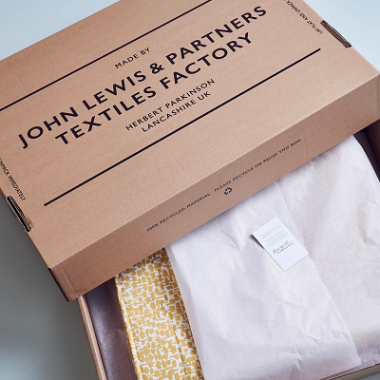
John Lewis is reopening its textiles factory 'Herbert Parkinson' in Lancashire, to make protective gowns for the NHS. Partners who usually sew bespoke blinds, curtains and pillows and duvets will this week begin making around 8,000 washable, clinical gowns for the Northumbria NHS Foundation Trust. The retailer is also donating over 20,000 metres of cotton fabric from its haberdashery departments and distribution centres to "For the Love of Scrubs" and 'Scrubs Glorious Scrubs', groups who now have thousands of members who are making scrubs for the NHS. The donated fabric is expected to make around 6,000 scrubs.
John Lewis has already created a wellbeing area for staff at NHS Nightingale London and Manchester. Now the retailer will begin donating 250 electrical products such as coffee machines, kettles and toasters to the staff rooms and wellbeing areas at 25 acute London hospitals, and the Nightingale Hospitals in Harrogate.
press release: John Lewis is making gowns for the NHS
Related news:
- El Corte Inglés starts producing masks
- Galeries Lafayette and BHV/Marais support Paris' hospitals
- M&S donates clothes to NHS
- Nordstrom is sewing face masks for health care workers
Walmart beauty exec Jody Pinson retires
Walmart beauty exec Jody Pinson retires

Under Pinson, Walmart in the last few years has aggressively shifted its beauty strategy, bringing on thousands of new brands and products in efforts to offer a more modern, differentiated and trend-driven assortment. Many of the retailer's beauty floors have been enhanced with better lighting and tech features. Influencers now participate in campaigns touting Walmart's beauty department.
At Walmart, Pinson was tasked with evolving the beauty department to better compete with online and specialty retailers like Ulta Beauty, at a time when drugstores and legacy mass beauty brands like Olay and Revlon were struggling to retain a young consumer base.
She was known for balancing exclusive offerings from legacy brands with trends like sheet masks sourced from South Korea, a broadened assortment of textured hair products and offerings that would be distinct to Walmart, such as an in-house clean beauty brand called Found.
Pinson worked at Walmart for 29 years, and it was in a sense the family business — her father at one point had worked for the retailer. She started as an hourly cashier at Sam's Club, and worked her way up to the management training program. As a buyer, she held roles across the stationery, sporting goods and pet care department before landing in beauty, where her gut instincts and keen understanding of the Walmart shopper aided her evolution of the department.
More news about Walmart:

