
Flexibility, risk management and innovation
IADS comments 27/04/2020
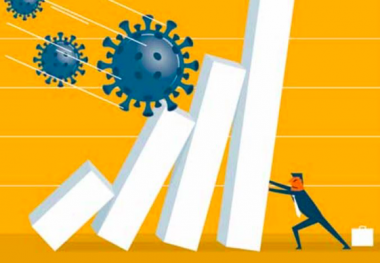
Retailers are by nature proactive. They anticipate the future, prepare to meet the ebb and flow of events, adapt to ups and downs. The current pandemic has caught us all by surprise: businesses, politicians, families, and indeed many scientists. The editor of one of the most important and respected medical journals of the world, The Lancet, has called the current situation "the biggest science policy failure in a generation".
This is particularly uncomfortable for retailers who have been reduced to reacting to the crisis. Closing stores, attempting to grow e-commerce, drastically cutting costs, managing orders and deliveries, and waiting for the moment when we can take back the control of our businesses and speak directly with customers.
Regaining control
The good news is that that moment is approaching, as different countries start planning the processes to end confinement. However, the good news is complicated by the fact that this process will be conducted under more or less strict conditions. We will have to adapt to customer needs in the face of a cycle of gradual openings and most probably of fresh restrictions. Furthermore, we will have to demonstrate huge creativity and innovation under circumstances of dire cash crisis.
For some, it will be too much to bear. The accelerator role of the pandemic, mentioned in previous notes, is likely to create an unsustainable burden for some companies. A recent New York Times article works through the list of US department stores, noting the comment of Marc Cohen, director of retail at Columbia University Business School, "the genre is toast… there are very few who are likely to survive".
Le Tote, which recently acquired Lord & Taylor, has fired its executive team and has suspended payments to vendors; Macy's and Bloomingdale's has extended payments to 120 days and the CEO is foregoing compensation, while the company valuation crashes; JC Penney has hired bankers, lawyers and consultants to explore restructuring; Neiman Marcus with debts of $4.8bn has stopped accepting new merchandise ad has furloughed most of its 14 000 employees while it explores bankruptcy filing; even Nordstrom has commented that it could be facing a "distressed" situation. In terms of liquidity, it has been estimated that Macy's has liquidity for four months, Kohl's six months, JC Penney seven months, and Nordstrom twelve months.
Getting fit
For those who survive, however, it represents a huge opportunity. Even in a crisis situation, several IADS member companies are reporting increases in market share. First, retailers have been pursuing the holy grail of greater efficiency through thin margins, lean inventory supported by just-in-time supply chains, and sometimes staffed by short-term contractors. As The Editorial Board of the Financial Times has put it, companies should shift from "just in time" to "just in case" to improve robustness, resilience and effectiveness. Ideally, they should aim for what Nassim Nicholas Taleb has called an "antifragile" approach (see book review of Antifragile on IADS website). It is forecast that, at least in the short term, investors will shun fragile business models and those that rely on a precarious workforce.
In the short term, according to Bloomberg, the complex role of Risk Management is gaining Boards' attention, beginning with crisis planning and remote work data privacy. But the role is complex and involves not only a range of skills able to deal with everything from supply chain to staffing. It also requires communication skills, financial skills, and the power to influence executives. As managers wrestle with how to restart businesses, they also need to consider how to prepare for inevitable future shocks.
Some of the priorities would include how to rebuild cash reserves. The buffer measures taken with banks after the last crisis have not been applied more widely to other businesses. Supply chain issues must lie at the centre of any future rethinking. Suppliers and retailers need to reassess their relations and build for the future in partnership. Finally, businesses will need to reinforce the network of people underlying their success. Two-way loyalty has become subsumed under the superficial appeal of a fragile gig economy.
These are some ways in which we can explore how to adapt to, and even thrive on disorder.
*Sources:
Anjana Ahuja, Richard Horton, Financial Times, 24 April 2020
Arianne Cohen, Risk Manager is Suddenly a Hot Job, Bloomberg, 20 April 2020
Melissa Fares, Department Stores offer Curbside Service, Business of Fashion, 24 April 2020
Financial Times Editorial Board, Companies should shift from 'just in time' to 'just in case', 22 April 2020
Sapna Maheshwari & Vanessa Friedman, The Death of the Department Store, New York Times, 21 April 2020
Nassim Nicholas Taleb, Antifragile, Random House, 2012*
Flexibility, risk management and innovation - pdf version
Related items:
- A year without spring 1: Pandemic resilience and trust
- A year without spring 2: The curse of efficiency and wilful blindness
Related posts

M&S and Sephora enter partnership to bring new beauty destination to the high street
M&S and Sephora enter partnership to bring new beauty destination to the high street
Heading 1
Heading 2
Heading 3
Heading 4
Heading 5
Heading 6
Lorem ipsum dolor sit amet, consectetur adipiscing elit, sed do eiusmod tempor incididunt ut labore et dolore magna aliqua. Ut enim ad minim veniam, quis nostrud exercitation ullamco laboris nisi ut aliquip ex ea commodo consequat. Duis aute irure dolor in reprehenderit in voluptate velit esse cillum dolore eu fugiat nulla pariatur.
Block quote
Ordered list
- Item 1
- Item 2
- Item 3
Unordered list
- Item A
- Item B
- Item C
Bold text
Emphasis
Superscript
Subscript

Selfridges profits soar as it calls for tax-free shopping return
Selfridges profits soar as it calls for tax-free shopping return
Heading 1
Heading 2
Heading 3
Heading 4
Heading 5
Heading 6
Lorem ipsum dolor sit amet, consectetur adipiscing elit, sed do eiusmod tempor incididunt ut labore et dolore magna aliqua. Ut enim ad minim veniam, quis nostrud exercitation ullamco laboris nisi ut aliquip ex ea commodo consequat. Duis aute irure dolor in reprehenderit in voluptate velit esse cillum dolore eu fugiat nulla pariatur.
Block quote
Ordered list
- Item 1
- Item 2
- Item 3
Unordered list
- Item A
- Item B
- Item C
Bold text
Emphasis
Superscript
Subscript