News

Richemont CEO talks refining digital with Alibaba
Richemont CEO talks refining digital with Alibaba
What: China has become a showcase for the Geneva-based group’s online offerings.
Why is it important: China is expected to account for half of the group sales by 2025.
China has become a showcase for the Geneva-based group’s online offerings. For the overall luxury sector, China is expected to account for half of global sales by 2025. Many of Richemont’s businesses have been the first to experiment with the newest digital engagement tools on Tmall Luxury Pavilion, Alibaba’s dedicated platform for high-end goods.
Alibaba is the preferred online shopping destination in China today. The collaboration between the two companies started with a joint venture, aiming to develop the Net-a-Porter and Mr Porter’s business in China. Net-a-Porter’s flagship store on Tmall Luxury Pavilion launched in September. The success has proven the value of the platform in extending the presence of Richemont’s businesses in China, including Cartier, Montblanc, Piaget, IWC Schaffhausen and Jaeger-LeCoultre. Nine houses were launched on the platform, which shows a strong willingness to grow quickly and scale the collaboration.
Chinese clients are sophisticated and increasingly demanding, which is why some of the best experiences today are first introduced in China. Clients there are very tech-savvy and open to new technologies, which allows Richemont to elevate the level of interaction. They are also younger than the rest of the world, which requires an adaptation of communication tools and approach to the specificities of a younger generation. Chinese consumers also have a strong appetite for new experiences. This curiosity and capability to adapt constantly raise the bar for all brands. Innovative features can be quickly developed and tested in the market, also at a large scale.
Richemont’s idea is also to make greater use of ecosystem resources within the Alibaba Business Operating System, which offers a fantastic opportunity to elevate omnichannel experiences. Also, TimeVallée (Richemont’s innovative multibrand watch retail concept open to all high-end watchmakers) has signed a partnership with Intime, Alibaba’s department store chain. This provides access to Intime’s physical and mobile shelf space and offers an experience to more consumers, both online and offline.
Working with Alibaba allows a time contraction. What usually takes twelve months to bring a new experience, now condensed to one month because of the intensity and the scale of the network that Alibaba offers. Partnering with Alibaba also revealed the immense possibilities beyond tier-one and tier-two cities. Relying on brick-and-mortar is limiting consumers’ access to brands, and the partnership helped confirm a good amount of interest and opportunities in tier-three and tier-four cities as well.
Richemont CEO Jérôme Lambert Talks Refining Digital with Alibaba

Walmart opens its marketplace to BigCommerce merchants
Walmart opens its marketplace to BigCommerce merchants
What: after announcing a partnership with Shopify last June, Walmart.com opens to more third-party sellers
Why is it important: this partnership signals a heavy push towards growing its online presence
After reporting a 79% growth in e-commerce sale in the past year, Walmart's partnership with BigCommerce signals a heavy push towards growing its online presence and crowd of third-party sellers. Walmart's head-on competition with Amazon means that it is increasingly making moves beyond brick-and-mortar retail.
Walmart also teamed up with Shopify last June to bring 1 200 third-party sellers to its marketplace by the end of the year. Shopify merchants won't pay to list their products on Walmart.com, but once they make a sale, the retailer will charge a "referral fee."
While Walmart doesn't outline how much it makes from its other business ventures, Amazon's net sales through third-party commission, fulfilment and shipping fees nearly doubled since 2018. Amazon's third-party seller services account for 20.8% or USD 80.5 billion of its net sales in the fiscal year 2020.
Walmart opens its marketplace to BigCommerce merchants
Intime grows beauty business thanks to digital marketing
Intime grows beauty business thanks to digital marketing
What: major beauty brands increased their 2020 turnover thanks to digital marketing innovations.
Why it is important: La Mer realised 50% of its 2020 turnover thanks to live streaming, leading to 200% increase.
La Mer, Lancome and Estée Lauder each surpassed USD 15,5 million turnover at Ali Baba’s own Intime department store, in spite of store closures. Intime, with its own e-commerce app Miaojie, encouraged its sales staff to become livestreamers, recommending and selling products via platforms. La Mer increased sales by 200% thanks to this strategy.
Beauty Brands See 2020 Sales Grow at Alibaba’s ‘New Retail’ Department Stores
Kohl's turns to Eddie Bauer as outdoor sales surge
Kohl's turns to Eddie Bauer as outdoor sales surge
What: The department store announced a plan to grow its activewear sales from 20% of its business to at least 30%
Why it is important: Kohl’s aims to become the retailer of choice for active and casual lifestyle
Kohl's on Monday announced a tie-up with Eddie Bauer to launch this coming fall.
An assortment of the outdoor brand's seasonal gear and year-round products for women, men and kids will be sold "in as many as 500 stores" and online, according to a company press release.
The partnership furthers the retailer's strategy, announced last year, to grow activewear from 20% to at least 30% of its sales, "which includes driving growth in the outdoor category," per the release.
Kohl's turns to Eddie Bauer as outdoor sales surge
Kohls Announces Partnership with Eddie Bauer 2021
Nordstrom leaves one office building
Nordstrom leaves one office building
What: the reduction of office spaces
Why it is important: with the pandemic and the emergence of remote working, Nordstrom sees opportunities to rethink its office work post-pandemic
The department store will leave the offices on Seventh Avenue in Seattle, reducing office space to two downtown Seattle buildings. “As we think about returning to our corporate offices later this year, we find ourselves with the rare opportunity to reimagine how these teams will work and collaborate in the future,” the company said. “While we will not be a fully remote headquarters, it’s clear remote work can and should continue to play a part in how we operate […]”
Working from home is one of the trend that was forced to emerge during the pandemic and that is here to stay; now workers, even in retail, need to adapt to this new reality.
Nordstrom to move out of one downtown Seattle office tower
Related item:
M&S issues sustainable standards for denim
M&S issues sustainable standards for denim
What: new sustainability standards for denim
Why is it important: sustainability is an essential part of the business for retailers, in terms of processes and in terms of merchandise. By taking a new step toward more sustainability, M&S commits to more transparency and to offer more sustainable solutions for customers, across a timeless and essential category: denim
The three key aspects of Marks & Spencer new sustainability standards are:
- Sourcing: 100% of the cotton used is always responsibly sourced, through the Better Cotton Initiative for the major part
- Washing: thanks to a partnership with Jeanologia -the leader in sustainable finishing technologies– M&S jeans are now made with 86% less water compared to the industry standard
- Dying: the switch toward indigo dyes with cleaner alternatives that are kinder the planet and require less water and chemicals to produce
M&S CLOTHING SETS NEW SUSTAINABLITY STANDARDS FOR DENIM
A return to the future of homeworking
A return to the future of homeworking
What: Working from home is not new.
Why is it important: We need to look closely and imaginatively at the advantages and disadvantages of remote work, and we can use some lessons from history to do so.
Contrary to first reactions as companies around the world went into lockdown and instituted remote working schemes, working from home used to be the norm until the early 20th century in today’s industrial countries. The Economist looks at remote working from a historical perspective. In spite of the abuses and hardships involved, it also allowed workers control over time.
The beginning of factories (and offices) around the 1800s increased the time spent at work and crucially allowed employers to control workers’ time. On the other hand, the development of the factory system also allowed workers to join together in trade unions to demand higher wages for their higher productivity. Wages were some 10-20% higher in factories.
How permanent is the shift to remote working from home today? And will it have the same far-reaching consequences as the shift away from home had in the process of industrialisation?
Home-working had its advantages
Brexit forces Debenhams to shut Irish webstore
Brexit forces Debenhams to shut Irish webstore
What: a severe consequence of the recent Brexit in UK
Why it is important: amid the current health crisis, UK is also experiencing a significant economic change due to the recent Brexit and its exit from the European Union trade agreements
UK department store chain Debenhams might be bankrupt, its website is still operating in the wait of news of a possible acquisition and save. Yet the British retailer has been forced to stop taking online orders coming from the Republic of Ireland due to complications linked to Brexit. The Irish webstore is temporarily closed over the Brexit ‘rule of origin’ clause. The news comes in the same week that several European retailers said they could no longer ship to the UK due to similar issues.
As early as 9 December 2020 John Lewis & Partners decided to close its international business and put a stop to international online orders to avoid the increase in shipment costs due to the new Brexit regulations.
Debenhams shuts Irish webstore on Brexit issues
Related item:
K11 opens a new mall in Wuhan
K11 opens a new mall in Wuhan
What: the first large-scale commercial complex opening in Wuhan since Covid-19.
Why it is important: K11 is introducing 35% of new brands in its art-meets-entertainment-meets-retail concept, and enlarges its footprint in China, with a target of 38 new locations within 2025.
K11 is a concept that mixes art with retail and entertainment. Store zoning often mixes F&B with stores in order to create modern malls where it is easy, and fun, to spend time. K11 is opening a new location in Wuhan, on 247,000 square metres (of which 86,000 will be dedicated to retail). They will be introducing 30 new brands, such as Marionnaud (perfumes), Nars (cosmetics), Atelier Cologne. This mall is the first of 2 units projects, the second one being opened next year.
K11 Concepts unveils K11 Art Mall II in Wuhan
Walmart to create fintech
Walmart to create fintech
What: Walmart is launching a fintech start-up dedicated to designing innovative and affordable financial solutions.
Why it is important: Walmart boasts a large customers base with a strong level of loyalty, which could help to a massive adoption of the solutions they could provide them
Walmart teamed up with a fintech investment firm to create a strategic partnership on payment solutions (reminding the strategy of Falabella for the latest years). The goal is to deliver tech-driven financial experiences both to Walmart employees and customers, with a focus on lowering the costs of the service.
Walmart to create fintech start-up
Frasers Group buys multi-brand store Psyche
Frasers Group buys multi-brand store Psyche
What: another acquisition for the UK retail group
Why it is important: Frasers Group has been making many purchases across the retail scene lately, extending its footprints both in UK and worldwide.
The purchase of Psyche include a 3700 sqm multi-brand store and a webstore, featuring high-end brands such as Barbour, Belstaff and Boss.
The operations have been affected by lockdown-driven closures, and the sale to Frasers Group helps to face the huge pressure the sector is under.
Former Psyche boss Steve Cochrane, who run the business for 38 years, will become CEO of the store. He said it will carry out an appraisal over the next six to 12 months to decide "where Psyche fits into its retail offer. We sit between Flannels and House of Fraser with the brands we sell. Hopefully there will be a space for us."
Read IADS exclusive case study on Frasers Group to learn more on the business and on the group’s ambition.
Mike Ashley's Frasers Group buys Psyche
Frasers buys Psyche, founder to stay at helm
Related items:
- IADS Exclusive Business Case: Frasers Group
- Frasers in talks to buy Debenhams
- Frasers increases stake in Mulberry
- Frasers Group buys stake in Hugo Boss
Local warehouses for Walmart
Local warehouses for Walmart
What: Walmart is setting up small, local, robot-staffed warehouses.
Why it is important: Fulfilment is a real competitive advantage. Best practices include speed and convenience. Could department stores use stores for fulfilment?
Walmart is planning to set up small local warehouses staffed with robots to handle surging online orders. The warehouses will be in or close to existing stores and will use robots to pick boxed items. More complex items will be picked by humans. The orders can then be picked up at the store by customers or by delivery workers.
Walmart also plans to experiment with automated pick-up systems that would present the goods at a hatch once a customer scanned a code on their smartphone. This effectively turns stores into micro-fulfilment centres which will cut the cost of the “last mile” delivery, the most expensive part of fulfilment. The move is seen as part of Walmart’s competition with Amazon which itself introduced a chain of grocery stores last year esigned to work as micro-fulfilment centres.
Walmart Presses Into Stores as Fulfillment Center Strategy
[
Votre navigateur ne supporte pas la balise vidéo.
r6583_17_walmart_turns_to_robot-started_warehouses_to_handle_online_orders.mp4
https://www.iads.org/files/pmedia/public/
https://www.iads.org/files/pmedia/public/

Macy’s opens second “Market” concept
Macy’s opens second “Market” concept
What: a second location for Macy’s newest concept “Market by Macy’s” launched last year.
Why it is important: department stores have been declining and in need of reinvention, even before the covid crisis. Last year Macy’s launched a new model, smaller than traditional spaces, with a major focus on community -a trend that has been strengthened by the pandemic
The Market by Macy’s is a community-centric, flexible retail store format with community-driven events. Following the opening of a first outpost in Texas in February 2020, Macy’s said it has “maximized learnings from the initial Market by Macy’s national debut to create a scalable store format” for the second outpost, also located in Texas. The store features items across fashion, beauty, home and gifts; it is a selected assortment of what’s available at full-line Macy’s stores.
Since the pandemic, big retailers such as department stores have been suffering from the loss of clients (Macy's is actually reducing is department store network), while the demand for community and local retail has been increasing (read about it in our exclusive article: The Rebirth of Local Retail) and retailers have been rethinking their models in order to cater to their local customers.
Macy’s is not the first retailer to develop local concepts: Nordstrom launched its Nordstrom Local concept in 2017 and continues to expand it; not to mention Neighborhood Goods, a “new type of department store” that offer a curated ever-rotating assortment based on the local-community needs Sports retailers Nike and Foot Locker both recently launched community-centric concept: Nike Unite and Foot Locker Community Power Store.
Macy’s Latest Format Gets a Second Site
Related items:
- IADS Exclusive - The rebirth of local retail
- IADS White Paper: “Global pandemic, local department stores”
- Macy’s reducing its network by 45 stores
Harrods owner gain from the Tiffany’s sale
Harrods owner gain from the Tiffany’s sale
What: a major gain for Qatar Investment Authority.
Why it is important: the owner of luxury department store Harrods sold its shares in Tiffany & Co as part of LVMH’s acquisition of the U.S. jeweller.
QIA had acquired a 5.2% stake in Tiffany & Co in late 2011 and had since then increased its stake up to 9.3%. QIA made a gain of around USD 892 million, as part of LVMH’s $15.8 billion acquisition of Tiffany & Co. “It represents a very good return for a listed equity in any environment,” said Diego López, Global SWF managing director.
Harrods Owner Nets $892 Million Gain From Tiffany & Co Sale
Hudson’s Bay Co. could take Saks.com public
Hudson’s Bay Co. could take Saks.com public
What: the possible IPO of Saks Fifth Avenue digital operation
Why it is important: the IPO would establish Saks.com and the Saks Fifth Avenue bricks-and-mortar stores as separate companies.
The rumour of HBC taking Saks.com public comes out just days after luxury online retail Mytheresa went public and saw its stock price quickly soar. The manoeuvre would make the physical operations and the digital operations two freestanding companies, which would be a first in the retail industry.
Saks relaunched its webstore last October, offering a more curated offer and a user-friendly navigation based on an enhanced data gathering process.
Hudson’s Bay Co. Planning to Take Saks.com Public
Central opens small store on historic site
Central opens small store on historic site
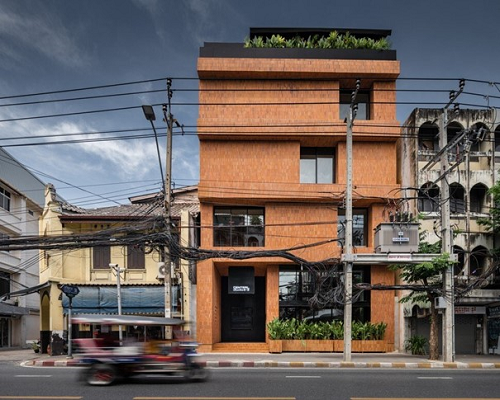
What: a tiny shophouse opened on the site of the original.
Why is it important: the converted space pays homage to The roots of the Chirathivat family, owners of Central Group, offering a glimpse of Bangkok’s past
Last October, Central Group opened the doors to a converted five-storey shophouse on the site of the original Charoen Krung shop. Dubbed Central: The Original Store, the building houses a concept store that sells vintage magazines and memorabilia, as well as a live-music venue and a cafe. The top-floor restaurant highlights forgotten recipes from mid-20th-century Bangkok, delving into cookery books of the 1940s and 1950s.
Learn more about the Chirathivat family and the origins of Central group below:
Thai-Chinese family’s rise from shophouse to conglomerate is a slice of Bangkok history
Bloomingdale’s launches small format store
Bloomingdale’s launches small format store
What: another department store launching a small format concept
Why it is important: department stores are at a pivotal time where they need to reinvent themselves to cope with the crisis and stay relevant in the future. Many retailers are now betting on smaller and more local store format to reach the local clientele
Bloomingdale’s is reportedly launching a small-store concept which will be called "Bloomie’s," the long-time nickname of the retailer. The 2040sqm store should open near Washington DC in fall 2021, with the goal to support the full-line Bloomingdale’s locations in the area by providing consumers with an alternative destination to shop, make returns or pick up packages ordered online. The Bloomie’s concept is part of parent’s Macy’s Inc three-year "Polaris" strategy which include closing stores to open new off-mall formats. Bloomie’s is likely to carry a limited assortment of some of Bloomingdale’s most successful categories such as women’s fashion, beauty and accessories.
Macy’s last year launch a small format store dubbed Market at Macy’s, with a second location opened earlier this month. This is a community-centric, flexible retail store format with community-driven events.
Seattle-based chain Nordstrom was one of the first to enter that segment when it launched its Nordstrom Local concept in 2017. The Local hubs are much smaller than regular Nordstrom locations and serve as supportive units for the full-line stores. There are no merchandise instore, but it features different services such as custom alterations, online ordering for in-store pick-up and easy drop-off returns.
With the pandemic, retailers, and especially department stores, realised how local retail and communities are important and essential to keep a business running. The theme of local retail was explored in our IADS Exclusive piece: "The rebirth of local retail" and in IADS White Paper: "Global pandemic, local department stores".
Bloomingdale’s Sets Bloomie’s Strategy
Related items:
- IADS Exclusive - The rebirth of local retail
- IADS White Paper: "Global pandemic, local department stores"
- Macy’s opens second "Market" concept
- Nordstrom expands its Local business in California
Nordstrom reports Holiday sales decline
Nordstrom reports Holiday sales decline
What: a net sales decline for the nine-week holiday period ended January 2, 2021, compared with the nine weeks ended January 4, 2020.
Why it is important: Sales decline 22% year-on-year, while digital sales grew 23%
Combined November and December sales were aligned with the company’s expectations for a decrease in the fourth quarter. As a result of its holiday performance, Nordstrom continues to expect to deliver positive earnings before interest and taxes (EBIT) and operating cash flow for the fourth quarter. The company’s full-year 2020 financial results should be released on March 2, 2021.
Nordstrom Reports Holiday Sales
President and CEO of Walmart U.S. e-commerce to step down
President and CEO of Walmart U.S. e-commerce to step down
What: the departure of the head of Walmart e-commerce.
Why it is important: Marc Lore is the founder of Jet.com that was acquired by Walmart in 2016. He became President and CEO of Walmart U.S. e-commerce when that acquisition was made, but the retailer shut down Jet.com last year.
Walmart has benefited from Jet.com to develop its digital infrastructure, thanks also to Lore’s expertise. Lore has also helped to drive deal decisions to snap up other e-commerce retailers including Bonobos and Modcloth (which Walmart sold in 2019), and strategic moves to leverage its physical stores to expand customer services.
Walmart chief executive officer Doug McMillon said: “the Jet acquisition was critical to jump-starting the progress we have made the last few years, […]our walmart.com nonfood e-commerce growth accelerated after the arrival of Marc and the [Jet team].”
Walmart’s Marc Lore to Step Down From Retailer – WWD
Related item:
M&S extends activewear line-up
M&S extends activewear line-up
What: an extension of an existing activewear line to cater to men and children
Why it is important: casualwear has seen an acceleration during 2020 due to the many lockdowns and stay-at-home regulations worldwide. The UK retailer has therefore decided to expand of its activewear label Goodmove
The brand debuted a year ago for women only, and is now launching for men and children. The initial launch of the label suffered some criticism at the beginning, but it turned out to be a success for M&S, giving the circumstances in 2020.
The retailer sees the growth of its label as part of its “bigger focus on casualwear” in the new normal. Products have been developed to suit the new consuming habits and include a range for workouts and everyday activities. According to a survey conducted by the company, 80% of M&S customers say they want to get fitter in 2021, which will also serve the purpose of the expansion.
The menswear line is the more sustainable to date, with more than 98% of products being made from sustainable materials.
M&S EXPANDS POPULAR ACTIVEWEAR RANGE GOODMOVE TO INCLUDE MENSWEAR AND KIDSWEAR
Debenhams closes stores, including Oxford Street flagship
Debenhams closes stores, including Oxford Street flagship
What: more store closure for the UK bankrupt department store chain.
Why it is important: while Debenhams is still hoping for a rescue deal, the new wave of UK lockdowns has put even more pressure on the retailer who has no choice but to close stores
The department store entered in liquidation at the end of 2020, and has been forced to close physical stores as a national lockdown was renewed. In this context, Debenhams could not secure lease extensions and has had no choice than to never reopen some stores, even after the lockdowns. Six stores are concerned by the decision, including the flagship located on London’ Oxford Street, leading to a possible redundancy of more than 300 people.
While the UK is still under lockdown, Debenhams’ closing sales continue online.
Update on winding-down process; closing down sale continues online
Related items:
Amazon buys planes to boost airfreight capacity
Amazon buys planes to boost airfreight capacity
What: the online giant buys its own air fleet to deal with deliveries
Why it is important: in a time where many sectors, including retail and travels, have been severely hit by the crisis, online retailers are soaring
Amazon is buying 11 used Boeing 767-300 jets to support its rapidly expanding air cargo operation. This is the first time the pure player is buying planes, instead of leasing them. It is a response to the major demand for cargo carriers and fast deliveries that increased during the pandemic.
Amazon had already been growing its air cargo fleet through leases in order to support fast delivery, especially Prime services. Such services became even more popular during the pandemic.
Amazon will be buying jets from Delta and WestJet, which have also suffered the lack of travels this past year and are trying to cut costs.
Amazon Buys First Aircraft From Delta And WestJet In Bid To Speed Up Deliveries
A makeover for Galeria Inno department store
A makeover for Galeria Inno department store
What: the redesign of the Belgium department store chain
Why it is important: The renovation is part of a strategic relaunch programme, in which the retailer wants to focus more on a premium positioning
The Belgian division of Galeria Karstadt Kaufhof has planned to renew its 16 stores across Belgium in order to focus more on a premium positioning. The retailer will also open an online marketplace this year and plans to partner with new and key players, especially in the food sector. The change should take place over the next three years.
A first store, in Schoten near Antwerp, has already been remodeled -read the article below for the details.
Galeria Inno department stores get extreme makeover
Neiman Marcus invests supply chain, new corporate appointments
Neiman Marcus invests supply chain, new corporate appointments
What: new investment to reinforce the management team and the supply chain
Why it is important: the department store entered and exited Chapter 11 last year, and is now making investments to better respond to the crisis. The investments will reshape the Neiman Marcus and Bergdorf Goodman customer experience.
To support multi-brand luxury online business, Neiman Marcus Group (NMG) will invest USD 85 million gross in supply chain innovation, specifically systems and fulfilment centres, by implementing a new order management system, a new warehouse system, and by investing in the company's Pinnacle Park distribution facility. "We are transforming NMG's core operating capability to support our growth as the luxury destination of choice for customers," said Willis Weirich, Executive Vice President, Group Operations & Chief Supply Chain Officer. "As the demand for luxury products continues to grow, so does our supply chain network and infrastructure. These investments ensure that NMG can quickly deliver the luxury products our customers want."
NMG is also making changes in its management teams. After reshuffling its board last December, it has appointed Bob Kupbens Executive Vice President, Chief Product and Technology Officer. He acquired a strong background in elevating customer experiences through multiple senior roles overseeing eCommerce, digital products and technology.
Another appointment is the one of Paolo Riva at the newly created position of General Manager, Brand Partnerships & Merchandising in the Neiman Marcus brand. He has an extensive brand and P&L experience in luxury senior global roles.
Investing in the supply chain is the latest move done by department stores to respond to the new demands and cope with the crisis as digital retail has been skyrocketed since the beginning of the pandemic. In Chile, Falabella will invest USD 1.085 billion to develop information technology and logistics over the next few years; while El Corte Inglés in Spain is also investing and reinforcing its logistical infrastructures to become more competitive.
Neiman Marcus Group Reshapes the Luxury Customer Experience with [...]