
IADS Exclusive: NRF Big Show 2026 - IADS report
The 2026 edition of the NRF Big Show took place from 11 to 13 January 2026 (a day shorter than the previous editions). It was, again, a record-breaking show, with more than 41,000 visitors from 100 countries and 564 speakers. Notably, this was the largest Expo ever, with 33,500 sqm dedicated to 1,025 exhibitors. This constant expansion might explain why the NRF is now a global fair, with an Asian edition (Singapore, launched 2 years ago), a European edition (Paris, launched last September), and, soon, a Middle East edition in Riyadh (planned for March 2027).
The recent changes in U.S. international policy did not deter foreigners from coming: more than a third of visitors were non-US, with the largest foreign delegation from Brazil. The total number of foreigners has decreased, however, compared to the previous editions.
As usual, there was a strong sense of excitement, fuelled by good overall retail sales and a good holiday season: according to the CNBC/NRF retail monitor, the strong December numbers brought total 2025 retail sales to an increase of 5.08% over 2024.
One could wonder however if the NRF Big Show still addresses retailers: while the event opened with the chairmen of BJ’s Wholesale Club and DICK’s Sporting Goods, one of the most commented keynote was the one gathering the CEO of Walmart, John Furner, with the CEO of Google and Alphabet, Sundar Pichai, and in the Expo, “agentic AI” was on everyone’s lips. Also, Microsoft’s and Google’s booths were spectacularly larger than their spaces in previous editions. While, as usual, the energy was palpable during the event, at least in the first two days, there was also a sense that many retailers based in the city did not show up due to a lack of time, or simply because the real retail conversations were increasingly taking place in side events. It felt as though tech and retail were no longer moving hand in hand, but were increasingly taking parallel trajectories, with tech eating retail, best illustrated by the large ChatGPT advertisement atop an iconic small store in the Village.
This focus on tech, for sure, continues to leave room for other global fairs interested in the “traditional” side of retail, such as Euroshop.
What follows is a subjective selection of conferences, news, and stores that we believe could be interesting to our members, as we try to cut through the noise and self-promotion. All conferences include a short recap of our 3 key takeaways.
Conferences recaps
A year after being appointed, REI’s CEO on driving growth, community, and innovation
Since taking the helm of REI —a 87-year-old co-op with nearly 25 million members—in February 2025, Laughton has been drawn to the company’s mission-driven culture and the opportunity to leverage its distinctive assets for future growth. The co-op structure, free from investor or equity-owner pressures, allows REI to make decisions centred on long-term health and member value rather than short-term financial returns.

Upon joining, Laughton embarked on an extensive listening tour, engaging with employees, store teams, distribution centres, and vendor partners. She solicited feedback from 15,000 employees, revealing a strong desire to maintain REI’s culture, mission, and values, while also recognising that the culture must evolve and the company must sharpen its strategic focus for the future.
This process led to the development of “Peak 28, Ascending Together,” a three-year strategic plan built around four pillars:
- Delivering an authentic, culturally relevant assortment;
- Elevating the service experience to foster emotional connections in an increasingly digital world;
- Reinventing the membership programme to engage the co-op’s vast member base;
- Evolving the company’s culture to be more connected, focused, and trailblazing.
Laughton underscored that cultural evolution is foundational—no strategy can succeed without it.
Interestingly, and echoing IADS’ research on DEI (link to our White Paper), Laughton’s first months were marked by controversy over REI’s endorsement of a political appointee. She responded by retracting the endorsement and issuing a public apology. While Laughton highlighted the importance of transparency and vulnerability in leadership, she also reaffirmed REI’s steadfast commitment to diversity, inclusion, and access to the outdoors for all, even amid external pressures, showing that DEI remains a tightrope to walk.
Signature initiatives like “Opt Outside,” which encourages employees and consumers to spend time outdoors, remain central to REI’s identity. Laughton indicated that while the company will continue to support such traditions, it is also focused on authentic, mission-aligned impact work, particularly around climate change, access to public lands, and environmental stewardship. The Cooperative Action Network, which mobilises REI’s members on advocacy issues, exemplifies the co-op’s ability to drive large-scale engagement, with over 600,000 participants sending more than 2 million messages to elected officials.
A key differentiator for REI is its “Green Vest” expertise—15,000 passionate employees across nearly 200 stores who serve as trusted guides for outdoor enthusiasts. Laughton is focused on extending this expertise beyond physical stores by integrating Green Vest testimonials and videos into digital channels and leveraging this knowledge in marketing campaigns. The goal is to create emotional connections and community, positioning stores as hubs for outdoor lovers and reinforcing REI’s brand in an era where transactions are increasingly digital and commoditised.
On the role of AI-driven commerce, Laughton acknowledged that while AI will touch every aspect of retail, technology alone will not be the differentiator. Instead, human connection and trust—embodied by the Green Vests—will set REI apart. She recognised the dual challenge and opportunity of AI-driven disintermediation, emphasising the need to balance participation in external AI-driven platforms with the preservation of unique experiences on REI’s own channels. Laughton stressed the importance of clarity about which content and expertise remain exclusive to REI and which can be shared more broadly.
Difficult decisions have been necessary to ensure the co-op’s long-term financial health, including restructuring the travel and outdoor experiences business. The recent partnership with Intrepid Travel reflects a shift toward a more financially sustainable model and offers new benefits to members. Laughton is committed to further evolving the membership program, focusing on emotional resonance and member value, as well as the co-op's financial viability.
IADS’ takeaways:
1. Digitising human expertise is the antidote to commoditisation. In an era when digital transactions are becoming the norm, REI’s primary defence is its "Green Vest" associates. For retailers, the lesson is that "human touch" shouldn't be confined to offline interactions; it must be content-engineered into the digital journey to build trust and community that algorithms cannot replicate.
2. Selective openness in the age of AI Laughton presents a nuanced approach to AI-driven commerce: recognising that while retailers must participate in external AI platforms (to be found), they must also aggressively protect their "owned" experience. Retailers need to clearly define what content and data they are willing to share broadly with AI agents and what high-value expertise must remain exclusive to their own channels to remain a destination, not just a data source for a bot.
3. Purpose-driven strategy requires financial realism and vulnerability. Even mission-driven co-ops are not immune to market realities or cultural backlash. Laughton’s restructuring of the travel business demonstrates that retailers must sometimes outsource operations to save the mission.
Building the store of tomorrow: the FairPrice Group’s approach
Established in 1973 through a tripartite collaboration between the Singaporean government, the labour movement, and business, FairPrice was designed as a co-op to moderate the cost of living and ensure daily essentials remained accessible and affordable for Singaporeans. This foundational mission remains central, even as the group has evolved into a diversified omnichannel powerhouse, commanding 60% of Singapore’s grocery market and serving one million customers daily in a country of six million.
Operating in a small yet highly competitive market, FairPrice faces formidable rivals, including Amazon, Alibaba, Lazada, Shopee, and Grab. The group’s strategy for maintaining and extending its leadership is anchored in making life “easy”—easy on the wallet, easy on the experience, and easy on the planet. This philosophy drives relentless process improvement, investment in omnichannel technology, and a commitment to sustainability. A major pillar of FairPrice’s strategy is also the development of its private label business, now the largest CPG company in Singapore. The private label division operates as a standalone business, reporting directly to the CEO rather than the chief merchant, and is staffed with talent recruited from leading CPG firms. This structure enables FairPrice to compete head-to-head with established brands, offering 3,500 private-label products across 70 categories and leading in 28 of them. The company has a rigorous approach: it advances products only if they win blind taste tests and launches them at a 15% discount to market leaders.
E-commerce, while initially dilutive to the P&L, is considered non-negotiable. Omnichannel behaviour is now the norm, with 70% of customers engaging across both online and offline channels, and digital baskets are five times larger than physical ones. By leveraging the FairPrice app in-store, the company has dramatically reduced e-commerce acquisition costs by leveraging natural store traffic to drive digital adoption. Integration with Singapore’s national ID system enables segmentation down to the individual, powering increasingly sophisticated personalisation and predictive analytics.
AI is at the heart of FairPrice’s next phase. Tools like Grocer Genie and Vision AI are deployed to support store managers and associates, providing real-time task management, workforce optimisation, and actionable insights across inventory, customer service, and more. The “Store of Tomorrow” concept, piloted in Singapore, features smart trolleys with personalised shopping assistants, electronic shelf labels, geofenced promotions, and vision-powered cameras that monitor stock, detect anomalies, and even flag unusual customer behaviour such as pilferage. These innovations have yielded measurable results, including a 17% increase in basket size and significant improvements in operational efficiency and customer satisfaction.
FairPrice’s approach to AI is pragmatic and inclusive, focusing on upskilling existing staff rather than replacing them, and using technology as a recruiting advantage in a tight labour market.
IADS’ Takeaways:
1. Structural independence is key for private label dominance. FairPrice treats its private label not as a procurement sub-function, but as a standalone CPG business that reports directly to the CEO. The lesson for retailers is to organise and resource private labels like independent brands rather than just low-cost alternatives.
2. Physical stores are the ultimate digital acquisition tool. While e-commerce can dilute margins, FairPrice offsets high Customer Acquisition Costs (CAC) by using its physical stores to drive app adoption. This proves that the physical store’s role is evolving into a cost-efficient recruitment centre for the digital ecosystem.
3. AI must deliver measurable "basket lift," not just efficiency. FairPrice’s investment in AI moves beyond backend efficiency to direct revenue generation. Their "Store of Tomorrow" pilots—utilising smart trolleys and personalised shopping assistants—validate the business case for in-store tech: it shouldn't just reduce labour costs; it must also visibly increase the average transaction value.
Lessons from a winning value-fashion retailer
Kiabi’s focus (a French value-fashion retailer offering affordable clothing and accessories for the whole family) is shifting toward becoming a service-oriented organisation, developing new brands, and launching a range of initiatives to support and engage customers in more meaningful ways.
Despite the intense competition and the rise of disruptive players like Shein, the company maintains a disciplined focus on its own vision and customer base, rather than being drawn into public debates or reactive strategies. In France, where demographics are challenging (there are 600,000 births annually and Kiabi addresses two-thirds of them), the imperative is to continuously support and accompany families, prioritising their needs and experiences over direct confrontation with competitors.
Innovation is a constant, with testing and experimentation both in stores and at headquarters. The company is leveraging its large workforce and retail footprint to drive service excellence, recognising that the future of retail lies in the quality of in-store experiences and the ability to build lasting relationships with customers:
- Kiabi’s service strategy is exemplified by the launch of the En Famille Plus Additional services include second-hand collection for toys, childcare products, and clothing, all designed to make life easier for families.
- The rise of second-hand business models is particularly notable, with 21% annual growth, and Kiabi is actively developing new services around resale, collection, and community engagement.
- Kiabi has also built a large and active community, growing from 100,000 to 300,000 members in just eighteen months, and has empowered these ambassadors to promote the brand and earn commissions through referrals.
The approach to AI and digital transformation is pragmatic and measured. While there is recognition of the hype and promise surrounding AI, there is also a healthy scepticism. The focus is on real-world impact and tangible results, rather than being swept up in the latest trends.
While the company is exploring new platforms like TikTok, it remains cautious, weighing the logistical complexity and potential return on investment before committing fully. The focus remains on identifying weak signals and emerging needs, particularly in mental health, to ensure the company continues to support families in relevant and impactful ways.
IADS’ Takeaways:
- Service-first strategy as a defence against ultra-fast fashion. Rather than trying to outpace disruptors like Shein on speed or price alone, Kiabi is pivoting to become a "service-oriented" ecosystem. This shifts the value proposition from a transactional commodity (cheap clothes) to an indispensable family partner, creating a moat.
- Community as a sales channel. Kiabi has successfully industrialised word-of-mouth by empowering customers to act as ambassadors who earn commissions. This, combined with growth in second-hand business, demonstrates that circularity and community engagement are now significant growth engines, not just CSR side projects.
- Pragmatism over platform hype. Kiabi offers a counter-narrative to the "innovate or die" frenzy. Instead of chasing every tech trend, they focus on "weak signals" within their specific demographic (such as mental health needs). The lesson is to prioritise deep relevance to the core customer’s reality over the logistical complexity of adopting every new platform.
Operating fashion in the U.S. vs. Europe: the great divide
Grunberg, North America President of Tory Burch and with experience at Célio and Lacoste, provided a nuanced analysis of the transatlantic differences in retail culture and the evolving priorities for growth in the American market. She emphasised that European brands often underestimate the complexity and diversity of the U.S. market, mistakenly believing that success in their home country will translate directly to the American context. Superficial familiarity with the U.S.—a few trips to Disney or New York—does not equate to a deep understanding of American consumers, distribution networks, or retail operations.
She highlighted the necessity for brands to fundamentally rethink their strategies when entering the U.S., rather than simply copying what worked in France or Italy. Product-market fit, marketing narratives, and distribution models must all be adapted to the unique characteristics of the American landscape, which is defined by its vast size, regional diversity, and complex mix of wholesale and direct channels. Success requires a willingness to “tweak and adapt” rather than overhaul, but also a recognition that what resonates with American consumers may differ significantly from what resonates with European audiences.
Regarding growth, Grunberg observed that, after years of heavy investment in digital and omnichannel infrastructure, the U.S. market is now at a crossroads. While digital development remains crucial, the operational costs of physical expansion—driven by rising labour and real estate costs—are increasingly prohibitive. Nevertheless, the most successful brands are accelerating their physical presence, including digital-native brands that are now opening stores and outlets to complement their online business. In the U.S., outlet stores are a particularly important channel, often more so than full-price retail.
When it comes to in-store experience, she was candid in his assessment that, with few exceptions, the U.S. market is not especially innovative compared to Europe. Most stores, from entry-level to luxury, struggle to deliver the level of service and technological integration that would set them apart, and she sees little breakthrough innovation in the mainstream U.S. retail landscape.
IADS’ Takeaways:
- Avoid the "tourist trap" strategy. Grunberg warns against the dangerous assumption that superficial familiarity with the US (through travel or the media) equates to market understanding. Success requires a specific "product-market fit" strategy that acknowledges the U.S. not as a monolith, but as a diverse, complex landscape.
- Outlets are a primary channel, not just clearance. Unlike in many European markets, where outlets are often secondary clearance mechanisms, Grunberg highlights that in the U.S., the outlet channel is often more important than full-price retail. Retailers entering the U.S. must treat outlets as a strategic growth engine. Furthermore, despite rising labour and real estate costs, physical expansion remains a necessity, with even digital-native brands aggressively opening brick-and-mortar locations to drive growth.
- The "service gap" is a competitive opportunity. Contrary to the perception that the U.S. is the pinnacle of retail, Grunberg argues that the mainstream U.S. market is "not especially innovative" in terms of in-store experience and service compared to Europe. Most U.S. stores struggle with high-touch service and tech integration.
Is there too much enthusiasm for AI?
Both Julia and Malfoy expressed scepticism about the proliferation of AI solutions: while there is significant investment and technical achievement—such as robots capable of sorting socks—the practical utility and business value of many innovations remain unclear. The market is saturated with AI-branded solutions that often lack clear differentiation or tangible impact. Just like Del Rey in another conference, they highlighted the challenge of distinguishing between genuine advances and superficial applications, with Julia noting that the term “AI” is now attached to everything from climate solutions to consumer electronics, making it difficult to discern real value.
He also emphasised that, despite the hype, the most meaningful progress in AI is occurring in highly specialised, domain-specific applications. While general-purpose generative AI has captured attention, it is the emergence of smaller, more focused agents—descendants of concepts dating back to the 1980s—that are beginning to deliver real results. These specialised agents, orchestrated to work together, are more efficient and impactful than large, generic models, especially when tailored to specific business needs.
The conversation turned to the importance of use cases and the difficult need to identify concrete, high-value applications for AI, rather than deploy technology for its own sake. One of the most significant challenges identified is the need to educate teams about what AI is—and what it is not:
- There is widespread anxiety among white-collar workers about being replaced by AI, particularly in intellectual professions. Julia stressed the importance of framing AI as a tool for cooperation, not competition, and of promoting the concept of “augmented intelligence” rather than replacement. The analogy was drawn to robotics, where the most successful outcomes have come from human-machine collaboration, not automation alone.
- They rejected the notion that AI will make professional expertise obsolete, arguing instead that the future lies in the cooperation between human specialists and AI tools. The message to young professionals is clear: invest in mastering craft, continue learning, and embrace AI as a means to enhance, not replace, expertise. The most valuable outcomes will come from the synergy between domain knowledge and intelligent systems.
Implementing AI at scale remains “very difficult,” according to Malfoy. The foundational requirements—clean, well-structured data, robust IT infrastructure, regulatory compliance, and clear objectives—are non-negotiable. Without these, AI projects are doomed to fail or deliver only marginal returns. But, even with these elements in place, measuring productivity gains is complex, as calculating the true impact on productivity and ROI is challenging.
IADS’ Takeaways:
- Shift focus from generic models to specialised agents. While general-purpose Generative AI gets the headlines, the real business value lies in specialised, domain-specific agents. Retailers should stop chasing broad "AI-branded" solutions and instead invest in smaller, focused agents that are orchestrated to work together on specific business problems.
- Reframe AI as "Augmented Intelligence" to secure adoption. The biggest barrier to implementation isn't technology, but workforce anxiety about obsolescence. Leaders must explicitly reframe AI as a tool for collaboration and augmentation, not replacement. The message should be that deep domain expertise is more valuable, not less.
- The "boring" foundations are non-negotiable.Scaling AI is described as "very difficult" because it exposes foundational weaknesses. Before deploying advanced agents, retailers must ensure the "unglamorous" prerequisites are in place. Furthermore, retailers should be prepared for the reality that measuring the ROI and productivity gains of these systems remains complex and often elusive.
What AI can and can not do for department stores
When looking at past innovations—barcodes, RFID, e-commerce, and even blockchain— some, like e-commerce, fundamentally reshaped the industry, while others were more fleeting or limited in their practical value. AI, however, was described as a new “electricity,” a foundational technology with the potential to drive efficiency, performance, and entirely new business models. The panellists agreed that, unlike previous cycles, AI’s reach will be universal, affecting all age groups and business functions, with a faster and deeper adoption than the internet revolution.
A key theme was the necessity for AI vision and governance to originate at the highest levels of the organisation, with leadership setting strategy and cross-functional teams executing on it. AI cannot be siloed within IT or digital departments; it must permeate the entire enterprise, breaking down traditional barriers between functions such as merchandising, supply chain, and store operations. The most successful transformations will be those that foster a “team of teams” approach, enabling data and insights to flow freely across the organisation.
However, the transformation is as much about people and change management as it is about technology. Pairing technologists with business and HR leaders was cited as essential to ensuring that AI initiatives align with company values, mission, and the realities of workforce transformation.
On the technical side, the discussion highlighted the importance of data quality and taxonomy. While many organisations worry about “dirty data,” the real challenge is often the lack of a clear framework for structuring and interpreting data. The emergence of small language models tailored to retail taxonomies offers hope for making sense of complex data environments, but panellists cautioned that AI is not a magic wand—organisations must still invest in foundational data work.
The conversation also addressed the distinction between AI-native and AI-applied solutions. Legacy systems, even when incrementally improved with AI, are constrained by their architecture and processes. True step-change gains—such as a 90% reduction in the cost of product data management—require a generative, AI-native approach that reimagines processes from the ground up. The panellists argued that while incremental productivity gains are valuable, the real opportunity lies in leaving the door open for reinvention.
For department stores and multi-brand retailers, the panellists identified both back-office and front-office use cases as low-hanging fruit for AI deployment. The complexity of managing vast product assortments and databases can be dramatically reduced with AI, freeing up resources to invest in customer-facing innovation and store experience. However, the panellists warned against cutting sales staff or store investments, noting that such moves can trigger a downward spiral of declining service and relevance. Instead, the goal should be to optimise operations and reinvest savings in areas that enhance the customer experience and brand differentiation.
The discussion acknowledged the existential pressures facing department stores, with AI seen as a matter of survival. The traditional advantage of choice and curation is eroding as the internet evolves, but AI offers a way to manage complexity and restore the value proposition of the physical store. The panelists emphasised the need for bold change management, drawing lessons from Amazon’s startup culture and warning against decision-making by committee, which can stifle innovation and agility.
IADS’ Takeaways:
- The "AI-native" leap vs. incremental improvements. A critical distinction must be made between "AI-applied" (adding AI to legacy systems) and "AI-native" (reimagining processes from the ground up). While applying AI to old architectures yields incremental gains, AI-native approaches can deliver step-change returns. Retailers are urged to look beyond small productivity boosts and leave the door open for total process reinvention to achieve genuine scale (probably easier said than done).
- The reinvestment mandate: don't cut the front line. For department stores and multi-brand retailers, AI offers massive "low-hanging fruit" in managing back-office complexity. However, the panellists issue a stern warning: do not use these efficiency savings to cut sales staff or store investments. Instead, savings from back-office AI automation must be reinvested in the front office to enhance the customer experience and differentiate the brand.
- Governance must break silos with a "Team of Teams".AI cannot be successfully deployed if it is siloed within the IT or Digital department. It requires a "Team of Teams" approach driven by top-level leadership that breaks down traditional barriers. Furthermore, to avoid the "decision by committee" trap that stifles innovation, technical teams must be paired directly with HR and business leaders to ensure data flows freely.
Beyond “agentic AI”, autonomous business models
Drawing on three years of research into companies investing in agentic and physical AI, Vala Afshar, Chief Evangelist at Salesforce, argued that every company faces disruption from an autonomous version of itself. His thesis is that without digital labour—whether agentic or physical—companies will struggle to compete and win. His examples drew on autonomous cars, which are now deployed in real-world environments, such as San Francisco, Phoenix, Austin, and London, where Waymo cars—retrofitted Jaguars with $100,000 in technology—operate without human drivers. Adoption is rapid, and the cost of AI-first vehicles is dropping dramatically: Tesla’s CyberCab targets a $36,000 price point, compared with $150,000–$200,000 for earlier models. The point is that an AI-first car is significantly different from a traditional car: there is no longer a need for a steering wheel, gas pedal, rearview mirrors, or even a cockpit, since the car drives itself. The latest AI-first cars no longer have these features: in China, trucks are now designed without human accommodations, further reducing costs and increasing efficiency[1].
His provocative and interesting question was: which “steering wheels, gas, or brake pedals” must business leaders remove from their operations to fully embrace AI-first principles?
For him, the transition to autonomous business models unlocks nonlinear optionality: employees freed from routine tasks can focus on higher-value activities, and companies can scale in new ways. At Salesforce, AI agents now handle customer support in 15 languages, raising first-contact resolution rates from 61% to 77% in just four months. The company is now semi-autonomous, with hundreds of agents deployed across sales, service, commerce, and marketing functions. Afshar stressed that AI is no longer just a tool but a colleague—akin to Tony Stark’s Jarvis in Iron Man—requiring organisations to upskill and reskill their workforce to collaborate effectively with digital agents[2].
IADS’ takeaways:
- Move from "retrofitting" to "AI-first" design.
Just as the automotive industry is shifting from retrofitting existing cars with sensors to building vehicles with no steering wheels at all, retailers must stop simply bolting AI onto legacy processes and identify the retail equivalents of "steering wheels and brake pedals"—outdated operational steps or hierarchies—that can be removed entirely to build a more efficient business model.
- Digital labour is essential for competitive survival.
The Salesforce example—where AI agents increased customer service resolution rates from 61% to 77% in four months—suggests that, for retailers, AI shouldn't just assist humans, but autonomously handle high-volume tasks (in multiple languages and functions), allowing human talent to focus on high-value, complex interactions.
- Treat AI as a colleague, not a tool.
Retailers need to shift their cultural mindset to view AI as a "colleague" rather than a utility. This requires a significant investment in upskilling the workforce to collaborate with these agents. Furthermore, retailers must prepare for a future in which their primary "interface" with customers may be through an AI agent rather than a traditional app or website.
The key AI priority for brands: conversational commerce capabilities, on their premises
Jason del Rey, recognised by the NRF as one of the 25 people shaping retail’s future, brought a somewhat specific, more immediate, and more grounded perspective than other guest speakers who were trying to predict the future and convince everyone of it.
He started by making a distinction between genuine innovation and “vaporware” in the AI space: while consumer research and product discovery are already being transformed by AI-powered apps and smarter e-commerce sites, there is a proliferation of startups—particularly in the AI-driven SEO and product search space—where much of the investment is chasing unproven concepts. He emphasised the need to separate hype from real value, especially as new players and platforms emerge.
He also contrasted the strategies of retail giants Walmart and Amazon in response to the rise of AI:
- Walmart is partnering with AI companies to ensure its products are well represented in AI-driven shopping experiences, aiming to become the default supplier as conversational commerce matures.
- Amazon is taking a more insular approach, blocking external AI apps from scraping its data and developing its own AI assistant, Rufus, and shopping agent, Buy For Me. Amazon’s strategy includes scraping external sites to fulfil customer requests, a move that has sparked controversy among small businesses.
Del Rey predicted that Amazon will continue to pursue its own path for as long as possible, while Walmart’s openness to partnerships may position it advantageously if AI-driven commerce becomes mainstream.
He also highlighted the rapid evolution of the retail funnel, with platforms like ChatGPT, Perplexity, Google Gemini, Anthropic’s Claude, and Microsoft Copilot vying to become the primary entry point for product research and, increasingly, transactions. These platforms are experimenting with conversational commerce, where consumers may transact directly within an AI chat, bypassing traditional search and even retailer websites. Del Rey noted that while social media companies have struggled to make in-app transactions work, the current wave of AI-driven conversational commerce could be different, though the outcome remains uncertain.
For incumbent retailers, Del Rey’s advice was clear: while it is worthwhile to experiment with emerging AI platforms to ensure products are discoverable, the critical priority is to deliver a smart, conversational experience on their own digital properties. He recounted a personal experience with Home Depot, where the difficulty accessing product information on the retailer’s site led him to use ChatGPT for a faster, more accurate answer. This, he argued, is the existential risk for retailers: if their own sites cannot match the intelligence and responsiveness of AI platforms, they will quickly fall behind as consumer expectations shift.
IADS’ takeaways:
- The "owned experience" is the urgent battlefield. While much attention is paid to how products appear on external AI platforms, the immediate existential risk lies on the retailer’s own website. Retailers must urgently upgrade their on-site search and discovery tools to be as "smart" and conversational as the general AI bots; otherwise, consumers will bypass the retailer’s digital storefront entirely for research and decision-making.
- Divergent ecosystem strategies: fortress vs. federation. Retailers must observe and choose between two emerging strategic paths. Amazon is pursuing an isolationist "fortress" strategy. In contrast, Walmart is betting on a "federation" model. Smaller retailers need to decide whether to protect their data (Amazon-style) or syndicate it widely to capture traffic from the new wave of AI search engines.
- Distinguish "vaporware" from funnel transformation. Del Rey cautions against the "hype" of unproven AI startups (especially in SEO), advising retailers to focus on where the consumer behaviour is actually shifting: the top of the funnel. With platforms like Perplexity, ChatGPT, and Gemini potentially replacing traditional search engines as the primary entry point for product discovery, retailers must prioritise visibility on these major platforms rather than chasing every new AI commerce tool. The shift here is towards "conversational commerce" that actually works.
How LVMH is leveraging data and digital
LVMH’s approach to artificial intelligence is defined by the commitment to elevating creativity and the singularity of each maison. The group’s AI strategy is rooted in four core values: creativity, excellence, entrepreneurship, and positive impact. As such, AI is positioned as a tool to amplify creativity, support the pursuit of excellence, empower individual entrepreneurship within every role, and ensure responsible, human-centred innovation.
The AI transformation at LVMH is structured around inclusivity and scale, with the “AI for All” initiative designed to engage every employee across more than 75 maisons. Each maison is encouraged to develop its own AI transformation plan, tailored to its unique culture and business needs, while the group identifies common priorities—commerce, marketing, and operations—where best practices can be shared and scaled. Creativity remains a sensitive and central domain, approached with caution to avoid homogenisation. AI supports designers in exploration and rapid prototyping, freeing them to focus on the emotional and narrative aspects of their work, while client advisors are empowered with documentation and insights to deepen their personal relationships with clients.
A defining feature of LVMH’s AI journey is the intentionality and discipline with which it is pursued. Rather than adopting a scattershot approach, the group prioritises initiatives that align with strategic business needs and the unique DNA of each maison. Projects are evaluated against three criteria: the size of the opportunity, the genuine potential to elevate the client experience, and the legitimacy of LVMH or the maison to win in that space. Only those that meet all three are pursued, ensuring focus.
“Agentic commerce” is being redefined by LVMH and Louis Vuitton as a means to build intimacy and long-term relationships, not just facilitate transactions. The vision is of a digital concierge that orchestrates every aspect of the client’s journey—across stores, online, events, and experiences—anticipating needs and preferences, and creating a seamless, context-aware narrative.
Maintaining the authenticity and singularity of each maison is paramount. While technology and best practices may be shared behind the scenes, every brand retains its own vocabulary, tone, and cultural touchpoints. Responsible AI is a cornerstone, with a charter and governance structure in place to ensure trust among employees, creatives, and clients. Each maison has responsible AI officers, and the group’s approach is as much about building trust as it is about compliance.
IADS’ takeaways:
- "Omnipresent yet invisible": technology as a substrate, not a spectacle. LVMH designs tech to be invisible, serving solely to amplify human connection and creativity. For retailers, especially in high-touch or premium sectors, this means AI should not be the interface itself but the backend engine that empowers staff (client advisors) to deliver hyper-personalised service, with the technology never being the focal point of the customer experience.
- Decentralised execution with centralised values.
With over 75 maisons, LVMH avoids a one-size-fits-all AI mandate. Instead, they encourage each maison to develop its own AI roadmap tailored to its unique DNA. This "federal" model enables agility and brand distinctiveness while leveraging the group's scale for backend synergies.
- Rigorous filtering: the "three criteria" rule.
LVMH rejects the "scattershot" approach to innovation. Every AI initiative must meet three strict criteria: the size of the opportunity, the potential to elevate the client experience, and the legitimacy to win.
AI without semantic capital is of no use
Pedersoli noted the omnipresence of “agentic” AI applications at the NRF: every vendor, across every layer of the customer experience, is now selling AI-driven solutions, and the investment in AI-embedded startups has surged—Goldman Sachs reporting that more capital was raised in the first half of 2025 than in all of 2024. Yet, despite this exuberance, the reality on the ground remains sobering: most companies are still struggling to achieve positive ROI from their AI deployments.
The core reason, Pedersoliargued, lies in the distinction between knowledge and context. While AI promises to help organisations manage and disseminate knowledge more effectively, knowledge itself is not a static repository of documents, PDFs, or wikis. Rather, it is the living way an organisation interprets its environment, reacts to change, and makes decisions. Most companies still operate on tribal knowledge—“ask Sarah, she knows”—rather than on systematically captured and codified expertise.
Pedersoliexplained that the traditional knowledge pyramid—data, information, knowledge, intelligence—has been disrupted by large language models. These models have commoditised the middle layers, ingesting vast amounts of generic data, but lack the specific organisational context that gives knowledge its true value. Every company now has access to powerful models and abundant data, but what remains scarce—and what constitutes the new competitive moat—is the unique context, decision logic, and semantic capital that define how a company understands its business and makes decisions.
Semantic capital, as he defined it, is not simply metadata or tagged documents. It is the explicit encoding of an organisation’s unique definitions, processes, and judgment—what constitutes a client, a good client, a risk, or an opportunity—into ontologies that are machine-readable and actionable by AI. The challenge for retailers and brands is to map their tribal knowledge, extract it from key individuals before it is lost, and build domain ontologies not for static knowledge bases, but for integration with LLMs and AI systems. This means making the company’s meaning, logic, and signature visible and searchable to machines, enabling true orchestration and continuous innovation.
Pedersoli emphasised that the winners in retail and beyond will not be those with the “best” AI model, but those who succeed in making their unique meaning and context machine-readable and computable. The sustainable competitive advantage will come from the ability to encode and orchestrate semantic capital—transforming the tacit, tribal knowledge that has long defined organisational success into explicit, actionable intelligence for the AI era.
IADS’ Takeaways:
- "Semantic Capital" is the new competitive moat. In a world where every competitor has access to the same powerful LLMs and generic data, the only true differentiator is organisations’ unique context—their "Semantic Capital" (the specific, codified definitions and logic that define the business). Retailers must stop relying on generic models and start explicitly encoding their unique business logic into machine-readable ontologies to gain a competitive edge.
- Shift from "tribal knowledge" to "machine-readable context". Most retailers currently run on "tribal knowledge" (e.g., "Ask Sarah, she knows"), a critical vulnerability. To succeed with AI, companies must extract this tacit knowledge from key individuals and codify it.
- The ROI gap is caused by a context deficit. Despite record investment in AI startups, most companies are failing to see positive ROI because they are feeding generic models with generic data. The path to ROI lies in feeding these models with the company’s specific "decision logic"—transforming generic processing power into specific, actionable business intelligence.
A subjective selection of innovative startups - AI
The FIRA organised a curated tour of the “Innovators Showcase”, a selection of 48 international companies already operating and with commercialised solutions. Out of the 11 companies presented, here is a curation of the curated list:
- NXN Labs : an AI digital production company for fashion. They offer AI-generated on-model images in 20 seconds according to the brief, which works very well for A/B testing (they already have customers in fashion, jewellery, sunglasses). On-model images can be turned into videos, and they can also generate full-campaign images (50 shots, according to the specs), in a week. Customers: Vince, JD Sports.
- Refabric: AI used for concept-to-collection processes, allowing the creation of collections in a digital version and pre-selling them before launching into production. Another European company offering this service is Athena Studio.
- Cimulate: integrates LLM models with the retailer’s product database at the search step of the customer journey to return a selection that exactly matches the natural-language request.
- Brandback: While the main activity is to enable resale directly in retailers’ D2C stores, their new product, glara.ai, optimises product visibility across an AI platform (ChatGPT…)
- Unistop Tech: an AI-powered retail machine, allowing to offer context-related cross-selling services, and with storage options starting at 200 SKUs / 2,000 units, and the possibility to sell anything, from frozen food to fresh items, or fashion accessories.
- New Black: A contextual commerce platform for customers and employees, fully integrated, from the POS devices to the e-commerce website, allowing sales staff to know everything about their customers when they come into the store (not to be mistaken with Le New Black, a French company offering showrooming tools).
A review of new stores opened in 2025
Must sees
Bloomingdales 59th Flagship store
What: The entire store is elevating its offering to deliver a modern luxury experience unseen in the U.S.
Why it is important: It’s not only about how it looks, but also how it structures itself, and the services associated. Also, it’s an IADS member.
Bloomingdale’s is undergoing a comprehensive overhaul of its physical spaces and a strategic repositioning of its luxury RTW and shoes floors, under the helm of architect Bernard Dubois3.
The renovation includes replacing the iconic black-and-white checkered floors with hard-wood floors, a new aesthetic with multibrand areas developed in colour blocks, and new store types: Chanel has opened the first duplex at Bloomingdale’s, integrating footwear and ready-to-wear. This duplex sets a precedent for the year, with the entire floor being reimagined to accommodate new brands and concepts. The store is also reopening its windows to flood the space with natural light, creating a vibrant and welcoming environment. The new fitting rooms, constructed with premium materials, further underscore the commitment to an elevated customer experience. The overall approach is to create a differentiated universe that stands apart from the traditional Bloomingdale’s experience and offers a unique alternative to the typical American department store model, such as Saks or Bergdorf Goodman.
Another key pillar is enhancing customer service, particularly in personal shopping. Dedicated spaces and apartments for personal shoppers are being introduced, offering a level of exclusivity and comfort not found elsewhere in the U.S. market. Approximately twenty cabins will be available on this floor alone.
Looking ahead, the ground-floor renovation is scheduled to begin in 2027 and is expected to take 2 years.
What: A radically different proposition, designed to be an ‘apartment store’ rather than a department store.
Why it is important: An interesting way to overcome structural store complexity by going radical in the retail proposition (but transferring the complexity onto sales staff).
The notion of “apartment store” design leverages the building’s complex shape by dividing the space into a series of rooms, each with its own unique atmosphere. Rather than organising the store by brand, the layout is structured around consumer types or moments in the customer’s day. The ground floor, for example, features a “playroom” offering more affordable items and a vibrant palette that encourages interaction and discovery.
As customers move deeper into the store, they encounter the “salon,” which houses luxury brands and evokes a more traditional, affluent ambience. The design here incorporates elements that reference French heritage, such as flooring inspired by the Palace of Versailles, creating a sense of connection and nostalgia. The beauty section, located in a challenging, long corridor, was transformed into a visually compelling area that exceeded initial expectations in both aesthetics and sales performance.
Further inside, the “boudoir” is dedicated to high-end jewellery and evening wear. The “Red Room,” initially considered for a restaurant, ultimately became the Shoe Salon. However, its dramatic design has overshadowed the merchandise, and lighting constraints—due to the building’s protected status—have presented operational challenges, as all lighting must originate from the floor and is limited in voltage.
Staffing strategy is closely integrated with the store’s spatial organisation. Employees are assigned to specific rooms but are encouraged to accompany customers throughout their journey, ensuring continuity of service and deeper engagement. Sales performance is tracked by individual staff members rather than by department, allowing for a nuanced understanding of customer behaviour and product mix. The store’s merchandising approach deliberately avoids price segmentation, instead promoting a mix-and-match philosophy in which affordable and luxury items are displayed together, reflecting contemporary consumer preferences.
Visual merchandising is highly dynamic, with the team updating displays twice a week to maintain a sense of novelty and urgency. Although product deliveries occur only twice weekly and in small quantities, this approach creates a perception of constant newness and scarcity, motivating customers to make immediate purchases.
The store culture emphasises autonomy within a broad framework, granting staff significant freedom to interact with customers, including the option to sit and have coffee together. This empowerment is supported by a robust incentive programme that includes hourly pay, bonuses for individual and store-wide targets, additional rewards for specific products, and special recognition for reaching significant sales milestones, such as the first million in sales.
Finally, when it comes to VICs, the store does not have a dedicated space per se, but has access to the private terrace located in the luxury residential building where it is located (leading to some negotiations with the residents from time to time).
Macy’s ground floor
What: The Cosmetics area has been revamped.
Why it is important: Not groundbreaking, but more efficient.
Macy’s has significantly renovated its cosmetics department, introducing a modernised, clearly segmented environment that hosts standard collections from major luxury houses like Dior, Chanel, and Saint Laurent. While the floor features varied brand activations—including a Saint Laurent perfume vestibule, a Burberry pop-up, and counters for Tom Ford and Prada—certain areas face challenges; notably, a Popmart installation situated near the escalators suffers from limited visibility and low engagement at the time of visit (but rumours said that it was all the rage during Christmas).
What: The only place to buy the new Meta sunglasses with AI-powered lenses.
Why it is important: The location in front of LV and Bergdorf Goodman (which was totally empty at the time of visit). The intersting in-store experience. Paradoxically, customer frenzy and an inefficient sales process.
Meta Lab presents an experiential retail concept centred on extended product trials and accessory customisation, enhanced by complimentary amenities. However, the customer journey is characterised by significant wait times and a notable absence of immediate information regarding pricing and availability.
What: The store was revamped to convey a new, more fashionable image.
Why it is important: The store hits half of its target. While the ground floor is interesting, there is nothing much groundbreaking downstairs.
The new Soho Target location features an experiential entrance tunnel showcasing current collections, though the accompanying display layout presents challenges for product location. Beyond this, the store offers a streamlined grocery department and a technologically enhanced cosmetics section, distinguished by automated packaging and diagnostic skin analysis capabilities. However, there are many great merchandising little ideas here and there.
What: A nice boutique selling high-end perfumes knock-offs.
Why it is important: You think this will not generalise if successful?
Dossier positions itself as an accessible alternative in the fragrance market, specialising in high-fidelity replications of luxury scents alongside a proprietary collection. The sales strategy primarily targets consumer familiarity with established perfumes rather than abstract olfactory preferences, guiding customers toward affordable analogues of specific designer fragrances.
What: The new experiential place allowing the brand to evangelise and capture new customers.
Why it is important: Forget about sales per sqm, it’s all about catchment.
Nespresso’s flagship employs a dual-level strategy designed to cultivate the American market through education and immersion. While the ground floor focuses on transactional efficiency and sustainability messaging, the lower level operates as an experiential lounge. This space encourages dwell time via self-guided tastings and expert support, effectively shifting the customer journey from simple acquisition to deep sensory discovery and brand engagement.
Try to see if your schedule allows
What: A brilliant execution and a place to gather to buy and sell Pokemon cards.
The Poke Court in Manhattan serves as a comprehensive hub for collectors, offering dedicated facilities for the valuation, exchange, and purchase of both vintage and sealed trading cards. Complementing its inventory of imported memorabilia and collectables, the venue distinguishes itself with a communal entrance area designed to foster active trading and engagement among enthusiasts. Notable for the crowd and the feeling of an elevated adult experience.
What: A “Cali cool”, US-only (for now) fashion brand, with already 7 stores in Manhattan.
Originating in California, Buck Mason has expanded its retail presence—including a significant footprint in New York—to offer both men’s and women’s apparel characterised by a mid-century Americana aesthetic. While the brand utilises a mix of domestic and international manufacturing, it maintains a premium positioning with pricing to match its focus on stylish staples and leather goods. The physical locations stand out for their curated, relaxed environments, offering complimentary amenities and high-touch service to evoke a distinct West Coast atmosphere. Interesting feature: customers are encouraged to help themselves in the bar, for free.
What: the everyday grocery iteration of Whole Foods
Nothing special for Europeans, but this format is a new feature in the U.S. Whole Foods Daily Market employs a compact format emphasising health and sustainability, though its use of open refrigeration appears to conflict with these environmental goals. The location features automated cleaning but eschews modern self-service and anti-theft technologies in favour of traditional, staffed checkout lanes and a minimal security presence.
What: The new brand from Dov Charney, founder of American Apparel.
Los Angeles Apparel serves as a revival of the American Apparel aesthetic, prioritising heavy-weight, domestically produced cotton basics. The retail environment adopts a warehouse concept, merging the sales floor with visible inventory storage to emphasise volume and variety. While the brand maintains a provocative visual identity through its art direction and staff attire, the product assortment remains focused on vibrant apparel and accessories, notably excluding footwear and outerwear.

What: A much-focused brand with a clear universe.Tecovas presents a comprehensive western lifestyle concept in Austin, merchandising footwear ranging from standard leather to premium exotics. The retail experience is distinguished by an inclusive hospitality strategy that offers complimentary beverages to all visitors to foster a welcoming environment (all salespersons are licensed to serve alcohol). This service-oriented model is further enhanced by on-site customisation capabilities, including leather branding and hat shaping, designed to drive customer engagement and conversion.
What: A Canadian luxury brand, going to the U.S. with a Flagship-only policy for New York.
Expanding from its Canadian roots into the U.S. market in the early 2000s, Aritzia has solidified its position in the affordable luxury sector through a massive flagship development. That strategy, notably in Manhattan, integrates hospitality via in-store cafés that enforce a strict "no-laptop" policy to curate a specific social environment.
Service standards vary notably across Aritzia’s Manhattan portfolio, with significant disparities in hospitality and expertise observed between the Flatiron and Midtown locations. Operationally, the retailer has implemented biometric authentication protocols to streamline employee system access.
They also enforce a no-picture policy, which sets the brand apart from the other retailers in the U.S., where this is usually not an issue.
What: Their brand-new store concept.
Under the direction of its new CEO, Lululemon has unveiled a pilot concept in SoHo that prioritises luminosity and spatial fluidity. This two-story flagship departs from the previous layout to offer an expansive, community-centric environment, anchored by localised visual merchandising and the introduction of "Directors of First Impression." The customer experience is further elevated through integrated amenities, including in-fitting room charging stations, interactive goal-setting displays, and on-site accessory customisation.
Reading about them in the press is enough
What: an amusing concept based on selling plans.
Easyplant recently opened its first proprietary pop-up, noted for its meticulous execution and design. The brand, known for its autonomous self-watering planters, has since expanded into a permanent U.S. location on 76th and Columbus. This flagship offers a comprehensive suite of botanical services—ranging from delivery to repotting—designed to facilitate effortless home gardening.
The pictures were taken on the last day of the pop-up.
What: A new boutique for high-end tech, with a profusion of screens to explain all products.
TM:RW establishes a striking, ultra-modern presence in Times Square, offering high visibility and an eclectic inventory that ranges from affordable gadgets to discontinued high-tech hardware. The retail experience relies heavily on digital interfaces and holographic displays, necessitating a labour-intensive service model focused primarily on technical product demonstration rather than brand narrative. One may wonder how long this model will last (remember B8ta?).
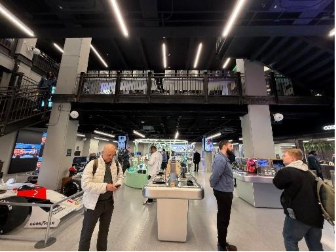
What: A high-end grocery store launched as the “Erewhon of New York”.
Meadow Lane presents a compact retail concept featuring a diverse, high-priced inventory ranging from confectionery and spirits to caviar and fresh produce. The store suffers from an ambiguous brand identity and an unclear value proposition, functioning more as a retail novelty than a cohesive luxury grocer. Consequently, this lack of strategic focus raises significant doubts regarding the location's long-term commercial viability.
Brooks Brothers' global flagship, which debuted in May 2025, adheres to a strictly traditional aesthetic that evokes a 1990s retail sensibility rather than a modernised brand vision. While the custom suiting department attracts clientele, the two-story location is characterised by low traffic and a static atmosphere, failing to project the vitality expected of a newly opened retail destination.
Banana Republic Archives presents a curated selection of vintage and second-hand apparel in its SoHo store, sourced both internally and externally. However, the collection lacks detailed provenance regarding item age or collection history, and the pricing strategy appears disconnected from the perceived value, suggesting the initiative functions primarily as a marketing exercise rather than a robust archival offering. Also, that’s just a rack!
Founded by former finance executive Vanessa Barboni Hallik, Another Tomorrow prioritises radical supply chain transparency, offering European-manufactured garments with granular traceability to the raw material source. The brand’s retail strategy integrates commerce with community engagement, utilising its flagship space to host rotating art installations and events that leverage the founder’s extensive network.
Credits: IADS (Selvane Mohandas du Ménil)
Related posts

IADS Exclusive – A cruel awakening: what the macro-exposition of Department Stores means
IADS Exclusive – A cruel awakening: what the macro-exposition of Department Stores means
Heading 1
Heading 2
Heading 3
Heading 4
Heading 5
Heading 6
Lorem ipsum dolor sit amet, consectetur adipiscing elit, sed do eiusmod tempor incididunt ut labore et dolore magna aliqua. Ut enim ad minim veniam, quis nostrud exercitation ullamco laboris nisi ut aliquip ex ea commodo consequat. Duis aute irure dolor in reprehenderit in voluptate velit esse cillum dolore eu fugiat nulla pariatur.
Block quote
Ordered list
- Item 1
- Item 2
- Item 3
Unordered list
- Item A
- Item B
- Item C
Bold text
Emphasis
Superscript
Subscript

Subscribers to the tech review The Information report AI returns rising as Claude and Gemini gain on ChatGPT
Subscribers to the tech review The Information report AI returns rising as Claude and Gemini gain on ChatGPT
Heading 1
Heading 2
Heading 3
Heading 4
Heading 5
Heading 6
Lorem ipsum dolor sit amet, consectetur adipiscing elit, sed do eiusmod tempor incididunt ut labore et dolore magna aliqua. Ut enim ad minim veniam, quis nostrud exercitation ullamco laboris nisi ut aliquip ex ea commodo consequat. Duis aute irure dolor in reprehenderit in voluptate velit esse cillum dolore eu fugiat nulla pariatur.
Block quote
Ordered list
- Item 1
- Item 2
- Item 3
Unordered list
- Item A
- Item B
- Item C
Bold text
Emphasis
Superscript
Subscript