
IADS Exclusive Articles

IADS Exclusive - NFTs: the missing link between physical and digital retail
IADS Exclusive - NFTs: the missing link between physical and digital retail
What: NFTs are an application of blockchain that is entering and changing the fashion industry as we know it.
Why it is important: Brands such as LVMH and Nike are leading the way, innovatively implementing NFTs into their business models for the long run.
The global pandemic has accelerated trends, especially in terms of technology and transparency. Although many buzzwords are being thrown around, it is not very easy to understand how blockchain technologies, cryptocurrencies, and NFTs (non-fungible tokens) could impact the way businesses offer their products to consumers. The big question that arises now is do we need to act fast, or can we ride out this latest tech wave until it passes? In order to answer that, we first need to understand what exactly the technology offers and what opportunities have arisen since its inception.
What are NFTs?
NFTs (Non-Fungible Tokens) are an application of blockchain technology that is said to be the future. A blockchain is an open and distributed ledger that captures transaction data between two parties in a permanent and verifiable way without using a central point of authority. In the example of a supply chain, the blockchain would capture all information pertaining to each stakeholder from a raw material supplier to producer to wholesaler to retailer. At each stage of the journey, a new block of information is created and cannot be altered. Blockchain enables the existence of cryptocurrencies and other mediums of exchange, like NFTs.
NFTs are individual tokens that are part of the Ethereum blockchain. What makes them different from cryptocurrency is that its tokens contain extra information, including ownership history, allowing art, music, and videos to be sold in the form of JPGS, MP3s, videos, GIFs, and more. Because they hold value, they can be bought and sold just like any other types of art with the price being largely dictated by demand.
Just like a physical piece of art, there can be copies of the original item put up for sale by the creator, but the original will hold the most value on the market. Although downloading these digital items for free can be easily done, the value of ownership lies in the information held in the Ethereum blockchain. Each item is unique and cannot be copied, which is what makes NFTs so valuable.
NFTs are making waves as in-game purchases across different video games that can be bought and sold by players, and include assets like unique swords, skins, clothes, or avatars. This has opened up the NFT world with new players entering the NFT marketplace every day. The big leap is to take this concept from tech circles to more mainstream consumer audiences, gaining acceptance among brands and influencers.
What’s in it for retailers?
Retailers and brands have tried to enter the market with the hope of understanding how they can turn the trend into a marketing opportunity. NFT use cases are still in their infancy, especially for fashion. Their entirely digital nature puts them at odds with fashion being historically all about physical products. Currently, NFTs in fashion are art rather than utilities, but this is shifting quickly. The present-day application of NFTs of GIFs and digital clothing to be used in virtual realms might not be the right fit for fashion brands. Future implications of using the technology to track and authenticate high-end luxury goods are more likely to have long-term benefits in the fashion and retail space.
Nike is among the companies dabbling with NFTs, but they have taken its application a step further. Nike is using NFTs as a patent for its footwear through its NFT, Cryptokick, which removes the barriers between the physical and digital world. The NFT of the shoe is linked to its physical counterpart. When a customer buys a physical shoe, a digital version of the shoe will be made available in their “virtual locker” and can be used in video games, thus extending Nike’s brand in the virtual realm. If the owner of the shoe were to sell their physical shoe, the sale would be mirrored in the digital realm as well. This application of NFTs is novel as it gives retailers additional avenues to connect with their customers.
LVMH has also understood the future implications of the information that blockchain technology can provide for luxury goods. The idea has brought together competitors in the space such as Prada Group and Cartier, among others, to develop a blockchain platform created specifically for the luxury industry to verify and authenticate goods. The result is the nonprofit Aura Blockchain Consortium, built by Consensys and Microsoft, which is open to any luxury brand to track and trace products with a unique digital identity based on an NFT. Brands pay licensing fees and a fixed fee per product, but they also get full access and control over their data (brand and client data are kept private) and contribute to the blockchain governance and strategy.
This application of the NFT technology has also been implemented by Arianee, an open-sourced traceability solutions provider which closed USD 9.5 million in seed funding in March 2021. The platform’s technology establishes digital passports of products to authenticate and track them throughout the supply chain, using NFTs to ascertain the online value of goods. While Aura was built to allow brands to control their processes and data without a third party, Arianee focuses more on transparency and engaging customers after a sale or resale. The platform attaches digital IDs to its timepieces and uses them to offer special promotions to owners while allowing the customer’s identity to remain anonymous. The Consortium also has a non-profit association, including Richemont, Ba&Sh, Breitling, Audemars Piguet, Verlan, Satoshi studio, and Manufacture Royale.
NFTs are hot…. and so is their impact on the climate.
The resale industry, especially as consumers become more environmentally aware, has boomed in the past few years with 62% of consumers saying that they are willing to purchase second-hand luxury goods. According to Statista, the luxury resale market was valued at around EUR 28 billion in 2020, seeing a 65% increase over the past 5 years.
Establishing an industry-wide blockchain system would bring the needed governance and oversight to secondhand fashion. Resale’s rise has spurred more brands to get involved in the space with Stella McCartney, Gucci, and Alexander McQueen all partnering on second-hand marketplace initiatives. This is a major shift in the luxury market that has been put off for a long time in fear of the impact that resale could have on brand value. This means that the stakes have been raised for brands and platforms to be able to verify the authenticity of resold items. Consistent blockchain use could eventually allow consumers to track the raw materials that their items have come from, ensuring it did not come from a labor camp, for example. This would give consumers the transparency that the fashion sector has not been able to easily provide, to understand the product's total sustainable impact from energy to worker’s rights.
On the other hand, minting NFTs requires a lot of energy consumption. Ethereum has been working on shifting to a less carbon-intensive form of security called proof-of-stake, but it is still in the works with no clear deadline. Some alternative blockchain marketplaces are already using proof-of-stake, but these are less established and potentially less permanent. The Guardian estimated that the sale of 303 editions of Earth, an NFT produced by the musician and artist Grimes, “used the same electrical power as the average EU resident would in 33 years, and produced 70 tons of CO2 emissions.” With impacts like these, the fashion industry needs to consider all implications when choosing their digital platform and understanding their overall digital footprint.
Cashing out on crypto
At the moment, only about 1% of luxury consumers use cryptocurrencies, according to data from Forrester. Although it is not going to be a mainstream payment instrument, it should not be ignored. Cryptocurrencies can be used by brands as a way to connect with and reward their customers. Lolli is a marketplace that allows shoppers to earn up to 30 per cent back in Bitcoin from purchases that they make at participating retailers. Lolli currently works with over 1,000 retailers including Nike, Sephora, Ulta, Bloomingdale’s, Saks, and StockX.
Plutus, which advertises itself as ‘better than a bank’, is a decentralized fintech firm that has partnered with Nike. Customers that shopped at Nike via Plutus received back 10% of the value of the sneakers bought in Bitcoin. Plutus has around 25,000 users, with most being under the age of 35. This shows that millennials and Gen Z have a different view on life regarding sustainability and governance, with trends related to these topics to continue gaining traction.
In this regard, should retailers and brands start accepting cryptocurrencies as a method of payment? It could be a great strategy in terms of how they can take advantage of existing disposable income. It is basically like introducing a new asset class. Companies like Microsoft and Tesla are already allowing customers to pay in Bitcoin. Microsoft directly converts the Bitcoin payments to fiat currency, while Tesla is betting on NFTs and retains the cryptocurrency. But, there are some risks as cryptocurrencies are speculative assets that are volatile and can potentially be lost.
For the moment, cryptocurrencies exist outside of the traditional global financial system and aren’t considered legal tender like cash issued by governments. But China has become the first country to create its own digital currency controlled by its central bank. The digital yuan is going to be positioned for international use and will be untethered to the global financial system where the U.S. dollar reigns king. This project has caused the United States to make the digitization of the dollar a high-priority consideration. With regulated sectors looking to introduce digitized currencies, NFTs could be a natural addition to the markets of tomorrow.
But wait, there is more
As NFTs originally gained popularity in gaming worlds, there is still a large community and marketplace for this type of use case. As the application of NFTs is virtually unlimited, the retail experience could be fully reimagined. There are already virtual worlds, like Decentraland, where you can buy virtual real estate and even create a business with a virtual storefront where you hire real humans to interact with customers.
Decentraland, also powered by the Ethereum blockchain, is set to open museums where people can display their NFTs, with the next move into retail and virtual shops. This will allow companies to buy virtual real estate to set up virtual storefronts where merchandise could be sold. This virtual store would be yet another channel that brands could reach their target audience and extend their image.
Virtual real-estate is yet another application of NFTs whose future implications, if any, are hard to comprehend. Virtual lands could bring in additional possibilities of what can be done using the land in the future like building art studios, doing advertisements, or renting it out for others to build on. As of February 2021, there have already been 116,943 transactions in virtual land totalling USD 40,814,665 on Decentraland. There are users building casinos with big retailers that are exploring possibilities to open shops in virtual land. As many stores are starting to offer virtual reality shopping, virtual stores could be the final piece that brings together the physical and virtual shopping experiences.
NFTs: powering the future of commerce?
NFTs are still in their infancy, but there is no doubt that they have already made a big impact in financial sectors with implications in the fashion industry. NFTs reduce friction in transactions and offer greater transparency and decentralization. The issues that remain with NFTs are that there is no single common network or agreed upon platform, there are various cryptocurrencies and tokens that exist in the space, and there are no regulations or legal frameworks in place yet. But all of this will be sorted out in due time as countries, like China, connect digital currencies to their central banks.
Just because there remain a few things that need to be worked out, NFTs still have the potential to be a valuable extension of a brand as they can connect and extend a consumer’s physical experience to the virtual one. Luxury houses especially need to stay alert so as not to miss the chance to connect with consumers on this new channel, as seen with LVMH’s Aura platform. Whether or not NFTs are here to stay, they have certainly piqued the interest of the rich, and there is money to be made and opportunities to be developed. The high prices of sales indicate that it is a real part of the future of art, fashion, and collectables in general. But, this does not mean that NFTs are a one-size-fits-all for retail or the fashion industry.
For the younger generation, cryptocurrency seems like a brave new world that they are excited about exploring. But before launching a full NFT summer collection, brands and retailers need to understand their current customer base and the customers they want to attract. Diving too deep into NFTs and cryptocurrencies too quickly could scare away loyal paying customers. Although this technology should definitely not be brushed under the rug as something that will pass with time, implementing and adopting it into a brand strategy should be done with a lot of thought and consideration. The risks just might outweigh the opportunities.
With this in mind, how should NFTs be approached by brands and retailers? Although future applications will arise, issuing NFTs that are linked to physical products to extend their value is currently the most strategic application of NFTs facing the fashion world. This allows brands to maintain visibility of their products, even as they go through the resale market. Blockchain technology also has the ability to grant royalties to the original creators of NFTs for each transaction in the secondhand market. This provides an additional revenue stream for brands that are normally uncapturable. As the application of NFTs is still being discovered and experimented with, retailers and brands would be wise to partner with those who understand its capabilities whether that be to hire someone internally to manage the integration, join a consortium like Aura, or offer products on marketplaces like Lolli that offer consumers rewards in cryptocurrencies.
As the global pandemic has led consumers to demand transparency from all industries, especially related to sustainability and supply chains, this kind of technology is exactly what is needed to bring some light to areas that have historically been blurred. The discovery of NFT use cases is far from over as this technology offers benefits both to brands and their consumers. Although some applications of NFTs will fade, others seem to be here to stay.
Credits: IADS (Mary Jane Shea)

IADS Exclusive - Business case: Frasers Group
IADS Exclusive - Business case: Frasers Group
Frasers Group, ex Sports-Direct group, is a UK-based retail group led by CEO Mike Ashley. It has been expanding its fashion and luxury portfolio over the past few years, trying to shift away from the sports tag toward a luxury brand. It starts in 2017 with the acquisition of Flannels, then with the buyout of then-bankrupt British department store chain House of Fraser in 2018 with the ambition to elevate it to the luxury market. With several additional buyout and acquisitions –Frasers Group also has stakes in Mulberry and Hugo Boss since 2020– the group appears to be trying to establish itself as a lifestyle and luxury retailer.
What retail model is the group following and is it viable? United Kingdom is living dark days as both the pandemic and the Brexit are putting huge pressure on the country’s economy, and the retail sector has not been spared.
I. THE GROUP
Sports Direct was launched by Mike Ashley in 1982, as a sports and ski shop. The business was a success and by 1990 he had opened 100 stores across the United Kingdom. It was in the late 90s that Ashley started to acquire brands, often from financially struggling companies. Sports Direct continued to grow as a brand and a retailing company, and even expanded internationally with about 100 stores in Europe and acquisitions in the U.S. After acquiring House of Fraser, the company was rebranded Frasers in December 2019.
The Group is currently structured across five business segments:
- UK Sports Retail, with notably Sports Direct and DW Sports (sports and gym business)
- Premium Lifestyle, with House of Fraser and Flannels among others
- European Retail, includes operations in European local markets
- Rest of World Retail, includes physical stores in the U.S. and online stores in Asia
- Wholesale & Licensing, for the brands it owns or has shares in
Frasers Group’s annual financial report, issued last September for the period running from 29 April 2019 to 26 April 2020, shows an increase in revenue and stable EBITDA (for a year which included 5 weeks of lockdown). UK Sports Retail was the best performing segments, with a GBP 2,187.3 million* revenue.
However, the real impact of the current crisis on the results will more likely show in the half-year report to be released later this month.
Diving deeper into its most notable businesses
a. House of Fraser
House of Fraser London
The British department store has been through quite extraordinary changes throughout its history. HoF was established in Scotland in 1849 as a drapery shop. The business rapidly expanding and diversified, buying brands and opening branches throughout the country. The company went public in 1948 and even acquired the Harrods group in late 50s. It was acquired by the Al Fayed family in the 80s, then went public again before being bought by an Icelandic bank in 2006 and to be sold to Chinese Sanpower group in 2014. It finally was acquired by Mike Ashley’s Sport Direct group in 2018 as it collapsed into administration.
Ashley rescued HoF with the ambition to elevate the department store to luxury, turning it into the ”Harrods of the high street” in Mike Ashley’s words. But House of Fraser was in bad shape when Sports Direct (now Frasers Group) bought it, and turning it around seems to be more difficult than expected: a year after the buyout, the group said: "If we had the gift of hindsight we might have made a different decision in August 2018.”
Ashley had the ambition to rebrand the 150 year-old department store into “Frasers” and redesign the stores, but not much has been done since August 2018. The Covid crisis was another setback.
The former House of Fraser store at Meadowhall shopping centre in Sheffield will be the first to experience the rebranding and to become Frasers, with a more premium lifestyle offer. The plan, released in January 2020, was to open in two phases. Frasers department store is supposed to open this winter 2020 and Flannels is to open in Spring 2021, within the Frasers store. But the pandemic and the new restrictions and lockdowns across UK seem to have delayed the project.
Recent news this summer announced that House of Fraser store located at the Westfield London White City shopping centre will turn approximately two third of its surface into a co-working space.
One can wonder where that leaves the department store and, if after the bankruptcies, the buyouts and the plans, it can survive. Competition is fierce in the United Kingdom, with many formats of department stores on a small territory. Plus the crisis has put the market under huge difficulties and pressure.
b. Sports Direct
Sports Direct Portsmouth
Sports Direct was a small store before becoming a big retailing group it is today. And the original sports concept Sports Directs still exists and operates stores. Last month the group unveiled a new Sports Direct concept-store in Portsmouth, with a new multi brand format [all brands are owned by Frasers Group].
The store not only carries the traditional sports brands like Under Armour, adidas, Asics and more, but also incorporates retail space for Flannels and British retailer USC. The USC streetwear and fashion section brings brands such as Champion, Levis, or Lacoste, while Flannels houses designer labels. The two-storey, 4 645sqm store also includes retail floorspace for Evans Cycles, specialising in bicycles, and Game, a destination for gaming offering an extensive range of games, consoles, phones, PC components and more. The Portsmouth store is the first to feature Sports Direct’s inclusive mannequins (like Nike did in its Paris House of Innovation) and a sustainability feature wall highlighting the current range of eco-friendly products on offer.
With this new format, Frasers Group takes a step away from the traditional sports store, presenting its customers with a wider offer that goes beyond just sports and that extends to fashion and lifestyle. It is a smart move in these times of pandemic, when casual, comfortable clothing are is in demand, and when the fashionable sweatpants are trending (see IADS Exclusive article: Adapting to new consuming habits).
With this concept, Mike Ashley once again confirms his will to turn his business into a luxury lifestyle reference. “Head of elevation” for Frasers Group Michael Murray said: “Our next-generation stores offer customers the biggest brands in sportswear, sports equipment and fashion, all under one roof […] This is a major part of Sports Direct’s brand elevation strategy that will see a huge investment in a number of new stores, while upgrading and improving existing ones across the UK.”
The new Sports Direct format is being upgraded to a lifestyle destination to cater to sports lovers but also to a more fashionable crowd. We can wonder if this concept will survive long-term when somewhat similar business Citadium, owned by Printemps, just announced it would be closing stores in France in an attempt to reduce cost structure.
II. THE OPPORTUNITIES
a. Flannels
Flannels London
Flannels started in 1976 as a menswear store in northern England. It was acquired by Frasers Group in 2017, which has since turned the brand into a curated luxury designer clothing and accessories store for men and women. Nowadays Flannels counts almost 40 locations.
A big move for Frasers Group was the opening of Flannels flagship store in London in September 2019, that shows off what Mike Ashley initially envisioned to be the future of high-end department store House of Fraser. The store can be considered as a sort of luxury department store for younger customers. The store spans four floors and houses a curated mix of men’s and women’s luxury designer clothing and accessories, featuring catwalk collections to the latest streetwear drops, from emerging designers and luxury’s biggest names such as Balenciaga, Off-White, Balmain or Canada Goose. The store offers different services and experiences such as customisation, personal shopping service, and click-and-collect. The building has no windows and features big interactive digital screens. As Gen Zs are extra connected and digital savvy, it is just another way to reach out to them.
The bold and most surprising move was to open a luxury retailer on Oxford Street, known for its high street offer with outposts from retailers such as Primark, Zara, and Topshop to name a few. We can speculate that Flannels does not cater for the needs of the traditional luxury shopper, and its strategy is to reach out to a broader clientele.
Indeed, the store has many outposts on secondary markets, where the competition in the luxury field is less intense and where it is easier to reach out to younger customers with this type of concepts, compared to the London crowd. Establishing itself on secondary markets is also interesting financially speaking, as rents are lower and as the local public need to be addressed directly -not everybody can travel to London or Paris anymore to get their hands on fashion. Most recently in October 2020, a Flannels store opened in Birmingham, and the group announced the opening of more outposts.
Still in Paris, Printemps opened Le Market corner, which caters to Millennials and features designer clothing.
What is also striking about Flannels is that, despite being a quite small business within the full group operations, Ashley is betting on it and helping it grow by implementing it inside other concepts, such as he did with HoF and Sports Direct. House of Fraser giving space to Flannels is a demonstration of the retailer’s will to differentiate its offer in order to cater to a younger crowd, but within the department store -like Rinascente did in Milan with its Annex store, where a curated offer caters to Millennials and Gen Zs.
Flannels Birmingham
b. GAME
GAME started in 1992 as a gaming and electronics store. The company expanded, and even extended operations internationally. After experiencing changes in ownership and financial issues, it filed for bankruptcy in 2012 before being bought by OpCapita. It went public and was listed on the London Stock Exchange in 2014. Frasers Group (then called Sports Direct) started invested in the brand in 2017 and eventually completed the acquisition of the brand this year, inheriting 256 destination-for-gaming stores.
Following the takeover, stores were closed and others opened as part of the Group’s strategy to move the GAME stores into the new elevated stores -in the newest Sports Direct in Portsmouth and in London’s House of Fraser. It is one of the group’s biggest brand in terms of number of stores (242), especially compared to Flannels (37 locations) and HoF (48 locations).
It is interesting that Mike Ashley decided to invest in the gaming sector, as it is becoming the latest way to do fashion, often referred to as the Gamification of Fashion. That fact that people are spending more time at home this year across the globe has accelerated digital trends, and it will force changes in how business will be done during and after this crisis. Online gaming is on the verge of entering a new phase where it could have big implications for the fashion industry. Indeed, several brands lately have been using gaming to showcase their fashion work, especially since the Covid break-out. Balenciaga announced it would release a video game called Afterworld: The Age of Tomorrow in which it will present its Fall 2021 collection. Several brands have partnered with Nintendo’s Animal Crossing (including Valentino and Highsnobiety, and extending to the Getty Museum and even fast-food chain KFC) to showcase their work.
III. THE RISKS
a. House of Fraser
As explained above, House of Fraser has had quite a history. Mike Ashley purchased it as it was already declining, with the ambition to turn it around and elevate it. However, such work will require a huge investment. So far, the group’s Premium Lifestyle business segment (the one HoF is attached to) is not the best performing one: GBP 732.9 million* versus GBP 2,187.3 million* for the UK Sports Retail’s segment.
Therefore, we may wonder if Ashley will make the necessary investments to upgrade it, especially in these uncertain times. Frasers Group’s rival retail group Arcadia fell into administration on 30th November, which had consequences on its long-term landlord, Debenhams, which is set to enter liquidation after failing to exit bankruptcy. These closings are another blow in the UK retail sector and we can’t help but fear that House of Fraser will suffer the same fate.
b. International business
Another concern lies within the group’s international businesses (Europe and World). European Retail accounts for GBP 599.8 million* and Rest of the world Retail for GBP 215.9 million*. What will happen to these businesses, especially the European operations, once Brexit will definitely be official and implemented on 1 January 2021? This will surely change a lot of thing in terms of revenues. Expect an increase in shipping costs for importing and exporting goods, new taxes and less flexibility among many new regulations and setbacks. For instance, John Lewis has already announced that it would stop selling and shipping items internationally effective this month, as the costs are too high.
c. JD Sport
Frasers Group biggest rival is JD Sport in UK. The British sports-fashion retail company posted a GBP 6,110.8 million** revenue in its latest financial report for the period running from 2 February 2019 to 1 February 2020. Frasers saw a group revenue of GBP 3,957.4 million* for the year ( April 2019 to April 2020). Obviously these results will significantly change and next year’s revenue will likely be impacted by the pandemic that forced stores to close for several months.
JD Sport was close to resembling Frasers Group as it was well-placed to acquire bankrupt chain Debenhams, therefore also becoming the owner of a department store. However the group pulled out of Debenhams takeover, leaving the chain with no other choice than to enter into liquidation. The fact that Arcadia group filed for bankruptcy significantly impacted JD Sport’s decision, as it was the largest concession holder at Debenhams.
Conclusion: Frasers Group, a viable business model?
Mike Ashley is aggressively entering the luxury scene, elevating its current portfolio and investing in brands. Rumours are that his group might eventually buy Mulberry. He made a bid to acquire bankrupt UK department store chain Debenhams but was kicked out of the race after failing to match the price tag demanded by the group’s advisers. The Same thing happen when he bid for Woollen Mill Group’s owned Jaeger early November. Now it has offered to rescue the Arcadia group for GBP 50 million. Qualified as a "lifeline" loan, it was rejected by Arcadia’s owner Philip Green.
Yet, between investing in luxury, elevating existing businesses and expanding its acquisitions, the global strategy of the group remains opaque. With its brands portfolio, and instead of opening several multi brand spaces under multiple labels (Flannels, Sports Direct, …), the group could just use House of Fraser to house all of its concepts, optimising the synergy between the brands and saving the department store at the same time -or at least try.
After all, given the collapse of Arcadia, some opportunities might open up for Mike Ashley. The question is: is he going to use them to invest in his existing businesses, or to invest in buyouts?
Credits: IADS (Louise Ancora)
IADS Exclusive - Can we afford online retail?
IADS Exclusive - Can we afford online retail?
For some years department stores have been contemplating a less profitable future as costs increase and as they depend more every year on online retail. The Covid-19 pandemic has exacerbated the problem by accelerating our dependence on the online part of our business. In fact, we have been putting in place a number of channels and services for customers which we know are less profitable, and in some cases, loss-makers. So, the search for future profitability has become even more urgent.
The unstoppable growth of digital retail
For years now, bricks-and-mortar retailers have been battling with the issue of how to make the online part of their business profitable. Now, with the online share of business growing in the omnichannel mix, department stores are facing a future of less profitable retail – which they can ill afford. According to the World Economic Forum, e-commerce sales are expected to reach 40% of total revenue in the next seven or eight years. How can we remain viable when the fastest-growing channel is the least profitable? Is there anything we can do to prevent already thin margins being shaved further by demands for ever-speedier fulfilment, unrealistically broad assortment, and easy free returns?
The situation has become dramatic recently with the Covid-19 pandemic accelerating the development of online retail, the only channel left to many department stores to make any sales at all. These have not compensated for the loss of sales in stores, in spite of some very inventive solutions and admirable efforts to serve customers. Even efforts to concentrate on local customers and to use stores in novel ways as fulfilment hubs, for example, still leave stores with no better than 90% of “normal” sales. “Normal” being the level of sales required to keep afloat with the existing department store model. Needless to say, a future based on this level of sales will be short.
Online today is generally less profitable
Interestingly, the problem is not limited to department stores. Walmart, the subject of a recent IADS Exclusive, with its huge investments and the development of Walmart+, is actively trying to reverse the tide in its struggle with Amazon through the development of new models. But, according to some, it’s still far behind Amazon, and there are developing tensions inside Walmart. Last year, the company was apparently projecting losses of more than USD 1 billion for its US e-commerce division, on revenue of between USD 21 billion and USD 22 billion. Walmart does not disclose these figures publicly and declined to comment.
According to Forbes, TheRealReal, the marketplace, increased its previous year’s loss in spite of revenue up 51%. The digitally native fashion retailer Revolve, also announced a loss against revenue exceeding all expectations. Farfetch reported larger than expected losses despite a record revenue growth of 44%. “These results mirror a familiar pattern for retailers: improving year-over-year revenue while profits decline. Often these slides in profitability correspond to an outsized increase in e-commerce sales, highlighting the unfortunate truth that it’s very difficult to operate a profitable e-commerce business. And it’s only getting harder”.
And the issue is not confined to fashion or apparel retail. Indeed, as reported in the Financial Times, grocery shopping is also losing money online. A cited Bain consulting report estimates that grocers around the world are typically suffering a negative operating margin of about 15% on online orders. Even a USD 7 delivery fee does not lift that number into positive territory. The only operation which appears to be mastering the issue is Ocado which claims to have a list of one million people waiting to become customers once it has the capacity to serve them. And that is likely to come about since it is estimated (by UBS and Bain) that a majority of shoppers will increase their use of online shopping after the Covid-19 situation improves. Ocado sees itself less as a retailer than as an online service provider to retailers through huge investments in automation, robotics and technology.
What can department stores do?
On a positive note, a number of department stores are vigorously addressing the problem. Indeed, it has been at the centre of their strategies for some who have been acting decisively to transform themselves. One example is Falabella which now describes itself as “a digital retailer with stores”. It has been analysing online costs for some time, attempting to balance value to the customer, value to the store, and net operating cost of different solutions such as DC to customer, DC to store, and click & collect from store inventory.
Theoretically, the costs of fulfilment, for example, of DC to store will be lower than home delivery, which would be less than pick from store which would in turn be lower than ship from store. However, in reality, results may vary depending on the individual efficiencies of each process such as the incremental use of store labour, the efficiency of fulfilment centre pick-pack operations, the cost of real estate of click & collect counters, store pick efficiencies and much more. It is these variables which have to be analysed and in fact tailored to the operation in question and properly integrated. “A lot of these online channels were added as an afterthought to the brick-and-mortar channel”.
In general terms, whereas the physical store costs may be dominated by real estate and labour, those of online retail would be made up to a larger extent of marketing (in particular customer acquisition costs) and fulfilment. As the Harvard Business Review puts it, retailers need to find a way of creating a “digital-physical fusion” which will catch up with customer expectations, and importantly create a viable business model. “The greatest barrier to adopting fusion strategies is not skepticism about their promise but inexperience with their execution.”
What are the priorities in this process for department stores?
- There has been much debate about whether department stores should offer their entire assortment online, or a subgroup, or even in some cases extra items not available in store. Clearly fulfilment costs should play a major part in this decision: items that have difficult logistics and return logistics should be the first to come under scrutiny.
- For the rest, supply chain optimisation is crucial. For the average retailer, fulfilment costs have increased 12% over the last 12 months before Covid-19. Even Amazon saw shipping costs jump 23% at the end of 2018, reaching a record USD 9 billion. This is multiplied by the fact that customers are increasingly expecting free and fast delivery. On the other hand, there is evidence that customers are willing to pick up in store to avoid shipping charges.
- Linked to this is the pricing and promotion strategy: any difference between online and store price will be picked up immediately by customers. In this area, technology is almost indispensable (dynamic pricing and markdown optimisation).
- Technology in the form of either AI and machine learning, or robotic automation is also becoming standard. The Ocado example mentioned above is highly dependent on technology to offer affordable services. So much so that it is now building DCs for other retailers. There is some evidence that cost-conscious retailers are being pennywise and pound foolish when it comes to IT modernisation. However, research from Publicis Sapient revealed that IT infrastructure investments can pay back in 2-3 years while continuing to create long term value through increased conversion, affinity and loyalty.
- Finally, AI can also help with customer response and customer acquisition. Lifetime Customer Value (LCV) is sometimes used as an excuse to cultivate unprofitable customers. Technology can help us distinguish and cherish our best customers. Customer acquisition is generally acknowledged to be one of the big costs of online business. Targeting and reducing this cost can significantly contribute to profitability.
Conclusion
Foot traffic to stores continues to fall, while online retail has grown many times in the last ten years alone and has been boosted by the Covid-19 pandemic, probably with lasting consequences.
Many retailers must adjust their physical footprint to accommodate these changes. In today’s landscape, the strategy to open as many stores as possible is neither viable nor practical. Instead, retailers must focus on having effective stores. This may mean downsizing to smaller stores, moving to different, high-traffic, convenient locations, or reformatting to better accommodate in-store pickups. The measure is a difficult one since it means reducing the proportion of the traditionally more profitable part of the business. Recent examples of closures include Le Printemps, and John Lewis.
Therefore, in parallel, we need to consider each and every way in which to truly integrate our existing channels as well as ways of evaluating the true costs of what we are offering customers. The current pandemic has led to a innovative but unprofitable solutions for customers. How can we readjust, rebalance and integrate our physical and digital formats to recover a profitable department store model for tomorrow?
This is one of the tasks which will be set for the IADS Academy 2021: proposing a P&L for a truly integrated omnichannel business, and the related KPIs with which to measure omnichannel performance. It is a practical case of department stores dealing with disruption as discussed in the IADS Exclusive: responding to disruption in which How to shift in a company from the Incubation to the Transformation Zone. It can be done, but it requires strong leadership and purpose.
Credits: IADS (Dr Christopher Knee)
IADS Exclusive - How far should the responsibility of department stores go?
IADS Exclusive - How far should the responsibility of department stores go?
For some years we have seen the beginnings of a shift from shareholder to stakeholder capitalism. Actions taken during the Covid19 pandemic and analysed in the IADS White Paper would seem to echo the new “stakeholder” purpose of companies. What they probably signal is in fact a rethink of the department store model in terms of its offer, its structure, its relation to other businesses, and its adaptation to new market realities.
The IADS has published a White Paper reviewing its members’ actions during and after the Covid-19 lockdown and draws key lessons to prepare for new crises and to address the future of the department store industry, at a moment when some regions are facing new episodes of lockdown: “Global pandemic and local department stores”.
One of the observations of the survey has been that IADS department stores were driven by agility, commitment and responsibility. Notwithstanding their size and complex organisations, department stores were surprisingly agile in addressing the pandemic issues, without losing focus on their social role and responsibility. All IADS CEOs swiftly adjusted their strategy to protect staff and customers, accede to government requirements, maintain and nourish relationships with customers and suppliers, while defending their businesses and preserving cash. This translated into a remarkably fast and coherent shift from all IADS members towards their stakeholders: customers, staff, suppliers, community, and shareholders.
In 2019, we saw the US Business Roundtable redefine the purpose of a corporation as serving these five groups of stakeholders, and this was followed by the Davos Manifesto of 2020 which shifted away from shareholder capitalism towards a business responsibility to “society at large”. We should remember that this was seen by many as a significant shift away from the principle of shareholder capitalism, which has been more or less dominant since the 1970s with Milton Friedman arguing that the primary aim of a company is to maximise value created for its shareholders. Doing anything else was described as spending “someone else’s money for a general social interest”.
It would appear then that the Covid-19 pandemic has renewed interest in this conversation about the purpose of a business. No company, to our knowledge, has questioned the appropriateness of taking on these broader interests in spite of the fact that most of them are struggling to keep their head above water in terms of sales and, even more so, profits. Such declarations of solidarity with all five stakeholder groups come at a time when issues such as climate change, diversity and inequality are all being aired and are apparently of concern both to our customers, and to our employees (in a survey, 70% of workers said their CEO should take a stand on climate, diversity and inequality).
So, stakeholder capitalism demands that companies should save the planet, increase diversity, ensure the right standards along the whole of the supply chain, get rid of the gender pay gap, take responsibility for its employees’ health (physical, mental and financial), as well as conduct a profitable retail business through a series of rolling lockdowns. Is this a reasonable expectation?
Furthermore, some of these issues are perhaps ones over which there may be shades of opinion among managers in a company. What happens if not everyone is on the same side in the “culture war”?
A provocative piece in the Financial Times argues that the burden may be too heavy for companies to carry alone. Indeed, it argues, “the social welfare of individuals is more a matter for their families, friends and state-funded community services….the physical health of the population is a matter for public health services, while issues such as climate change are a matter for governments to rule on”. It reminds us that companies pay taxes so that others do such stuff.
What it forgets, however, is that the sophisticated operations of department stores (and indeed other retailers) puts them in a privileged position regarding knowledge of what members of the population think and need, that the health services of many countries have been overwhelmed due to long-term underinvestment, and that they are already often playing an important community role which has not abandoned sustainability even in the face of serious cost overruns.
Whether this balance between business, politics and society is a desirable state of affairs or not, it remains that without the cooperation of businesses, and department stores among others, the situation on the ground would have been significantly more unpleasant for a large proportion of the population in many countries.
The fact that it also makes sense from a business perspective and increases customer and employee loyalty does not diminish the contributions of department stores which have stepped into the breach as detailed in the IADS White Paper.
It may or may not be part of a shift towards stakeholder capitalism, but the actions undertaken have redefined the sense of purpose of department store companies, given them a new lease of life and injected new meaning into the daily activities of many employees. Coupled with innovative adaptations and practices such as remote working, we are perhaps witnessing something special which may yet have positive consequences, with department stores taking back the initiative.
Credits: IADS (Dr Christopher Knee)
IADS Exclusive - IADS Academy 2020 exclusive report
IADS Exclusive - IADS Academy 2020 exclusive report
Following a truly innovative process this year due to the worldwide pandemic, the IADS Academy was conducted in full digital mode, and looked at immediate consequences of lockdowns for IADS member organisations. A number of suggestions were made by the 2020 IADS Academy who presented some answers to the question “What next?” at the General Assembly of CEOs on 30 October 2020. Their answers covered customer behaviour, convenience, private labels, and store networks, as well as organisation structure and skills for the future. They caused some important questions to be raised relating to organisations, profitability and store real estate.
The Covid-19 pandemic has affected all our businesses, and indeed has also impacted the IADS activities. This is the reason why, this year, the 2020 IADS Academy was asked to go very operational in its data collection and thinking process, to address the pandemic-related questions: what have we, as department stores, been doing in relation to Covid? and what next at this stage of the pandemic?
The outcome of the work has been a White Paper, titled “Global pandemic, local department stores, learning from the pandemic and addressing the future for the industry”, to be released soon, which covers in detail the context in which we have been operating and a whole series of innovative and speedy actions. In addition, participants in the 2020 IADS Academy were asked to go further into scenario-planning, which led to a presentation to IADS CEOs at their General Assembly on 30 October 2020 (see summary and slides here).
The Academy considered several scenarios for the immediate future. These could be described as best, middling and worst, or short-term, medium-term and long-term (up to 24 months ahead). Scenarios used for the simulations were the following:
- First scenario: another lockdown within 8 months (the 2020 IADS Academy work was finalised before the second round of lockdowns and curfews across Europe)
- Second scenario: full recovery within 14 months in Asia and US thanks to a vaccine but leading to “travel bubbles” and regional closures in the meantime
- Third scenario: painful global recovery within 24 months and adaptation to a “new normal”, including “stop and go” local approaches leading to a permanent state of economic crisis and customer insecurity.
Each scenario was aiming at constructing possible actions and strategies under three main headings:
- The department store context: cities, flagships, and local retail
- The department store offer: services and assortment
- The department store organisation: structure and roles
The matrix below synthesises their analysis:
The priorities overall are fairly clear:
- emphasise local retail
- prioritise safety and stability
- develop digital and online operations
- innovate in services, sometimes quite radically
- upgrade and develop private labels
- shift to an agile organisation structure and leadership
- and, even further, to an ecosystem characterised by autonomous structures and empowerment
The value in this work comes not only from the suggestions but also from the structured thinking which we need more than ever for crisis management, including the scenario-planning approach we advocate at IADS.
As with all good research, its value lies also in what questions it raises for further investigation. Three such big questions should be mentioned:
I. What is involved in shifting towards a flatter more agile organisation structure?
…especially as future structures are likely to mean fewer people, as well as fewer layers. From a practical standpoint, outsourcing tasks to teams means defining those tasks very precisely since the teams will not necessarily be involved in other parts of the business: a “division of labour” approach reminiscent of early scientific management. And yet, according to many accounts, we are also moving in an opposite direction where the skills we will need for the future are analytical thinking and innovation, active learning, complex problem-solving, critical thinking and analysis, and creativity, originality and initiative (see Future of Jobs Survey, World Economic Forum, 2020). These latter are more general and pose a real challenge to HR departments to find the right profiles.
Some of our members are already tackling these issues such as Falabella’s “delayering” projects. In general, agility as it has manifested itself during Covid, as was mentioned by the Academy, is more an accumulation of small decisions taken with speed. The question is: have we managed during Covid to speed things up which normally would take longer?
According to some, the ideal command structure in the army is not a rigid hierarchy but a sphere, where the core sets the culture, and those at the edge of the sphere use their initiatives and take decisions as the situation demands. Only this allows an organisation to cope with VUCA (volatility, uncertainty, complexity and ambiguity); (see The Economist, 24 October 2020, p.58). Others suggest that one of the best ways to achieve resilience is through the establishment of routines or simple rules known as heuristics (see HBR, Building Organizational Resistance, November-December 2020).
II. Shifts cost money: how to find necessary investments?
This is particularly important since much store-based retail was already dealing with a lower-profit retail future even before the pandemic. Can we find resources through development or through charging for services?
For example, delivery from stores was initiated by Manor to respond to customers’ needs. And it was indeed welcomed. But it was also a terribly expensive service for the store. Is it worth the cost? It might be that responding to customers’ needs is always the right thing to do and that ways will be found or developed to make it profitable in the future. Should we simply act and modify and fine-tune as we go? It is perceived as a considerable risk. Are there any examples from the past of such a risky action eventually turning a profit? What does appear to be true is that the new “remote work” is often more productive than work performed at the office (this point was raised by the Academy also). This means that at least some costs should be saved by a new structure. Best practices in remote working are only recently beginning to emerge.
This strain on investments was illustrated in part by a discussion of Geoffrey Moore’s theory of “zoning” and how to bring new ideas into the mainline business. (see IADS Exclusive article: Responding to disruption)
III. What part in the business is online retail likely to play in the future?
This is probably an impossible question to answer since, increasingly, department stores are no longer separating their online and physical businesses. Indeed, in some cases they are no longer able to do so. However, it remains an important question for its implications for the real estate assets of the business, sometimes quite considerable. A number of businesses are facing the possibility of closing down less profitable stores and/or using them for other purposes such as fulfilment centres (as hinted by El Corte Ingles and already realised by Macy’s and Lotte). John Lewis has recently revealed plans to convert part of its business and real estate to other formats including residential.
In the present circumstances, the question of flagships is also raised, especially if they relied significantly on the tourist trade. Local, smaller stores were initially neglected but appear now to be nearer to the centre of department stores’ attention. Some, such as Magasin du Nord, are asking whether the value of smaller stores may have increased from the real estate point of view because of the crisis. A number of companies, as is well known, have been developing smaller, local stores for some time, such as Nordstrom Local.
Following the General Assembly held in October, elements of these questions have been incorporated into the IADS programme for the coming year as topics for meetings, exchanges, and indeed future Academy investigation. This renewed approach aims at bringing elements of answers to complex CEO questions and help our members to address their future.
Credits: IADS (Dr Christopher Knee)
IADS Exclusive - Retail Review #1: experience, digital & curation
IADS Exclusive - Retail Review #1: experience, digital & curation
Keeping markets under a close watch, IADS detects innovative concepts related to key topics such as experience, new models, digital, and curation.
In the first selection from our Retail Review series discover:
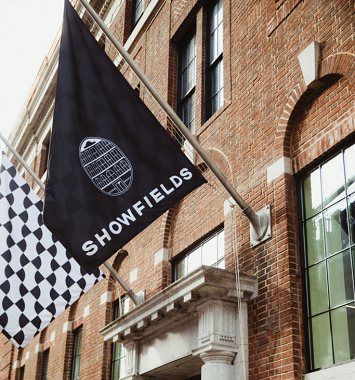
Self-proclaimed "the most interesting store in the world", Showfields opened a 1300sqm, four-storey space in New York City’s NoHo neighborhood in December 2018. In this new concept, a mix of curated DNVB and brick and mortar brands are housed in a most theatrical environment. It is a place for online brands, such as Nuria (beauty), Wet (swimsuit) and Paneros (clothing) to get a glimpse at physical retail and get a new customer baseline.
The store allows for offline and online worlds to collide as customers can both touch the products and use touchscreens to explore additional items or make purchases.
What makes Showfields different from other retailers, which function somehow similarly: curated brands and rotating assortments, like Joyce (HK), Galeries Lafayette Champs-Elysées (Paris) or Neighborhood Goods, Dover Street Market (US) and SKP-S (Beijing)? Or like b8ta (US), which also houses Direct-To-Consumer brands for their first dive in physical retail? The answer: theatre.
It is immersive
At Showfields brands get to showcase their products in a totally immersive décor. Where multi-brand stores install a brand next to the other, Showfields goes deeper as each brand corner features an environment relevant to its items. Think bathtub and mirrors for beauty products, and sofas and beds for quilts and pillows. Brands configure their space online via a six-step process; it will then be fitted out and staffed by Showfields. All the tech comes as part of the deal, including mobile POS and data sensors which provide real-time data to each brand inside the store, using heat mapping to show what products customers are touching, picking up and lingering in front of. Brands can rent a space on a monthly basis, with a four-month commitment minimum. Note that Showfields does not make money out of product sales, only on renting spaces.
But Showfields is not alone on that segment since other retailers worldwide also offer immersive experience to the customers. Korean eyewear brand Gentle Monster is very well known for its physical locations which vary a lot from one place to another. Each time it offers an immersive experience in a meticulous décor inspired by the environment and the city the store it is located in.
American designer Blaine Holvorson does the same with his Madeworn brand. His Los Angeles showroom, accessible upon appointment, is divided into three spaces staging three decors, three stories.
More recently, winter clothes brand Canada Goose opened The Journey: a Canada Goose experience in Toronto. The inventory-free concept store pushes the boundaries of e-commerce and retail. The top feature is the Cold Room, where products can be tested in temperature set at -12 degrees Celsius, while being surrounded by floor-to-ceiling Arctic landscapes and real snow. However, you cannot purchase merchandise in the store, you will have to order them online (via instore screens).
Some brands, with a specific immersive décor, manage to recreate the experience offered in their standalone store in a department store corner -for instance French cosmetics brand L’Officine Buly with its apothecary counters or American label Urban Outfitters with brass pipes and furniture- but not all brands’ corners in department stores are immersive, contrary to House of Showfields as the full store offers complete immersion.
Last summer the retailer launched House of Showfields, a 30-minute sensory theater production featuring six brands and designed for customers to touch, smell and taste the products. The experience, and the whole store for that matter, is not staffed with salespeople, but with actual actors who are trained to tell the story of the brands. Customers get caught in a brand’s story, without feeling pushed to buy. What’s more theatrical than that? Yet, it is reported that L’Officine Buly also staff its stores with actors instead of salesperson, to give even more storytelling to the brand.
The opening of the House of Showfields show draw a 33% gross in traffic, and a 50% sales increase (as of last fall).
It is “instagrammable”
Another asset that comes with having an immersive space is that, in a time where social media account for a big part of people’s exchange, it makes the place highly instagrammable. Influencers are the new fashion models and brands ambassadors, and the new generation of customers Gen Z are fond of short video media Tik Tok, pictures platform Instagram and other social networks.
Once again Showfields is not the only retailer to offer unforgettable pictures for your social accounts. Beauty brand Glossier, who’s brand identity already shows well in its product recognisable packaging (imitating paint tubes or coloured in a pink blush), showcases its items in clean, immersive decors. For example the Los Angeles store imagines a drive through the desert and even replicates Arizona’s Antelope Canyon in a separate room.
Museum of Ice Cream (MOIC) started as a colourful, pop-up museum playground highly instagrammable. It even had an actual pool of ice cream sprinkle, where Beyonce and Jay-Z took a dive. The experience eventually turned into a brand and opened an ice cream store in NYC, The Pint Shop, just as much as intagrammable as their itinerant museum.
It is exclusive
The House of Showfields could relate to the notion of ‘incubators’ has it bets on lesser-known DNVBs that need physical exposure to gain customers. In the light of the recent demonstrations across the U.S.A., the store has dedicated an entire section to Black-owned business brands. Adding to all that the fact that items are showcased within a time-limited frame, it makes them all new each time you come back, exclusive, and desirable.
In that, Neighborhood Goods is similar has its offer regularly rotates, and varies from one store to another, reinforcing the sentiment of exclusivity.
Many retailers have understood the importance of exclusivity and already take advantage of that, especially department stores which host pop-ups and collaborations, with items made exclusively for the store event; through exhibitions at Le Bon Marché (ex: Los Angeles Rive Gauche, Let’s Go Logo) or collab at Selfridges (ex: The Co.Lab in partnership with Highsnobiety)
The difference with Showfields is that it is an exclusive show all year-round. Department stores with all-year dedicated pop-up spaces can offer a similar level of exclusivity.
It is a gallery
Imagined kind of like a museum, customers wander from one brand to another and discover a new universe each time. At the end of the journey, they step into The Lab, which is like the gift shop at the exit of an exhibition or a tourist attraction. All items previously experienced in the store can be purchased in The Lab. We can make a parallel with furniture giant Ikea, which also offers an immersive experience where you wonder inside the store, passing from rooms to rooms to finally pick up items at the end of the visit. A formula that seems to be working as the turnover of the group has only been increasing since 2004 (from EUR 12,9bn in 2004 to EUR 38,8bn in 2018 according to Statista).
In the end, Showfields does not force any purchase on customers, but offers actual experience to have people coming back and eventually buying items. Bringing people inside through events in hope to turn their visit into a shopping trip. Isn’t it what Selfridges is doing with its instore movie theatre? Or what IADS member Galeries Lafayette did with a glass walkway in its Haussmann flagship to attract instagrammers? Or any other department stores with dining experiences or beauty services for that matter? Not to mention the Dubai’s Mall of the Emirates that offers access to a ski slope inside a mall.
So what’s more to Showfields?
As demonstrated above, Showfields is not completely revolutionising retail as we know it. Other brands and other retailers offer similar experiences and features in their locations. The retailer features a large assortment to reach out to a variety of customer range: from dog food to beauty products and digital items, it is a store for anybody.
But the real strength of House of Showfields can be that it is all at the same time: it is a store, it is a gallery, it is an experience, it is instagrammable, it is digitally enabled. Plus, there is a slide to go down from the third to second floor.
We can compare the attraction of Showfields to the one of Story when it first opened in NYC. But now that the concept has been bought by Macy’s and that founder Rachel Shechtman has left, it has somehow lost its appeal. Will Showfields experience the same decline and what will be left of it once/if the novelty has passed?
Showfields is funded by several ventures, and, as of this date, turnover information has not been released.
How about experiential retail in the Covid-19 era
How a store, that is all about the immersive physical experience, deals with the Covid-19 pandemic when people are reluctant to spend much time outside of their safe environment? As a response to the health measures, House of Showfields launched an App called ‘Magic Wand’. While inside the store, customers use their phone to tap or scan a display object, and the app will provide additional information on it. The app also allows customers to get prices, add items to a digital cart, and check out without interacting with a store associate. They can pick up a bag full of sanitized products on their way out.
Originally not a response to any sanitary crisis, but a desire to offer customers the experience they choose, Nike has a similar option in its latest House of Innovation in Paris. While instore, you can order an item through the Nike app and have it delivered directly to you in the store. Try it and buy it at one of the self-checkout stations, without interacting with any sales associates if that is your wish.
Inside Showfields, additionally to the basic safety measures such as mandatory masks, social distancing and hand-sanitising stations, the retailer has decided to focus on brands that guarantee a safe experience, and brands such as Play Doh (kids modelling clay) were removed.
Showfields also offer curated virtual tours of their store, so customers can discover the products and enjoy the experience from the safety of their home.
However, be sure that the instore guided tours bring more than just an introduction on brands and description of products. They are led by actors portraying diverse characters such as scientists, artists, creators, and explorers, to give an even more narrative arc to the store visit and the brands featured.
Moreover, the store gives the possibility to book a guided tour with CEO Tal Zvi Nathanel himself. Has this ever been seen before?
Conclusion
Can department store become immersive experiential space? What can they learn from Showfields? And is experiential physical retail still relevant after a pandemic?
As to the question if department stores can offer immersive experience the answer is yes. Best example is IADS member SKP latest store in Beijing: SKP-S. Designed in partnership with Gentle Monster, the store offers an immersive experience on each of its floors through a purposefully ever-changing landscape. The entire experience is based on the theme Digital-Analog Future and the assumption that, in the distant future, technical leaps will allow the boundaries between human and digital to blur -think massive artificial intelligence. The concept of this new store differs completely from SKP flagship store, which resembles more the ‘traditional’ department store/mall model. The SKP-S store is even is considered a benchmark in forward-thinking retail by Retail Leisure News.
SKP-S follows the same theme and narrative through the entire store, while at Showfields one brand equals one story.
As to the relevancy, one can wonder if physical experience is still a viable option after the pandemic that left people afraid to go out, interact with one another and afraid to touch anything. According to Essential Retail, experience will be digital after Covid-19, even instore. But will it be enough? Is this the end of what was in pass to become the new way of making retail? Showfields manages to keep its experience intact through the crisis, but will it last?
Finally, what can department stores learn from Showfields that they do not already know? Bring experience not necessarily link with the idea of purchasing? Done at Selfridges. Offer an immersive décor? Done at SKP-S. At the end of the day department stores already have the answers and know what they need to do to gain customers. It is up to them to find the right formula that will suit their business best.
Credits: IADS (Louise Ancora)
IADS Exclusive - How SM Group implemented a new distribution channel
IADS Exclusive - How SM Group implemented a new distribution channel
INTRODUCTION: what is remarkable?
Covid-19 pandemic and the consequent lockdown strongly affected SM Group’s ability to operate both online and offline, due to the harsh regulations applied. This led the group into setting up a new way of selling and distributing its products, in a record time (deployment to 63 stores in 1 month), with significant & quantifiable results:
- Sales: average of 3,2K daily orders after lockdown (from scratch)
- Marketing: increase the reach by 31% while maintaining the CPC at an acceptable level
The “Call to Deliver” setup uses the existing instore resources (staff, assortment) to address the needs of the local clientele with a low-tech and simple procedure, while remaining in line with regulations and safety instructions.
Its success made SM Group identify a new channel opportunity, and this temporary solution has now become permanent, as it ideally addresses local communities’ needs & tightens ties between SM and those communities.
Benefits of the Call to Deliver setup
- Use of existing relationship with local customers to provide them with what they need, while reassuring about SM’s commitment and legal compliance
- From order processing to fulfilment, a low-tech setup, easy to implement, fast to deploy
- An internal cohesion tool: all teams were involved and contributed to find solutions
- Can be easily transposed to other IADS members setups
Key learnings
- In a crisis, grouping together to design a collective solution with clear accountability lines can be effective and quick
- The implication and cooperation of all teams from the beginning brings a pragmatic and down-to-earth implementation
- Low-tech and simplified procedures sometimes exceed more sophisticated operations
- By putting the customer experience at the centre a new retail channel was created and allowed to reach a new clientele
A harsh Covid-19 context
100 million Filipinos went into lockdown on 16th March 2020. Planned initially for a month, the lockdown ended up being one of the longest of the world, until June, and one of the harshest: total closure of the country and impossibility to travel, restriction on mass gatherings of more than 10 people, total closure of schools and “non-essential” businesses, “stay at home” orders and mandatory wearing of face mask outside, curfew from 8pm to 5am in Manila region (30% of the population, 27 million people), and other strict measures.
The release from lockdown end of June saw a rise in cases and led the Philippines to revert to a second lockdown early August, with a 24-hour notice to citizens and businesses. However, due to the impact on the economy and the lack of publicly funded social support, the lockdown measures were softened mid-August, sometimes creatively: at the time of writing, the Manila region is going through a rolling lockdown: one week open, one week closed.
As of 7th September, the Philippines is the first country most impacted in South East with close to 239.000 cases and 3.890 deaths, making it the 21St most impacted country in the world. Economically speaking, Q2 saw a GDP contraction of -16,5%, household consumption -15,5%, unemployment +17,7% and -6,4% revenue from the Filipino diaspora abroad. Overall, the country GDP is expected to contract by -7% and is now in recession, the first in 30 years.
IADS Member presentation: THE SM STORE
The retail arm of SM Investment Corporation is the largest and most diversified retail group in the Philippines: food (SM Market, Waltermart and Alfamart) and non-food (SM Stores and specialty stores). Its 2019 turnover was 6,3bn euros (+9% vs. LY), with a net income of 217m euros (+10% vs. LY).
Part of the SM Retail division, the IADS member, the SM STORE, has 64 stores nationwide, representing overall more than 807.000 sqm. of retail space, operated with 23,479 collaborators. Pre-crisis, SM has operated e-commerce since 2018: ShopSM, linked to the group’s loyalty programs and including a click & collect concept (buy online, pick up instore).
Reasons for implementing a new distribution channel
The impact of lockdown was immediate: deemed as “non-essential”, all 64 stores had to close from 16th of March till 18th of May. E-commerce operations were also stalled, with staff having difficulties to reach the fulfilment centre, and logistical difficulties abound.
This is why SM Store developed a new retail channel, adjacent to the e-commerce operations: “Call to deliver”. Simply put, use the existing instore resources (staff, assortment) to address the needs of the local clientele with a low-tech and simple procedure, while remaining in line with regulations and safety instructions.
Call to deliver program – the beginnings
The idea
No hard selling was allowed to anyone: the law about “non-essential retail” had to be respected. To comply with regulations while trying to find a business solution, senior store management contacted customers, either via email or social media, to “test the water”: gather some news & give comforting messages. Templates were circulated to make sure key messages from SM Stores HQ were carried, with a latitude given in the tone, allowing managers to express themselves in a natural manner.
Quickly, customers came back with questions about purchasing goods & SM identified opportunities:
- Kids (cater for their needs and entertain them)
- Working from home adults
- Keeping healthy and in good shape (from home)
E-commerce being itself crippled by the lockdown, it seemed natural to use stores resources and stocks.
How to onboard teams
Philippines is a fragmented country. Therefore, in addition to the lockdown measures and teams’ sickness*, the potential impossibility to travel due to the lack of transportation added to the difficulties.
SM assessed the local context surrounding each store and categorized teams according to their mobility:
A. can come to store, will not have problems with checkpoints
B. can reach the store, but might be difficult
C. impossible to move
This allowed the identification of resources to further contact customers.
*SM Store took care of all sick employees by providing them full support & equipment when blocked at home, in addition to the state support on pay.
The stock issue
E-commerce stock was not reachable and had a more limited choice than the stores themselves. It was therefore decided to use the store’s stocks. However, stores were still closed to the public as “non-essential” businesses.
At the beginning, customers were simply on the phone with a sales rep, who was going along aisles of closed stores to pick what the customer needed. This quickly proved inefficient and troublesome for everyone. It was then decided to gather a selection of items according to themes: “work from home essentials”, “stay at home essentials”… allowing compliance with regulations while expanding the number of skus available (this implied creating from scratch ad hoc catalogues).
How to deliver in a cost-effective way
Customers had 2 options: home delivery (thanks to the employees still able to freely move) or curb side pickup. In both cases, for the sake of simplicity, products were delivered into regular SM shopping bags from the store, and not the sophisticated e-commerce boxes. Interestingly enough, this contributed to tighten the link between stores and customers, by giving to the latter memories of what life was pre-lockdown.
Detailed organization of the Call to deliver process
CTD is organized into 5 simple steps, with clear lines of accountability:
- Ordering station – 2 positions:
- ‘CTD Shopper’: Order taken via phone/social media after engaging the customer.
- ‘Order controller’: checks the coherence of the order and accuracy of picking
- Picking station – 1 position: goes directly instore to pick the selection
- Packing station – 2 positions:
- Cashier
- Packer – checks the order slip, sends receipt to the customer and advise when orders are ready.
- Dispatching station: 2 positions
- Runner: takes the selection from packing station to dispatcher
- Dispatcher: monitors and updates delivery
- Delivery / pick up station: 2 options
- Employee rider (collects or processes payment)
- Delivery partner (for locations the employee rider could not get into)
Operation deployment and marketing
The rollout was quick and effective:
- 13-16 April: pilot in 3 stores
- 17 April: extension to 9 additional stores
- 65% of the network ready within 0,5 month
- 95% of the network ready within 1 month, mid-May (just before the reopening of stores)
No specific marketing campaign was carried during lockdown, however, since early June, SM carries monthly promotions including rebates or free delivery when ordering via CTD, on thematic “essentials” catalogues (Mother’s day, Father’s day, Independence Day).
Quantitative results: future of Call to Deliver
Call to deliver generated 212 K transactions during the course of 10 weeks, with an average of 23 K transactions per week, including a peak of 36K orders just before the end of the lockdown.
During the week of reopening, this channel generated 18K orders, and went back to 25K after 4 weeks.
On average, Call to deliver generated 4,9K daily orders during lockdown, and 3,2K daily orders after.
Measured digitally, CTD marketing generated in June a growth of +76% impressions, +31% reach and 75K clicks, at a CPC of 0.35 euros.
Going further, Call to Deliver is now a permanent option, along with store shopping and e-commerce: an app is available, logistics is handled by the e-commerce fulfilment partner. The articulation between e-commerce and CTD is quite down to earth:
- E-commerce is for people who have the time to browse and wait for the products, i.e. distant customers, content to have access to a selection of skus from the website
- Call to Deliver is for people wanting to order anything from the nearby department store. SM realized that this was a good option for quarantined people, especially the elderly.
CONCLUSION AND BENEFITS
SM identifies 6 key learnings from this implementation that will be rolled out to all operations:
- Simplicity of process for ease of execution
- Operations involvement for continuous improvement
- “The right person to staff the station”
- Digital advertisement is the best medium to quickly gain awareness
- The best endorsers are the most satisfied customers
- Sharing of best practices is key for common success
CTD’s execution also led SM to consider fulfilling e-commerce from its stores, and not from a central stock as it did before.
At IADS, we also consider this experience interesting for the following reasons:
- Contributing to solidify a team spirit within each store by trying to set up something new, together,
- Impressive speed of execution and deployment thanks to management and teams cooperation
- A good solution proving that getting back in touch with local clientele does not always imply complex setups
video: Click here for more information about the Call to Deliver program
Sources on general situation of Philippines:
nCOv2019.Live: Covid Worldwide statistics
Foreign Policy, 14/03/20, Coronavirus Lockdown Launches Manila Into Pandemonium
Flanders Trade, Coronavirus, the situation in Philippines
BBC News, 04/08/20, Coronavirus: Millions return to lockdown in Philippines
The Diplomat, 07/08/20, Philippines tightens lockdown measures as Covid-19 cases rise and economy plunges
The News Lens, 18/08/20, Philippines Lockdown Lifted, no Relief for Frontline Workers
Manila Bulleting, 03/09/20, Moody’s sees deeper economic contraction in PH
Credits: IADS (Selvane Mohandas du Ménil)
IADS Exclusive - The rebirth of local retail
IADS Exclusive - The rebirth of local retail
Department stores are being challenged to rediscover what it means to serve their local customers. Going local in retail has been a trend for some time but the Covid-19 pandemic has brought it into focus and perhaps accelerated the trend. What does this mean for department stores and their business model?
The trend to local
The current Covid-19 pandemic has all but put an end to international travel and tourism, and indeed put a serious dent in national travel and tourism too. The proud department store boast comparing their visitor numbers to those of the Eiffel Tower, the Colosseum, the Great Wall, the Statue of Liberty, now seems irrelevant. At least this is the case for the world’s flagship stores, some of which relied on foreign tourists for upward of 60% of their business.
Even at a local level, shoppers are tending to remain in their own areas of the city rather than travel to shop.
For those department store chains present at a local level in smaller national cities, the challenge of getting their customers back into their stores is already great, especially if many customers have been tempted to use online alternatives. For the large flagships, the challenge is acute. Indeed, our city-centre flagships have been privileging customer experience in an effort to convince visitors to browse, stay as long as possible, be inspired and “shop”, as opposed to enter, search, find, pay and leave.
With the fear of contagion, shoppers are more than ever interested in convenience, in a frictionless intuitive experience, which allows them complete control over their use of time and effort. Even in the luxury world, as the hospitality industry is keenly aware, convenience is a type of luxury. The luxury retail world needs to take this on board in terms of knowledgeable and sensitive staff, and maximum use of technology, including for payments or inventory search for example.
If we combine this with another trend, that concerned with global warming, diminishing carbon footprints, gas and particle emissions, energy use and environmental preservation generally, then localism becomes even more attractive, and addresses a younger demographic. To a certain extent, this has already taken root in parts of the food retail industry, and, for example, in department store Manor’s local produce traceability to nearby farmers; see also Whole Foods local sourcing.
Local city
Department stores have been at the centre of the life of cities since their invention in the 19th Century. A reassessment of cities is currently underway in the light of environmental, health and social considerations which concentrates, for example, on grouping inhabitants’ needs within a 15-minute radius by foot or bicycle. Work, home, shops, entertainment, education and healthcare should all be available within the same time a commuter might once have waited on a railway platform, according to Carlos Moreno of the Sorbonne.
The recent opening of the first full-line Nordstrom store in Manhattan has attracted a lot of attention. Perhaps the equally important openings of two Nordstrom Local stores in the city have been less commented. The first Nordstrom Local in Melrose, LA, was noticed but, like the Manhattan stores, the two further ones in LA were not. And yet these are efforts to cater to a local population in terms of service, assortment and of course convenience. "Whether it is our Nordstrom Local locations on the Upper East Side and in the West Village, our new flagship opening, or our Nordstrom Rack locations across the city, we want to bring the added convenience of services such as online order pick-up, fast and easy returns, alterations, styling and more as close to customers as possible," Nordstrom's president of stores Jamie Nordstrom said in a statement.
The combination, at least for the moment, of flagship global brand store with local outlet, appears to be replicated with Nike which has recently opened its third House of Innovation in Paris after New York and Shanghai, while simultaneously developing the Nike Live local concept in California (Melrose and Long Beach) as well as in Tokyo.
Local community
It has now been conclusively demonstrated that most of the traffic for online department store customers comes from the area near the bricks and mortar stores. So even if the store itself depends heavily on tourists, the online sales form a hub pattern around the store. When this channel took off during the pandemic, a number of stores concentrated on what they could do to help their local communities. John Lewis, for example, donated £1.4 m to around 3000 local charities during the lockdown.
John Lewis has also recently vastly increased its local reach in spite of plans to close stores by partnering with 500 Coop shops to serve as collection locations.
Technology plays a part in convenience and efficient service: Marks & Spencer has recently introduced a Mobile Pay Go facility in 310 stores. It is available through the app and linked to the loyalty programme, and for the moment targets convenience shoppers. The Japanese giant Lawson convenience store company is rolling out prefabricated stores to local communities in China and planning to develop them in Japan also.
Economies of scope
The advantages of a local perspective described so far are clear in terms of serving the changing needs of the market. It allows:
- Targeting and personal service (return on service investment)
- Increasing quality of offer and relationship (adaptation to market)
- Developing trust and loyalty (dependable and stable customer base)
- Supporting the local economy (earning good will/increasing intangible asset)
However, it also requires some costs. For example:
- Adjustments in marketing (local and social media)
- Adapting assortment (local merchandise team)
- Agile supply chain
- Upgrade in staff skills base
- Relative management autonomy
Traditionally, department stores have relied on economies of scale: centralised management and support departments have allowed larger companies to get better prices for volume from suppliers, to minimise supply chain costs per unit, to rationalise management processes to reduce the marginal cost of growth etc. And these might still be relevant, to some extent, for some businesses.
However, the current situation underlines the obsolescence of the traditional mass-market approach of department stores. Other industries (and in particular manufacturing which is where the original inspiration for department store management found its roots) have moved on.
Technology and new management practices today offer new or refined capabilities:
- Flexibility which allows variety of designs or offers
- Rapid response to changes in market demand
- Greater control and accuracy leading to better quality and reliability
- Reduced waste of goods as well as of training and maintenance
- Greater predictability from information and data reducing markdowns and personnel costs
- More speed from smart processes and AI
All of these points challenge the assumptions of economies of scale which the volume-based department stores have been wedded to since their inception. (Even the higher end “luxury” department stores have been following that same logic, but compensating for their higher costs through a higher gross margin justified by enhanced service, innovation in merchandise or “customer experience”.) Arguably, technology, processes and management today allow a shift towards economies of scope, and a vastly different model of the department store.
Could it be that the team of outsiders currently running the John Lewis Partnership in the UK is moving in the right direction? They are closing stores (even recently opened ones), considering new businesses (retail and non-retail), planning to move to 60% online sales, developing partnerships (and reducing central staff) to increase flexibility, and revisiting their technology offer through further partnerships. Only time will tell; and it will depend at least as much on the execution as on the strategy. But the challenge of local is real.
Credits: IADS (Dr Christopher Knee)
IADS Exclusive - Adapting to new consuming habits
IADS Exclusive - Adapting to new consuming habits
Covid-19 has changed people’s consuming habits, but how exactly? Lockdowns across the globe boosted trends that were already emerging before the pandemic. We identified these trends and reviewed some examples from various markets.
Home
The “Netflix and chill” was already the new hot Saturday night pre-covid, and people had been activating their nesting mode for the last few years, as shown by the “Hyyge” Danish trend (a sense of cosiness that comes from doing simple things such as lighting candles, baking, or spending time at home). This translates into quilts, pillows and good food to ensure a good night home. Obviously the trend was taken to an all new level when the pandemic forced us to stay in. A trend which might become the norm eventually, as remote working -already in sights pre-Covid- has also been accelerated by the situation. A study by FlexJobs released in February 2020 (before the pandemic) indicates that remote working has grown by 44% over the past five years in the US. A study by McKinsey published in July reveals that “74% of surveyed CFOs plan to keep part of their workforce permanently remote after the Covid-19 crisis.” McKinsey also highlights that in “around 200 million people were working remotely by the end of the Chinese New Year holiday” this year.
Lifestyle
Forced remote working (because of lockdowns) gave legitimacy to sweatpants, and more generally comfortable clothing. It follows the athleisure movement that already allows for people to walk down the street wearing leggings and sports equipment with style. Without overanalysing, we can only assume that the next generation of worker will be mobile and will need a hybrid workwear wardrobe both smart and comfortable, that adapts to the new habits of consumers: working from home to office, biking to work, using flexible offices. Additionally, in the current economic uncertainty and the financial crisis that will follow the health crisis, people are not particularly in the mood for crazy fashion. They need basic, daily essential clothing to suit the timing we are entering.
Local
The sanitary crisis also accelerated the desire for local consumption, in food and fashion. According to consulting firm Nielsen “local origin has become an important accelerator in brand/product decision making during COVID-19 and will remain a major choice driver into the future.” Indeed the fact that global supply chain slowed down during the lockdowns, forcing people to rely more on locally produce items, led to consumers putting more trust in the local market at the exit of the crisis. A study by Cetelem lead in Europe shows that “94% of those surveyed think that products manufactured in their home country offer an added guarantee and 93% believe the same is true of regional products.” Customers also see local consumption as a way to be more sustainable and to support the local economy.
All these trends do not necessarily question retail as we know it, but as we make it, and address the needed actions to activate the change, with a common guideline: go back to the essential.
What made the department stores great when they opened in the 19th century was to give clients the possibility to buy everything, and anything, at one place. It was convenient. Soon they started selling products made with valuable material. It was fancy. They had an assortment available nowhere else. It is exclusive. And they used to be a platform launch for brands. It was trendy. For some they welcomed clients in the most beautiful Art-Deco buildings. It was magical.
**WHAT NOW:
HOW CAN DEPARTMENT STORES ADAPT QUICKLY TO THE NEW TRENDS?**
Home & Lifestyle
Retailers should rethink their assortment and their lifestyle offer. Put the accent on home and furnishing, as people are learning to spend time in their own home again when they have been used to spend the biggest part of their day in an office for most of their life. Highlight clever ways to make a home-office. In its strategic plan, Swiss IADS member Manor indicates that it is repositioning its focus toward core activities such as home and beauty. During the lockdowns, Filipino IADS member SM Retail offered ‘ad-hoc’ catalogs, made-to-measure curated offers based on the physical inventory and focusing on immediate needs for customers like for Home, to ensure a good remote-work environment, and Toys, to keep the kids busy. There is no surprise that the home department was the busiest and most popular.
In fashion, department stores should turn toward a comfortable fashion offer, and stock stylish training gears that are necessary for the new urban equipment (bikes, scooters …) that are practical and wearable in the office, as Printemps did when opening outdoor dedicated space La Réserve in its Paris flagship.
Local – in terms of customers and assortment
Become again a local retailer. Big flagships in capital cities should compensate the lack of tourists’ flow by betting on their local clientele. Know you immediate customers, watch their environment, learn from their lifestyle, and gave them what they want and need. You don’t sell the same handbag to a Parisian woman and to a Chinese tourist. A way to know one’s customers is to offer one-to-one shopping experience such as personal stylists like French IADS member Galeries Lafayette did when launching its new personalised live video retail service in May 2020 or via extensive data gathering like Nike is doing through its diverse communication platforms (see our latest exclusive article here). For instance, Venezuela-based IADS member Beco reaches their customers directly on Instagram, attracting a younger, social-media savvy crowd. That is how the retailer adapted its offer before launching its e-commerce this summer.
Increase the offer of locally-made and locally-sourced produce in the lifestyle and the food departments is becoming necessary so retailers should turn to local designers and producers. Here again Manor is reinforcing its local F&B supply chain strategy, via its ‘Local’ label, promoting locally-sourced fresh organic products. Betting on local brands and producers is also a way to diversify the assortment from one big chain to another on a global level.
Conclusion: what is your next step?
Look at Texas-based retailer Neighborhood Goods whose success story should be an example and inspiration for department stores. Referred to as a “new type of department store” by the retailer itself, and dubbed ‘the new Sears’ by Forbes, the three physical locations (open in less than three years) feature an ever-changing rotating assortment, carefully curating brands that are right for each neighbourhood, and therefore offering something new each time a customer returns to the store. Plus, a rotating and time-limited assortment will help avoid being left with too much stock -especially in this uncertain timing.
We can question if having a rotating assortment a suitable model for department stores; or if investing in the local market will be their recovery. However we acknowledge that the health crisis, as it did for retail and fashion trends, has forced a change on department stores that had been in question for years now, and it is up to each to define what is their priority. Is it adapting assortment? Is it re-engaging with customers on all channels? Is it refocusing on core values?
Credits: IADS (Louise Ancora)
IADS Exclusive - Reviewing the future of Department Stores
IADS Exclusive - Reviewing the future of Department Stores
The beginning of the third century of department stores
Some big players in the European department store world, including Dr. Christopher Knee from IADS, were interviewed for The Future of Department Store by Erik Van Heuven, published just before the covid-19 pandemic. They make a number of interesting and insightful points about department stores. Do these points still hold after the first wave of lockdowns, and will they provide a guide to the future in the “new normal”? Dr. Christopher Knee reviews the conclusions drawn by then at the light of what we perceive today of the new realities.
How a crisis will concentrate the mind
In the months before the Covid-19 pandemic a number of famous department stores were suffering (JC Penney, Macy’s, Barneys New York, Debenhams, House of Fraser…) generating a familiar plethora of articles predicting the death of the 19th century format, often using Darwin as a meme. More recently as a result of the pressure all retailers have experienced, the end of department stores is once again described as imminent.
What do the actors themselves say about it? In The Future of Department Stores, a book published just before the pandemic, 12 important European department store retailers shared their thoughts on the opportunities and challenges for department stores.
There follows a selection and synthesis of some of their preoccupations and how they might be viewed in the “new normal” post-pandemic world.
Heritage and branding
Department stores are conscious of their heritage. It is viewed as an asset which distinguishes them from other retail formats. Their history is often deeply embedded in their brand, as it is in the cities in which they have traditionally played a significant role, defining whole areas and attracting tourists at least as much as major city monuments. In some cases, it is difficult to imagine the city without the store (try Paris without Galeries Lafayette, London without Harrods or Selfridges, Milan without Rinascente, Amsterdam without Bijenkorf, Brussels without Inno, Berlin without KaDeWe, Helsinki without Stockmann, or Madrid without El Corte Ingles). These landmarks are slowly beginning to come back to life.
What is important is that the measures and protocols taken to ensure staff and customer safety are in line with the store brand and image, whether they court exclusivity or family-orientation.
Space-time
This emphasis on the “wonder” inspired by the department store building has continued since the format’s founding, with major architects hired to remodel or build new stores around the world. The recent wave started with Rem Koolhaas and the Prada store in New York in 2001, an approach which was quickly adopted by department stores, notably the Selfridges in Birmingham by Amanda Levete and Future Systems, opened in 2003. Investments have continued with Koolhaas at KaDeWe as a recent example, and the hugely expensive refurbishment/restoration of the Printemps store in Paris. These places are designed for “shopping” rather than buying, and for customers to linger and dream. While this will no doubt be the case once again in the future, the health crisis underlines a defensive preoccupation with convenience, even in the luxury world. Furthermore, although the space variable remains an important component of the winning formula, time and speed have become a real part of the offer of intuitive shopping.
Global and local experience
The status of the department store in the city makes it an experience in itself. The KaDeWe building in Berlin, like the Rinascente in Milan have historic significance, just like the Marshall Field’s in Chicago (which inspired Selfridges in London) and which elicited large protests when it was renamed Macy’s. These buildings have both tourist and local appeal. But it is the local customers which department stores now have to woo back, until international travel regains its former volume which will not be for some time. It was precisely because of the experience of neglect felt by local customers that Galeries Lafayette opened a special tourist store across the street from the flagship with tax-free and group facilities. It is this tension and mutual dependence between the global and the local which is the challenge for flagship department stores. Stores in smaller cities require a different sensitivity. (see concept of “the 15-minute city”.)
There is no doubt that the food offer including restaurants has become an important component of the experience of visiting department stores. Food is fashion and embodies perfectly the need to offer a global food experience as well as to emphasise the low carbon footprint fresh provenance and local taste and production.
Management
Department stores have also been working for a long time on their business model and structure, and how to make it efficient (this was indeed the original role of the IADS, to bring “scientific management” to the format). However, a different model is now required: some elements of the original model act as a brake on the development of department stores, with silos slowing its response to change, merchandising models unable to adapt to competition and to the new relations with brands, and employment practices which discourage the kind of engagement customers have come to expect.
This revolution remains to be fought: getting away from what one retail leader has called “mismanagement” is a fundamental requirement for many industries. Classic theories still dominate and are no longer capable of delivering the leadership, engagement, flexibility and agility needed in the current century. This characteristic has been accelerated by the health crisis.
E-commerce
The march of e-commerce has been accelerated also. It is no longer a “must-have” because your retail business is old-fashioned without it. E-commerce for many was the only source of revenue during the lockdowns. Online selling represents huge convenience for customers. For retailers, it has opened up a whole range of innovative solutions to getting essentials (and often less essentials) to customers.
However, these are rarely profitable solutions for the long term. What remains is diminishing returns as online grows. With the covid-19 spread, online became a way to remain present in the mind of the customer, but not a source of profit for the future. The original goal of the IADS, to make department stores efficient and profitable has not yet been reached for the online business. As the CEO of the online business whose department store division failed puts it, we are “not good enough yet…”. While before the pandemic, most department stores were struggling to offer the same assortment online as they did in store, the more recent point of view would appear to be that the “infinite shelf” or “endless aisle” is too expensive, and that choice, selection, curation and indeed personalisation are the ways forward to increased convenience and frictionless retail.
Conclusions
Department stores cannot remain a volume business:
Unless department stores can attract large numbers of tourists and a significant local clientele, they will not remain volume businesses. Locally, the middle class which the department store format was engineered to serve is shrinking. Hence the tendency to move upmarket. With the continuation of the covid-19 scare, we will have to learn to serve fewer customers.
Department stores need to know their customers:
As a corollary to the above, department stores need to know their customers. This does not necessarily mean knowing them individually, but knowing what kind of experience, assortment and service they are seeking – and also how to surprise them. Technology understanding and investments will become crucial. Such a close contact with customers moves us still further away from mass retailing.
Who are the local customers?
Department stores will need to learn to address their local customers more clearly and appropriately. This also applies online: most online department store customers come from the areas around the physical stores. Even the large luxury brands are conscious of this lacuna. Customers are (re)discovering their community and their environment. However, this means losing some of the benefits of economies of scale.
Choices:
The best way to address customers in the future will be to “cut across the noise” and curate the offer. And the offer needs to match the store brand as well as the targeted customers. This will involve some difficult choices. Department stores may choose to offer above all convenience, or entertainment, or a curated selection, or value, or innovation… In the past, department stores attempted all or most of these. In the new normal, customers need one unchallengeable reason to visit.
Simplifying the store:
One of the main objectives of department stores in the new normal should be to simplify: this means simplifying operations to focus on profitability; and simplifying the offer to appeal to a local customer mindset. Department stores are both complicated and complex. Complicated in their operations which can be simplified through appropriate strategy and management. Complex in their DNA which can be managed through a shift in business model and technology.
Want to go further or exchange your ideas? Share your thoughts with us at [questions@iads.org](mailto:questions@iads.org)
Credits: IADS (Christopher Knee,)
IADS Exclusive - Diversity: a strategy of silence
IADS Exclusive - Diversity: a strategy of silence
The killing of George Floyd in the US and the consequent protests around the world have brought to the surface a long-felt sense of injustice that has found an echo so deep that it has forced media, businesses and politics into a frenzy of self-justification and defensive posturing.
The reaction has some things in common with the viral spread of the MeToo movement three years ago following the revelations of harassment and sexual abuse by Harvey Weinstein.
Mary Barra, CEO of GM, Ken Frazier of Merck, Arvind Krishna, boss of IBM, are just some of the Fortune 500 names who have recently spoken out in support of Black Lives Matter, in complete contrast to the deafening silence we have grown used to on these controversial issues. From the department store side, Michelle Gass, CEO of Kohl’s, has been outspoken against racism and referred to her company’s CSR report. John Lewis who recently appointed a new chairman who is a woman and black, published its first diversity report just before her arrival. Although John Lewis’s overall diversity numbers are good, there is still a strong imbalance between higher and lower levels in the company.
Is the situation and these pronouncements different now? Are these bosses to be taken seriously this time, or are we witnessing another episode of “race washing” which defuses a short-term crisis without yielding any substantive changes?
“Give the lady what she wants”
Marshall Field, founder of Marshall Field’s department store in Chicago
Underrepresentation is everywhere
There is clear underrepresentation in business of most non-white straight male groups in top roles. For example, according to The Economist (13/06/20), although black people make up over 13% of the US population, only 4 of the current Fortune 500 CEOs are black, and 6-7% are female (including Best Buy, Kohl’s and JC Penney) . The same goes for other top positions in business. Even among those companies which claim good practice on diversity, there is sometimes an element of bad faith: look closely at the makeup of company boards and it appears that many of those which claim to have a diverse board are counting non-executive directors equally. Very few indeed will have a woman at the executive helm who is not an owner’s family member (which is not to diminish those people’s competence). Similarly, in whatever country, ethnic minority groups get fewer in number as you move up the hierarchy.
What is the excuse?
The main argument put forward by businesses has been that racial and gender inequality are problems for society to solve. Only society as a whole through government can tackle poverty, inadequate schools, a flawed justice system, and dominant domestic arrangements.
After an incident at Nordstrom Rack where the police was called to deal with three black youths wrongly suspected of shoplifting, it was commented that “Nordstrom cannot fix society on its own as it relates to stereotypes”.
There is of course a moral imperative which recognises that businesses exist in society with employers and employees, customers, suppliers and stakeholders. It has been pointed out that business is where races mix in a world which is often sharply divided into separate communities. As the multinational 3M has put it, “businesses have a responsibility to help lead”.
The business imperative for diversity
What is the impact of low diversity on business? Any imbalance in employment of different social groups represents potential waste of talent as employees at all levels may be excluded in spite of their high ability. A number of reports have considered this angle and by and large link lack of diversity to underperformance. A paper published by the World Economic Forum argues that “diversity brings many advantages to an organization: increased profitability and creativity, stronger governance and better problem-solving abilities”. It continues, “companies with more women in the C-Suite are more profitable”. BCG claim that “diverse leadership teams boost innovation”; and for McKinsey, “many successful companies regard I&D (inclusion and diversity) as a source of competitive advantage. For some, it’s a matter of social justice, corporate social responsibility, or even regulatory compliance. For others, it’s essential to their growth strategy”. It is no accident that JC Penney, long recognised for its efforts in promoting diversity, has a specially designed training programme called “winning through inclusion”.
What is to be done?
Most under-represented groups appear to reject quotas and affirmative action which they claim have not worked. Having the scales tipped in their favour, reduces their voice when they do get to the table. Furthermore, it should not be what some have called a “box-ticking exercise” (ok, we’ve got a woman, so we are not un-diverse). Rather, what is needed is a) focus: diversity is a difficult topic which needs a strategy. Also, the situations of different under-represented groups are not the same. Race, gender etc. cannot all be solved together; b) the problem should not be ghettoised for example through a “diversity committee”. It should be the concern of the whole business and led by the CEO; c) metrics and measurement. Goals and targets need to be set, (not quotas) including follow-up, for example, of executives who leave; d) management practices need to change. Managing diverse teams is a new skill which needs to dispense with “affinity bias”, the tendency to assume we are working with people from a similar background.
In terms of merchandise, the list of faux pas is a long one: Macy’s got publicly shamed and had to apologise for a set of plates on the theme of weight reduction which were insensitive. The well-known racist sweater design by Gucci wich raised a storm of protest prompted the comment from film-maker Spike Lee: “we’ve got to be in the room”. In other words, if there is no diversity in the company, there will be costly and offensive mistakes made (whether you have a “diversity officer” or not, apparently).
Are there any best practices?
A four-part series appeared in Women’s Wear Daily at the end of June as part of the panic following the realisation that the George Floyd killing and its aftermath was perhaps more significant than first supposed. It attempted to paint a picture of fashion, brands and retailers in terms of their diversity employment and policies but ended up as another example of evasion and prevarication on the part of many of the companies approached. Many claimed they had no data to share. Macy’s CEO was quoted as saying that diversity and inclusion has been in the retailer’s DNA for years, but it needs to and plans to do more, in light of the recent protests over the killing of George Floyd. Many followed his line that diversity “requires long-term action” as though the problem had only just been identified. Even Nordstrom which came off relatively well for a department store, confessed that they “must do more”. In the Forbes “Best Employers for Diversity” ranking of 2020, Nordstrom occupies position 273, Macy’s 293, and Bloomingdale’s 339.
Although not noted for diversity in management positions, John Lewis in the UK as mentioned above, recently appointed its new chairman: a black woman who came from outside the retail industry. The management board of the John Lewis Partnership now consists of 8 people mixing ethnicity, gender, continuity and expertise in a convincing cocktail.
Are we really listening to our customer?
An Accenture study has found that “42% of ethnic minority shoppers would switch to a retailer committed to inclusion and diversity” and 41% of LGBT shoppers would do the same. It is never one element that shapes how people perceive a retail brand. Many points of interaction including marketing and advertising, store environment, front line employees, products and services, and public statements contribute to brand reputation. We are beginning to hear the faint rumbling also of black influencers being short changed by brands, of fashion students at Central St Martins or Parsons demanding more mixed teaching.
As the report on retail by DLA Piper surveying businesses in the US, the UK and Europe concludes: “the most senior people driving strategy in the largest listed retail firms in the US, UK and mainland Europe are not representative of the customer groups they serve or the type of diverse leadership which can give them a proven competitive edge”.
Conclusions
Undoubtedly, the US is a special case in terms of ethnic numbers. Few other countries have a comparable racial/ethnic mix, and indeed few other countries collect census details like the US. Nevertheless, the lessons are broader: diversity is the opposite of sameness, uniformity, and the “affinity bias” mentioned above which smothers innovation and creativity. At the present moment, racial diversity is under the spotlight. It is a perfect moment to learn that our customers are diverse beyond simply age, and if we are to keep them, we will need to cater to that diversity, whether ethnic, gender, sexual, disability or other. We will not have the means to do so successfully if we rely on a traditional uniform leadership. “To start building diverse senior teams for the future, retailers need to take deliberate and proactive action” …. Only this “will ensure the pipeline is filled with leaders of the future” (DLA Piper).
For companies, this means:
- Having a real strategy for diversity
- Recognising that diversity concerns the whole company; a “diversity officer” may have the effect of absolving everyone else from responsibility
- Pushing for diversity where it is needed: at the top and particularly in senior executive and operational roles
Credits: IADS (Christopher Knee,)
IADS Exclusive - E-commerce & Department Stores
IADS Exclusive - E-commerce & Department Stores
