
Articles & Reports

IADS Exclusive: Does the word “sustainability” ring differently in India, China and the West?
IADS Exclusive: Does the word “sustainability” ring differently in India, China and the West?
The integration of sustainable practices is no longer an option for retailers across the planet, due to impending national and international regulations, combined with consumers’ growing preference to buy sustainable products and engage with responsible brands. However, if the intention is the same, the execution might significantly differ from one continent to another.It starts with the way national companies handle global guidelines. For instance, the 17 UN Sustainable Development Goals (SDGs) provide a framework for sustainability priorities, but retailers in each country prioritise different SDGs according to their national strategies and culture. For example, Chinese enterprises have focused on “Good Health and Well-being” (SDG 3), “Quality Education” (SDG 4), “Responsible Consumption and Production” (SDG 12), and “Decent Work and Economic Growth” (SDG 8)i . In the meantime, in the US, the private sector has an increased focus on “Clean Energy” (SDG 7) and “Industry, Innovation and Infrastructure” (SDG 9)ii . This difference in sustainability priorities must be reflected in the undertakings of the retail sector attempting to engage and expand in new markets.
Even within regional blocs, differences arise. One of the key takeaways of Bain & Company’s report on sustainability for Asia-Pacific consumers is that fast-growth markets such as India, China, Indonesia and Vietnam care more about sustainability than mature markets like Japan, South Korea and Singapore. A possible explanation cited is that witnessing first-hand the impact of environmental issues in emerging markets makes these threats real and tangible. The average pollution in fast-growing markets is two and a half times that of mature markets, with the highest levels being in India and China.Today, we are seeing an increasing number of retailers and department stores commence or enhance their operations in growing markets such as India and China. India saw the entrance of 27 international retail brands in 2024, including Saks Fifth Avenue, which announced its interest for the market a few years after Galeries Lafayette announced they would open a store in 2026. In China, despite a luxury slowdown, retailers such as Metro AG and the retail conglomerate SM Investments have expanded their Chinese footprint in Tier 1 and Tier 2 cities. Across both countries, the majority of the population is concerned about the environment. But do consumers in these emerging markets have the same definition of sustainability as the West? And to what extent does the notion of sustainability differ from a consumer and retailer’s perspective, in each country, compared to the West?
Consumer sentiment on sustainability in the West: The responsibility lies on brands
According to the European Commission’s Eurobarometer, 78% of Europeans agreed that environmental issues directly affect their daily life and health and over 80% agreed that EU legislation is needed to protect the environment in their countries.
This reflects the fact that, in the West, the onus of creating and maintaining sustainable practices is divided more evenly between the government and the private sector. For 92% of Europeans, companies should pay for the costs of cleaning up their pollution, while 74% agree that public authorities should pay for the costsiii.
Almost 60% of European respondents demonstrated a willingness to pay more for sustainable products that are easier to repair, recyclable and/or produced in an environmentally sustainable way. However, these results differ over research reports with BCG’s 2024 European Consumer Sentiment Report finding that while Europeans consider sustainability while they shop, only 20% declare that they would pay more for green products. Repair has become one of the newer features of sustainability in the West where 77% of European citizens would rather fix a product than substitute it, as of a 2022 survey by the EU. This sentiment has been capitalised on by retailers such as Decathlon, providing bike repair services in-store and online support for customers to self-repair products, as well as Uniqlo’s Repair Studio for repairing and upcycling products.
In the US, 78% of consumers say a sustainable lifestyle is important. Products making ESG-related claims averaged 28% cumulative growth over the past five-year period, versus 20% for products that made no such claimsiv . According to EY’s US Future Consumer Index, sustainable products command a 39% price premium compared with conventional products. Research by OnePoll also showed that 55% of Americans would cease using a brand upon discovering its lack of commitment to environmental sustainability. 42% of respondents said they can tell when a company is trying to greenwash their activities.
Overall, in the US and Europe, sustainability is an important issue to consumers. However, they place the responsibility for sustainable production and consumption more on the private sector than on the government. This may be a feature of already having advanced regulatory standards, especially in the EU. Despite this, consumers in Western countries are only willing to pay between 8 and 10% extra for sustainable products which is lesser than consumers in India and China. The sustainability say-do gap, which reflects the difference between expressed intention and action, looms large in Western countries.
Consumer sentiment in India: Sustainability as an efficiency operation
In India, as in many other developing countries, sustainable actions take the form of operational efficiency. An ingrained reflex for most Indians, reusing, recycling, and repair are foremost cost and effort savers, which now also translate into conscious consumption of sustainable goods. As a saving economy, Indians are prone to avoiding the wastage of goods and services, including money and food. Indian consumers are also cautious regarding greenwashing and paying premiums for sustainable products.
Several sources make it clear that sustainability is an important issue for Indians. 92% of Indians are concerned for the environment, while 66% feel it is at riskv . Two in three urban Indian consumers prioritised environmentally responsible actions taken by businessesvi . Indians also have a dual focus on wellness and sustainability, with 33% stating that they opt for natural products for health benefitsvii . Finally, according to PwC India’s Voice of the Consumer Survey, 46% of Indian consumers view climate change as a significant threat, driving 60% of them to change their behaviour and move toward sustainable products. They are even willing to pay a premium of 13.1% (vs price base lines) for sustainably sourced goods.
However, only 30% of Indians perceive sustainability as the responsibility of private companies with the majority believing it is the government’s responsibility to address sustainability issuesviii . Despite re-use and repair as engrained practices, there is a sustainability say-do gap in India, which is explained by high prices and limited product information and availability. As a collectivist society with a recently booming economy, Indians tend to place their expectations for responsible actions on the community and institutions. Brands and corporations taking the lead on sustainability can hence build brand value and equity by engaging with the community. Though facing the right direction, the average Indian can be better nudged to invest in sustainable initiatives. A growing number of consumers, especially younger generations, are more conscious about their consumption and which brands they engage with.
The repair culture in India is very developed resulting from a combination of high price sensitivity and low labour cost to repair products. Technicians are available for a low cost to repair almost every product ranging from apparel and shoes to washing machines and microwaves. For example, Decathlon’s bike repair initiative will not make as many gains in India as it does in France due to the existence of cheap and convenient bike repair shops. While Decathlon does run this initiative in India, it has been outsourced to a third-party provider that runs digital workshops with little advertising. Given that most retailers such as Decathlon exclusively repair purchases made in their store or of their brand (i.e. Decathlon repairs only Decathlon brand bikes or other bikes bought at a Decathlon store), it prompts questions on the relevance and perception of such initiatives for Indian consumers with access to cheaper, more convenient, and non-exclusive alternatives.
On the other hand, enhancing value as part of a repair or recycling scheme can resonate with customers who prioritise value. For example, Yves Saint Laurent’s repair services for perfume bottles and refills that can be attached to existing containers can be framed as a value-added service that is also sustainable especially for luxury products. Retailers aiming to enter emerging markets will do well to understand the nuance of repair, where an approach like that in the West could lead to public backlash and accusations of greenwashing.
Consumer sentiment on sustainability in China: Not at the cost of convenience
The government drives the sustainable transition in China; consumers and the private sector are involved but not to comparable levels in the West. Most consumers prefer convenience over sustainability and are still in “consumption catch-up mode”. Large Chinese conglomerates are increasingly publishing ESG reports and pushing sustainability initiatives to keep pace with their Western counterparts.
A feature of sustainability in China is that it revolves mainly around environmental concerns and does not include social issues and human rights concerns as much as in the West. PwC’s June 2022 are willing to switch to brands that emphasise sustainability and corporate responsibility. As an emerging economy focused on savings, China also has a strong availability of low-cost labour for repair. This has also been characterised by a developed used goods market where all kinds of used products are refurbished and prepared to be resold. For example,
Centergate Como in Zhongguancun, Beijing’s IT neighbourhood, is a gigantic six floor shopping mall filled with small electronics shops selling all kinds of used gadgets.
UNDP’s Survey Report on Business and Sustainability in China found that while 89% of Chinese companies surveyed know the SDGs, 42% do not yet know how to measure their contributions towards them. Chinese enterprises have also prioritised SDGs concentrating on health and well-being, education, responsible production and consumption and decent work and economic growth. Enterprises are undertaking sustainable development projects based on their branding and image-building needs. Chinese enterprises have also prioritised SDGs concentrating on health and well-being, education, responsible production and consumption and decent work and economic growth. Enterprises are undertaking sustainable development projects based on their needs of branding and image-building.
According to Ipsos, air pollution was the leading environmental concern for Chinese consumers with 45%. Many families visit play areas in shopping malls because it is deemed safer than playing outdoors. The Credit Suisse Research Institute also reported that more than 50% of Chinese consumers were distrustful of corporate sustainability claims: greenwashing is obvious to most consumers. As a result, luxury groups are more likely to foster higher engagement if there is a greater focus on local green issues. For example, Prada hosted a Re-Nylon pop-up store to engage shoppers at SKP-S in Beijing in late 2020.
While data on the sustainability say-do gap in China is minimal, research shows that consumers are willing to pay greater premiums for sustainable products in emerging markets with high levels of environmental concern. More so than in India, the burden of tackling sustainability is on the Chinese government with private enterprises keeping themselves competitive by increasing ESG monitoring and publishing reports. For consumers, air pollution and other environmental issues top the list of concerns with a significant focus on health but not at the cost of convenience.
L'Oréal: A case analysis of contextualised sustainability by brands
L'Oréal Groupe is one of the global frontrunners in sustainability engagements helmed by the private sector. It has been recognised as a United Nations Global Compact LEAD company for over seven years. As part of its commitment to the Ten Principles for responsible business and for placing the United Nation’s SDGs, L'Oréal launched its second sustainability programme, L’Oréal for the Future, in June 2020. With a variety of environmental and social commitments, the analysis for this article focuses on three aspects:
- Comparative analysis on the kind of environmental initiatives L’Oréal undertakes in India, China and the US.
- Local adaptations of their global ‘Stand Up’ initiative that aims at combatting street harassment. L’Oréal has also operated in both India and China for nearly three decades through wholly owned subsidiaries.
- The leveraging of local sustainability issues to build value. .
On environmental initiatives, the overarching 2030 objective is to reduce its greenhouse gas emissions of all scopes by 50% per finished product. As a member of the ‘Business Ambition for 1.5°C’ initiative, the Group has also committed to net zero emissions by 2050.
The Chinese teams continue advancing the L’Oréal for the Future programme, from eco-design to plastics recycling. One example is L’Oréal Paris Extraordinary Oil shampoo, an innovation developed by teams in China whereby every part of the packaging, including the pump, is recyclable – a first for the Group.
In India, L’Oréal’s operated sites including factories, distribution centres, research and innovation centres and administrative offices have achieved 100% renewable energy usage. Furthermore, their Green Pathways project focuses on ecological restoration in the drought-prone and water-scarce Yavatmal district in Maharashtra, India. Since its inception in 2021, over 4,500 hectares of degraded land has been restored, enhancing water storage capacity in the region by 150 million litres, benefiting over 1,800 vulnerable farmer families with a 20% increase in income. By 2030, they aim to restore 10,000 hectares of land through this initiative.
L’Oréal USA joined the US Plastics pact, which brings together over 850 organisations over common definitions and concrete targets to accelerate progress toward the US circular economy for plastic. L’Oréal’s commitment to land restoration in India corresponds to Indian consumers’ focus on environmental pollution while in the US, collaborative action for a circular economy is prioritised where the discussion around sustainability revolves around the circular economy.
L’Oréal’s ‘Stand Up’ initiative aims to promote self-defence training to combat street harassment. However, in China, the brand delved deeper into understanding its consumer profile and the social concerns of its target audience. This led to a shift in focus towards addressing sexual harassment in the workplace, making it more relevant to the local context. In India, this programme has trained over 850,000 individuals to effectively address street harassment. While their global initiative is partnered with Right to Be, in India L’Oréal has partnered with Breakthrough, an Indian NGO working against gender-based violence and discrimination. In France, on the other hand, the ‘Stand Up’ programme has online courses and statistics on street harassment with a call to include victims and witnesses of this crime. This manner of responding to their consumers in each country – workplace harassment in China, partnering with local NGOs on gender-based violence in India and directly addressing women in France through their website, reflects a localised approach for their global programmes to enhance the impact of these initiatives.
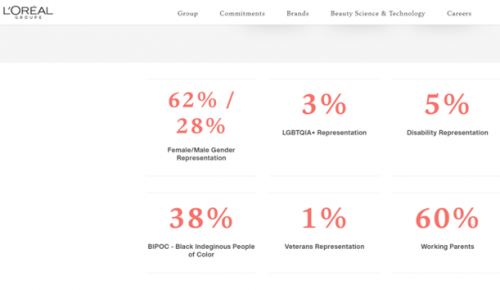
Not only cascading group level initiatives, L’Oréal’s country subsidiaries also create and run their own sustainability initiatives to leverage locally relevant topics. For example, diversity and inclusion is a priority for L’Oréal USA with the Inclusive Beauty Fund and civil society partnerships with onePULSE Foundation for its scholarship programme. This reflects the ongoing cultural conversation in the US where diversity, equity and inclusion (DEI) is forefront for consumers. L’Oréal USA’s website has statistics on gender, sexuality, disability, Black Indigenous People of Colour, veteran and working parents’ representation in the organisation. While this caters to the US’ approach of affirmative action and upliftment, this kind of representation is unachievable and to some degree, unnecessary, in markets like France where the perspective is based on equal rather than equitable treatment of minorities.
L’Oréal Groupe’s brands showcase a high degree of autonomy when it comes to their approach to sustainability topics. For example, in 2014, Garnier faced backlash as their personal care products were distributed in care packages to female Israeli soldiers by its Israeli subsidiary. Garnier USA then released a statement saying that they do not condone this initiative managed strictly at a local level. This contrarian navigation by both Garnier Israel and Garnier USA shows how brands manage local adaptations including dealing with controversial topics.
L’Oréal’s brands and strategies provide a clear perspective on the mix of group-level initiatives, that align with larger goals and strategies, and country-level initiatives, that correspond to local consumer sentiment and values. The right balance of autonomy and leadership in sustainability related areas is key to build brand value for retailers.
Conclusion: The collectivist vs. individualist approach to sustainability
Consumers have distinct regional variations in sustainability implementation and consumer attitudes that have an impact on the retail sector. In Western markets, environmental responsibility is shared between government and private sectors, with a strong focus on social and environmental issues both. In contrast, emerging markets like India and China approach sustainability through the lens of operational efficiency and cost savings. Despite showing higher environmental concerns than mature markets, Indian consumers expect governmental leadership in sustainability initiatives while remaining cautious about greenwashing. China presents a unique case where sustainability is predominantly government-driven, focusing primarily on environmental rather than social concerns, with consumers showing increasing scepticism towards corporate sustainability claims.This is due to the cheap availability of labour combined with cultures where saving is prioritised. According to Bain & Company, consumers in fast-growing markets, where environmental concerns tend to be highest - such as India, Indonesia, Brazil, and China - are willing to pay between 15 and 20%, a greater premium than in the West. Additionally, consumers cited the lack of availability of a variety of sustainable products as a challenge. Overall, the Indian consumer is highly price-sensitive and hence focuses on sustainability efficiently. Extremely averse to greenwashing, this group focuses on sustainable products for health and wellness benefits to counter the impact of environmental pollution. An analysis of the repair economy in these three zones shows that while Western countries approach it as a sustainable method with retailers starting to incorporate it into their offerings, emerging markets such as India and China have advanced economies for repair due to operational efficiencies.The sustainability say-do gap reflects the difference between expressed intention and action. While data from the US and Europe shows that consumers will not pay significant premiums for sustainable products, there is a lack of information regarding emerging markets like India and China. Ipsos Behavioural Science White Paper on the sustainability say-do gap details that focusing on enabling actions that people are already inclined to take can facilitate the adoption of sustainable behaviours. This provides a concrete action plan for retailers and brands where they can build brand value by engaging with consumers on sustainable actions that they are leaning towards taking. For example, consumers in the Asia-Pacific region tend far more towards health-conscious decision-making compared to their Western counterparts. They consider making healthier choices for themselves and their families, often evaluating sustainable products to improve health. By adapting their sustainable initiatives and communication around this focus on health and wellness, retailers can build a connection with their customers.L'Oréal's case study demonstrates the value of having a strategic global vision with local execution for sustainability topics. From land restoration initiatives in India, gender equality programmes in China, and diversity and inclusion programmes in the US, L’Oreal has provided guiding principles for retailers on successful market-specific adaptation of sustainability initiatives. It has provided a clear framework on how group-level initiatives like Stand Up can be implemented at a local level to ensure impact and brand relevance. Striking the strategic balance between global vision and local execution has proven increasingly crucial for brands and retailers alike.
Credits: IADS (Anchita Ranka)

Why the future of retail belongs to brands that build private jokes
Why the future of retail belongs to brands that build private jokes
What: Brands are shifting from mass-market strategies to community-driven engagement, using cultural fluency and exclusivity to build loyalty and belonging.
Why it is important: The move toward exclusivity and authentic engagement is reshaping retail economics, with brands that maintain cultural relevance achieving greater resilience and profitability.
Retail is experiencing a decisive shift away from broad, broadcast-style marketing toward strategies that prioritise community, cultural fluency, and exclusivity. Brands like Gentle Monster are leading this transformation by curating experiences that reward cultural literacy and foster a sense of belonging, rather than simply targeting mass demographics. This approach is mirrored across the industry, with luxury retailers and cult brands leveraging experiential loyalty programs, controlled scarcity, and authentic storytelling to deepen customer relationships and drive higher lifetime value. The economic benefits are clear: community-driven brands consistently outperform traditional competitors, achieving greater customer retention and more efficient acquisition. However, the risks of abandoning core values for broader appeal are significant, as brands that dilute their identity often face backlash and eroded loyalty. As retail spaces evolve into social and cultural hubs, brands are increasingly responsible for facilitating identity formation and meaningful connections, making cultural capital and belonging the new benchmarks of retail success.
IADS Notes: From December 2024 to May 2025, leading retailers have reimagined loyalty through experiential programs and personalised service, while brands like Hermès and Brunello Cucinelli have demonstrated the power of controlled scarcity and authentic philosophy. Community-driven brands have seen measurable gains in purchase frequency and customer lifetime value, while brands that stray from their core communities have suffered backlash. The evolution of retail spaces into social hubs further underscores the sector’s new role in fostering identity and belonging, confirming the rise of “tribal commerce” as a defining trend.
Why the future of retail belongs to brands that build private jokes
Where does sustainability sit?
Where does sustainability sit?
What: Fortune 500 companies are embedding sustainability into core business strategy, shifting from siloed CSR functions to integrated, executive-led initiatives.
Why it is important: The integration of sustainability across business functions and leadership is now essential for regulatory compliance, operational efficiency, and long-term competitive advantage, as recent Notion reports confirm.
Sustainability has evolved from a peripheral CSR concern to a central pillar of business strategy, with its position and leadership structure varying according to organisational maturity and regulatory context. While early approaches often relied on separate sustainability teams or Chief Sustainability Officers, the current trend is toward embedding sustainability across all functions, ensuring it is championed by influential leaders with operational credibility. This shift is driven by the need to align sustainability with business priorities, navigate complex reporting requirements, and respond to tightening regulations such as the EU’s CSRD and CSDDD. Executive sponsorship is increasingly recognised as critical, with leading companies integrating sustainability into supply chain, finance, and product development, and leveraging it for innovation and risk management. As regulatory and consumer pressures mount, the most effective sustainability leaders are those who combine strategic clarity with a deep understanding of business operations, ensuring that ESG goals are not sidelined but drive meaningful, measurable progress throughout the organisation.
IADS Notes: Recent industry research underscores this transformation, with Bain & Company (September 2024) and Harvard Business Review (May 2025) both highlighting the strategic integration of sustainability as a source of innovation and competitive advantage. New EU regulations are accelerating this trend, requiring comprehensive reporting and operational integration, while executive sponsorship and harmonised standards are increasingly seen as vital for compliance and business value. These developments confirm that sustainability’s influence now depends less on hierarchy and more on strategic leadership and cross-functional collaboration.
Is Macy’s turnaround gaining traction?
Is Macy’s turnaround gaining traction?
What: Macy’s targeted investments in select stores and luxury divisions are delivering incremental gains, yet the company faces persistent structural and competitive challenges.
Why it is important: Macy’s experience underscores the ongoing challenge of achieving sustainable growth in a rapidly evolving retail landscape, despite early successes in pilot locations.
Macy’s recent quarterly results reveal a company in the midst of a complex transformation, with its Bold New Chapter strategy producing modest but notable improvements in certain areas. Enhanced investment in select “Reimagine 125” and “First 50” stores has led to record customer satisfaction scores and better sales performance compared to the broader chain, while luxury divisions like Bloomingdale’s continue to outperform. However, these incremental gains are tempered by persistent challenges, including underwhelming sales growth relative to competitors such as TJX and Ulta, ongoing margin pressures, and the burden of an oversized, outdated store portfolio. Macy’s efforts to optimise its store network and modernise operations are prudent, yet the pace of change is constrained by deep-rooted structural issues and the need to balance short-term financial demands with long-term viability. The company’s future hinges on whether its current strategy is bold enough to win back customers and secure its place in a contracting and highly competitive sector.
IADS Notes: Macy’s transformation reflects a broader industry shift, as department stores pursue targeted investment, store optimisation, and digital integration to address declining market share and changing consumer behavior. The company’s pilot store initiatives and luxury expansion have shown early promise, yet ongoing activist investor pressure and comparisons to more operationally disciplined peers like Dillard’s highlight the sector’s struggle to balance financial demands with sustainable evolution. These dynamics, documented from November 2024 through March 2025, underscore the complexity of department store reinvention in today’s retail environment.
Canaries in the coal mine? Six facts about the recent employment effects of artificial intelligence
Canaries in the coal mine? Six facts about the recent employment effects of artificial intelligence
What: Generative AI adoption is driving significant changes in retail employment, particularly impacting entry-level roles and prompting a shift toward workforce augmentation rather than replacement.
Why it is important: This shift reflects a broader industry trend where sustainable productivity gains depend on augmenting, not replacing, human talent, as confirmed by recent retail data.
The widespread adoption of generative AI is fundamentally altering the landscape of retail employment, with early-career and entry-level roles experiencing the most pronounced effects. High-frequency data reveal that since late 2022, young workers in AI-exposed positions, such as customer service and sales, have faced notable declines in employment, while more experienced employees and those in less-exposed roles have remained stable or even grown. This trend is particularly acute in occupations where AI is used to automate rather than augment human labor, underscoring the importance of strategic implementation. The evidence suggests that the most successful retailers are those who leverage AI to enhance, rather than replace, their workforce—enabling employees to focus on higher-value tasks and supporting long-term talent development. The distinction between employment and compensation effects is also critical, as workforce adjustments are more visible in job numbers than in wages. Ultimately, the retail sector’s ability to balance technological advancement with human capital investment will determine its resilience and adaptability in an increasingly AI-driven environment.
IADS Notes: Recent industry data from March and June 2025 confirm that leading retailers are achieving 4.5% annual productivity growth through strategic AI integration focused on augmentation, not replacement. This aligns with findings from February and July 2025, which show that only 10% of retailers successfully scale AI applications, and that comprehensive training and human-centric strategies are essential for sustainable transformation. The elimination of entry-level roles threatens talent pipelines and succession planning, while the distinction between automation and augmentation remains central to workforce stability. These trends are evident across both remote and in-person retail roles, reinforcing the need for structured implementation and ongoing investment in human capital.
Canaries in the coal mine? Six facts about the recent employment effects of artificial intelligence
IADS Exclusive: Fortnum & Mason: the art of staying small to matter more
IADS Exclusive: Fortnum & Mason: the art of staying small to matter more
CHECK OUT THE PHOTOS OF FORTNUM & MASON
Fortnum & Mason is the only department store whose core economic engine is food and drink, generating nearly two-thirds of revenue. Located on London’s Piccadilly, the store is 6,000 square metres and employs around 1,000 staff. It currently holds two royal warrants granted by King Charles III and Queen Camilla.i
As for other department stores, such as Galeries Lafayette, Fortnum & Mason is privately owned. Positioned as a heritage luxury department store with a single cultural landmark flagship widely regarded as a tourist attraction, Fortnum & Mason is characterised by a predominance of full-price luxury merchandise and great international brand awareness, attracting affluent travellers.
Over three centuries, the grocer-turned-icon, still trading under the same turquoise colour, has converted from supplying the Crown into profitable retail ventures. Fortnum & Mason offers a blueprint of how heritage meets innovation, how experience can protect against footfall volatility and how operational efficiency enhances brand storytelling.
The origins of a retail institution
The genesis of a brand: from household waste to high-end retail
Fortnum & Mason started in 1707, when William Fortnum, then a Queen Anne’s footman, joined forces with his landlord, the St James’s shopkeeper Hugh Mason. Fortnum’s habit of reselling the royal household’s half-burned candles provided initial funding, and the two partners opened a grocery store in St James’s Market. From this first venture, Fortnum & Mason positioned itself at the intersection of refined taste and commercial flair. By the middle of the seventeenth century, the store had become an unofficial provisioner to royal and aristocratic customers as well as London’s growing mercantile class.
By 1761, Charles Fortnum, grandson of William, entered Queen Charlotte’s service, reinforcing the family’s court connection. Besides bringing cachet, the link to the Crown guaranteed steady and early success. Then, three pillars would remain at the core of the store's business success for centuries: proximity to political power, mastery of import logistics through Britain’s expanding empire, and relentless product novelty, which turned necessities (such as tea, candles, and preserves) into desirable luxuries.
The nineteenth century was an era of growth. During the Napoleonic Wars, the store supplied British officers with dried fruit, spices, and preserves, establishing a reputation for reliability. Queen Victoria famously ordered bottled beef tea for Florence Nightingale’s War hospitals, reinforcing the brand in the national imagination as purveyor of comfort in adversity. These high-profile adventures generated press coverage that no advertising budget could match.
At that time, Fortnum & Mason also invented, or at least popularised, the luxury hamper, an elegant wicker basket packed with provisions for railway journeys and country-house weekends. Hampers became both a revenue stream and a portable marketing billboard for the store. The Victorian decades saw the shop rebuilt on a grand Neo-Georgian scale, with large windows and gas lighting, transforming displays and inviting shoppers to linger.
Modern times: wars, prosperity and change in ownership
In the twentieth century, the two world wars forced Fortnum & Mason to adapt. During World War I, the company provided comfort parcels for officers, and in World War II, it produced Service Chocolate, a calorie-dense bar in a bright pink wrapper which was requisitioned by the Ministry of Food. The emphasis on quality within constraint reinforced, yet again, Fortnum & Mason’s as a purveyor of comfort in adversity.
Post-war austerity gave way to renewed prosperity. In 1951, Canadian businessman W. Garfield Weston acquired Fortnum & Mason, bringing capital for modernisation while retaining the store’s private company agility. Installed in 1964 over the Piccadilly entrance, the iconic four-ton clock has become a tourist landmark. Each hour, automated figures of Fortnum and Mason characters bow to one another, accompanied by chimes. During the 1960s and 1980s, Fortnum & Mason cautiously expanded into other categories, such as fragrances and fine jewellery. Yet food and beverage remained the most significant source of revenue, helping the business weather the department store’s downturn of the past decades.
Now, Fortnum & Mason operates under Wittington Investments, which is controlled by the Weston family. Besides Fortnum & Mason, the company is famous for owning Selfridges until 2021. They now own Heal’s (upmarket furniture chain), real estate, various private equity and property holdings. Additionally, Wittington Investments holds a majority stake in Associated British Foods (ABF), a FTSE 100 conglomerate that owns Primark, Twinings, and British Sugar.
A snapshot of the business: profitability rooted in purpose
Appointed by Wittington Investments in 2020, CEO Tom Athron, who spent six years as Waitrose’s CFO, developed a storytelling, hospitality, and sustainability strategy. Financial resilience has been notable. FY2022 declared turnover was £187 million, returning to a £6,1 million profitability post-Covid. In FY2023, declared revenue was up 11.9 % to £208.6 million, and gross margin improved to 44.4 %. Pre-tax profit rose to £9.3 million in FY 2024 on declared sales of £228 million. Also, the company saw a 20% increase in its wholesale business. Finally, with shipment available in over 120 countries, online sales are now accounting for 36 % of turnover by FY2024.
More specifically, 63% of the turnover is generated from food and drink, including teas, biscuits, preserves, speciality groceries, spirits and wines. The home, beauty and lifestyle categories account for 18%, encompassing tableware, candles, fragrance, accessories and leather goods. Hospitality and experiences generate 9 % of the turnover and include restaurants, masterclasses and events. Last but not least, the famous hampers represent approximately 10 % of sales, with a 10 % YoY volume growth at Christmas 2024. The latter decades saw Fortnum & Mason’s hampers go global, boosted by the rise of air travel and corporate gifting. International luxury ingredients, such as Iranian caviar and Jamaican Blue Mountain coffee, were added to British heritage products, while foie gras was discontinued due to animal welfare concerns. Same-day London delivery and temperature-controlled shipping are available to the 200+ hamper SKUs.
With entry prices such as £5.95 for preserves and £6.95 for tea bags, driving conversion and souvenir appeal, Fortnum & Mason sits at the intersection of everyday luxury and British heritage, mainly attracting three types of customers: affluent international tourists, who represented 40 % of Piccadilly footfall in peak Summer 2024, domestic treat seekers, who are primarily Millennials and GenX Londoners, and finally corporate clients leveraging hampers for softpower gifting.
Fortnum & Mason’s current era: a modern luxury model rooted in legacy
Store organisation: the experiential pivot
To mark its 300th anniversary, the Piccadilly flagship underwent a £24 million refurbishment, reopening in 2007 with expanded hospitality spaces and restored Georgian facades. The investment accelerated a strategic pivot from retail-only to a combination of retail and experiences with restaurants, cookery masterclasses, and immersive window theatre becoming key traffic drivers at a time when footfall on traditional high streets was declining.
With F&B options on four floors out of six, the -1 floor is home to the food hall and the wine cellar. It also features a rather dark wine bar and click-and-collect service. Food-to-go options and the Lower Ground coffee-to-go kiosk are available on this floor to capture a greater share of the local weekday trade. The ground floor, the ‘pièce de résistance’ of the store, is bustling and offers Fortnum & Mason's core products (tea, marmalades, coffee, chocolates, sweets, biscuits and patisserie). Cash desks are positioned on this floor, with entry-price items displayed along the queuing journey. Finally, the 45 Jermyn St. fancy restaurant opens from breakfast to dinner. The first floor is dedicated to teaware, stationery, accessories, and picnic equipment. The busy The Parlour restaurant is specialised in ice cream. Gift wrapping is available on this floor. The second floor seems to be designed for the female clientele. It offers a large beauty section and a significant niche fragrances section. Unlike the other floors, which primarily sell Fortnum’s own brand products, this floor offers a selection of luxury international brands. The space is complemented by women’s hats and scarves, loungewear and jewellery. Personal shopping services and a beauty room are positioned on this floor. The famous hampers are available on the third floor, offering a service that allows customers to design their own hampers. The Food & Drink Studio occupies a significant section of the floor. When there are no cooking classes, chefs are preparing pastries or pasta, offering a food spectacle to shoppers. A cook shop and a book shop complete the floor, which feels somewhat empty. The 3’6 bar is an intimate, speakeasy-like cocktail bar. Finally, the fourth floor is home to The Diamond Jubilee Tea Salon, an homage to the British tradition of afternoon tea. Queen Elizabeth II formally opened the room in 2012, renewing the special bond between the store and the Crown.
Floors are accessible through elevators and two different staircases, including a double-helix one. While the ground floor is packed with merchandise and customers filling their baskets with tea boxes and sweets, the other floors are airy and sometimes feel empty. During a weekday visit, the upper floors were relatively empty, with only a few customers shopping. Only the ground floor and the restaurants were busy. Some parts of the upper floors could be enhanced with additional products to recreate the ground floor’s product abundance, clearly inviting a food shopping spree.
Retail expansion with intention: scarcity as an asset
Additionally, Fortnum & Mason has developed an international presence over the years, always controlling scarcity. Similarly to Harrods, they demonstrate deliberate resistance to overextension, preserving the brand mystique and ethos. As a result, in addition to dozens of wholesale stockists, they are adopting a selective retail presence:
- A store at St Pancras International rail station opened in 2013, with click-and-collect services.
- A bar and a store at Heathrow International Airport opened in 2014, targeting premium international travellers.
- A store, bar and restaurant at the London’s Royal Exchange boutique opened in 2018.
- A store and restaurant launched in 2019 at K11 Musea in Hong Kong as the first overseas venture, designed as a brand embassy for Asian luxury consumers.
In June 2025, the company announced a regional UK expansion project beyond London, aimed at addressing the surge in demand for its luxury teas, biscuits and jam. While more than one additional store could open, they are currently exploring sites with iconic architecture, continuing to resist a mass rollout.
From legacy to leadership: Fortnum & Mason’s innovation agenda
Tech upgrades and operational efficiency
With a 7% decline in online sales during Christmas 2024 due to issues with hamper deliveries, e-commerce has been a challenge at Fortnum & Mason. The retailer has optimised its supply chain by consolidating its four distribution centres into one, increasing its e-commerce capabilities. While the situation is improving, demand still exceeds their delivery slot capabilities. This is why the company deliberately limits the number of orders, making sure they can fulfil them while maintaining excellent service.
Fortnum & Mason shows great dynamism in optimising operations to improve productivity. From 2024, the company began rolling out an AI-powered forecasting and merchandising system, developed by Relex, across its category buying teams, which were previously using spreadsheets. In-store, they successfully reduced the number of steps in the checkout process, resulting in a five-second decrease in transaction time per customer.
In parallel, in March 2025, Fortnum & Mason entered the on-demand delivery market. They partner with premium groceries delivery platform Zapp to offer 24/7 60-minute delivery across London. No longer seen as a Christmas-focused business, this initiative marks a significant milestone in terms of customer centricity and service for Fortnum & Mason as they claim to be the first of London's high-end stores to partner with an on-demand delivery service.
Subscription service: repositioning the brand beyond Christmas through convenience
Increasingly focused on customer centricity and convenience, Fortnum & Mason unveiled a three-tier subscription delivery service in 2024:
- At £100 annually, the Tea Post subscription offers customers a year’s supply of monthly refills of a choice of Fortnum’s tea blends. Subscribers also receive a personalised china mug, tin and strainer.
- The Biscuit Post, which costs £20 a month, offers refills of the Toffolossus, Chocolossus or Gingerlossus biscuits, available on either three-month, six-month or 12-month subscriptions.
- The third subscription, called the Teatime Dispatch, offers a selection of tea and biscuits, as well as a choice of jams, for £75 a month.
From customer to member: building a brand-led community
In 2025, Fortnum & Mason took another step toward emphasising customer relationships. They launched Friends of Fortnum’s paid membership programme offering exclusive events and early access to product drops. The scheme costs £100 per year. Members will receive a curated welcome gift, seasonal gifts and free next-day UK delivery on all orders over £25. Subscribers will also be able to access tickets for exclusive events, along with other small extras, when shopping in-store or dining at its restaurants. The department store developed the programme in direct response to customer feedback seeking a closer connection to the Fortnum & Mason brand. Despite discreet in-store advertising, the early stages of the launch are said to be very positive. Their re-platformed CRM, powered by SAP Emarsys, enables behavioural segmentation and provides first-party data capture.
Finally, marketing activations have been launched through noteworthy partnerships. They have recently partnered with actor and cooking expert Stanley Tucci for a cookware range and with multi-layered cake brand Get Baked, which has drawn younger crowds to the store thanks to its success on TikTok.
With food and beverage at its core, Fortnum & Mason stands apart as a department store. Turning its historic specialisation into a competitive advantage, the company’s food-centric heritage and royal cachet sustain its cultural relevance. Its deliberate emphasis on experience over expansion, high-margin own-label assortments, and curated internationalisation reflects a relevant approach to luxury retail. Additionally, the company demonstrates that category focus, rather than scale, can define global luxury success.
The future of Fortnum & Mason holds uncertainties, though. Achieving less than £250 million annually, the centuries-old business is real but narrow. Concentration in one flagship, UK tourist tax policy, and high exposure to raw material inflation are threats to the company.
Finally, the consequences of climate change may reveal a more fragile business than the brand aura suggests. Driven by heatwaves and floods, Darjeeling tea output fell to a 170-year low of less than 6 million kg in 2024, and Assam tea production dropped 7.8%, two key products at Fortnum & Mason. While food and drink have always been its core business and a success enabler, this shows how Fortnum & Mason's heavy dependence on certain products could transform into a threat to its future—a cautionary tale to keep in mind.
Credits: IADS (Christine Montard)
US Holiday Outlook 2025: Value, meaning and generational shifts
US Holiday Outlook 2025: Value, meaning and generational shifts
What: Holiday 2025 retail spending is declining for the first time since 2020, with Gen Z cutting back sharply while older generations maintain or increase their budgets.
Why it is important: The generational divide and economic pressures reinforce the importance of flexible retail models and personalised engagement to capture shifting demand.
The 2025 holiday season signals a notable shift in retail dynamics, with overall consumer spending expected to decline by 5%—the first such drop since 2020. Gen Z is leading this contraction, planning to reduce their holiday budgets by 23% as they navigate economic uncertainty, early career challenges, and a heightened focus on value, sustainability, and wellness. In contrast, baby boomers are set to increase their spending, and millennials are holding steady, highlighting a pronounced generational divide. Despite tighter budgets, consumers remain committed to holiday traditions, with spending on travel and entertainment holding firm and food emerging as a resilient gift category. Value-driven choices are shaping the season, as shoppers seek affordable alternatives, embrace secondhand and upcycled gifts, and prioritise meaningful experiences over material goods. Flexible shopping and payment channels, including omnichannel integration and diverse payment options, are increasingly important, while technology and AI are playing a growing role in product discovery—especially among younger consumers. Retailers are challenged to move beyond one-size-fits-all strategies and respond in real time to evolving consumer needs.
IADS Notes: The generational and value-driven shifts described in the 2025 holiday outlook are echoed in recent industry findings. Gen Z’s changing definition of necessities and their rising economic influence are prompting retailers to adapt, while baby boomers’ wealth and loyalty remain underleveraged. The surge in secondhand gifting and the anti-materialist movement, highlighted in late 2024 and early 2025, reflect a broader move toward affordability and sustainability. Hybrid shopping patterns and the adoption of flexible payment options, such as BNPL, are reshaping consumer journeys, as seen in the 2024 holiday season. Economic pressures, including tariffs and inflation, are eroding consumer confidence and driving more cautious, deliberate spending. Meanwhile, the growing use of AI for product discovery among younger shoppers coexists with a persistent demand for human interaction, confirming that successful retail strategies must balance technology with personal service.
US Holiday Outlook 2025: Value, meaning and generational shifts
Spinning textile waste into value
Spinning textile waste into value
What:
AI agents are now mediating and automating e-commerce transactions, redefining the relationship between brands, retailers, and consumers.
Why it is important:
This shift reflects a major reconfiguration of retail power structures, as tech giants and AI agents increasingly control consumer access and decision-making.
The global fashion industry faces a mounting crisis of textile waste, with 120 million metric tons discarded annually and only a fraction recycled into new fibers. As apparel production and consumption rise, the environmental and economic toll intensifies, with 80% of discarded clothing ending up in landfills or incinerators and less than 1% recycled into new textiles. The industry’s reliance on linear models is unsustainable, prompting a shift toward circular economy strategies and advanced recycling technologies. Retailers are responding by adopting circular models, driven by both consumer demand—nearly a third of shoppers now prioritize eco-friendliness—and regulatory pressure, particularly in regions like the EU. However, operational and financial barriers persist, including the high cost of recycled materials, inadequate infrastructure, and the complexity of scaling next-generation materials. Overcoming these challenges requires industry-wide collaboration, investment in innovation, and active consumer engagement. As circularity becomes a mainstream imperative, the fashion sector must accelerate its transition to sustainable practices to ensure long-term competitiveness and resilience.
IADS Notes:
Bangladesh’s textile waste challenge, with 577,000 metric tons of factory waste annually, exemplifies the urgent need for expanded recycling infrastructure as global sustainability standards tighten. This mirrors the broader industry shift, where circular economy strategies are becoming essential for retail survival, and operational barriers to scaling next-gen materials remain significant. The convergence of consumer demand, regulatory action, and business innovation is transforming circularity into a mainstream imperative, making cross-industry collaboration and consumer engagement critical for large-scale impact.
The rise of the consumer visionary merchant
The rise of the consumer visionary merchant
What: Retail merchandising is being redefined as merchants evolve into “consumer visionaries,” blending human insight, technology, and agility to drive customer intimacy, dynamic assortment, and brand loyalty.
Why it is important: By redefining the merchant’s role, retailers can break down silos, foster innovation, and deliver more relevant, personalized experiences that drive loyalty and long-term value.
The role of merchandising in retail is undergoing a profound transformation as merchants shift from traditional, margin-focused planning to becoming “consumer visionaries” who blend deep human understanding with technology and agility. Today’s merchants are expected to act as content curators and influencers, integrating social commerce, omnichannel experiences, and real-time data to build true consumer intimacy. AI and automation are elevating the merchant’s role, freeing teams from routine tasks and enabling rapid test-and-learn cycles, dynamic assortment, and personalized value propositions. Success now depends on decoding customer motivations, orchestrating connected offers, and delivering delight at speed—requiring merchants to collaborate closely with marketing, planning, and inventory teams. This evolution is driven by the need for resilience, innovation, and the ability to pivot quickly in response to economic headwinds, supply chain disruptions, and shifting consumer behaviors. Retailers that invest in developing these capabilities will create durable advantages, positioning the merchant as a key driver of brand loyalty and sustainable growth.
IADS Notes:
The transformation of retail merchandising is being driven by a convergence of technology, data, and evolving consumer expectations, as documented by BCG (May 2025), Inside Retail (March 2025), Retail Systems Research (April 2025), and Forbes (March 2025). The BCG survey of 350 retailers reveals a significant gap between current merchandising practices and future requirements, with AI adoption and automation emerging as critical enablers for efficiency, dynamic assortment, and real-time decision-making. Inside Retail highlights how AI-driven hyper-personalisation is now essential for meeting consumer demand for tailored experiences, while Retail Systems Research underscores the urgency of moving beyond traditional Excel-based planning to data-driven, AI-enabled merchandise management. Forbes emphasizes that true productivity gains come from integrating technology with people and process changes, enabling merchants to focus on strategy, creativity, and customer intimacy. Collectively, these developments illustrate how the merchant role is evolving into that of a “consumer visionary”—one who blends human insight, digital fluency, and agility to drive brand loyalty, competitive advantage, and sustainable growth in a complex retail landscape.
Why the global flagship still matters
Why the global flagship still matters
What: Flagship stores remain vital for brands, serving as innovation labs, customer engagement hubs, and powerful drivers of both physical and online sales in an increasingly digital retail landscape.
Why it is important: The continued investment in flagship stores demonstrates that physical retail, when focused on experience and innovation, is essential for brand differentiation, customer loyalty, and omnichannel growth.
Despite the rise of e-commerce, global flagship stores are thriving as essential brand assets, offering immersive experiences that go far beyond traditional retail. These spaces serve as innovation labs where brands test new concepts, technologies, and services, learning from a diverse and engaged customer base. Flagship stores attract not only local shoppers but also tourists and destination visitors, amplifying brand visibility and providing valuable insights for broader rollout. The “halo effect” of a memorable flagship experience boosts both physical and online sales, as positive impressions carry over to the brand’s entire offering. Retailers are increasingly integrating advanced technology, such as next-generation POS systems, to streamline operations and gather actionable data, ensuring seamless customer journeys. The evolution of flagship stores reflects a broader industry trend: blending marketing and sales, prioritizing inspiration and utility, and creating spaces that are both brand showcases and operationally effective. This approach is setting new standards for customer engagement and brand loyalty in the digital age.
IADS Notes:
The enduring relevance and evolution of flagship stores are well documented by The Robin Report (January 2025), which highlights how retailers are transforming physical spaces into experiential destinations, using flagship locations as test grounds for new concepts, technology, and memorable customer engagement. The Los Angeles Times (March 2025) underscores the global momentum behind experiential retail, with participatory experiences and social spaces in malls and flagships driving footfall and brand visibility, especially among Gen Z and Millennial consumers. The Retail Bulletin (April 2025) further illustrates how department stores and flagship locations are blending marketing and sales, investing in innovative design, and setting new standards for customer experience. Inside Retail (September 2024) provides international context, showing how flagship stores in Japan are pivotal in attracting tourists and supporting economic growth. Collectively, these sources demonstrate that, far from being obsolete, flagship stores are central to brand strategy, innovation, and the creation of positive “halo effects” that benefit both physical and online sales in the modern retail landscape.
What Australia’s tariff win really means for retail and supply chains
What Australia’s tariff win really means for retail and supply chains
What: Australia secures competitive edge in US market through favourable 10% tariff rate, while global competitors face significantly higher trade barriers up to 55%.
Why it is important: The favourable rate offers Australian manufacturers strategic opportunities for market expansion at a time when global retailers are fundamentally restructuring their supply chains and establishing geopolitical nerve centers to manage tariff complexity.
Australia's position in the latest US tariff regime represents a significant strategic advantage in global trade dynamics. While allies like Canada face a 35% tariff rate and New Zealand confronts a 15% rate, Australia's maintenance of a 10% baseline offers crucial market access benefits. This competitive edge becomes particularly valuable for Australian manufacturers, who can leverage the lower rate to maintain viable margins in the US market. However, the implications extend beyond simple tariff rates, as Australian retailers with offshore production must navigate more complex scenarios, particularly regarding Chinese-manufactured goods facing minimum 30% tariffs. The situation presents both opportunities and challenges, potentially encouraging partial reshoring of manufacturing to Australia under current rules of origin. This development comes at a critical time when global supply chains are being reimagined, with pricing strategies and sourcing decisions increasingly influenced by strategic market access rather than cost considerations alone.
IADS Notes: Australia's relatively favorable 10% tariff position gains significant context when viewed against the broader retail landscape of 2025. While BCG projects $640 billion in additional US import costs from expanded tariffs, Australian retailers benefit from a more stable trading environment. This advantage becomes particularly relevant as department stores globally implement varying price increases, with footwear seeing rises of up to 4.2%. The impact on consumer behavior is notable, with data showing projected price increases of 1-1.5% and lower-income households facing potential 2.3% drops in disposable income. Major retailers' responses, including Costco and Walmart pressuring Chinese suppliers for price concessions, highlight the strategic value of Australia's position. As retailers globally establish geopolitical nerve centers to navigate tariff complexity, Australian manufacturers' competitive edge in the US market could prove increasingly valuable for maintaining stable supply chains and pricing strategies.
What Australia’s tariff win really means for retail and supply chains
Retail’s next tech breach won’t be a hack
Retail’s next tech breach won’t be a hack
What: Retailers face a new cybersecurity threat as AI systems become vulnerable to manipulation through hidden prompts, potentially compromising product recommendations, customer service, and operational decisions.
Why it is important: With ransomware now accounting for 30% of retail security incidents and average losses reaching £1.4 million per attack, this new threat vector through AI systems represents a critical vulnerability that could amplify existing security risks.
The integration of AI tools into retail workflows has created an unexpected vulnerability: prompt injection attacks. While these AI systems efficiently handle tasks from customer service to inventory management, they also present a new attack surface that doesn't require traditional hacking methods. Through carefully crafted text or metadata, malicious actors can manipulate AI models to override policies, distort analysis, and compromise decision-making processes. The threat is particularly insidious because it exploits what makes AI powerful - its training to follow instructions - while leaving no obvious intrusion points.
The risk extends across multiple retail touchpoints, from marketplace platforms using AI for product listings to chatbots handling customer requests. Unlike conventional cyber attacks, prompt injections can create falsified summaries, manipulated product comparisons, and distorted personalised promotions without triggering security alerts. This creates a diagnostic challenge for retailers, as tracing the source of manipulated outputs becomes increasingly complex in an environment where data flows from numerous sources simultaneously.
The retail sector's vulnerability is heightened by its fragmented architecture and real-time data processing requirements. Forward-thinking retailers must now approach AI not just as a tool for efficiency but as a critical security concern requiring robust governance, clear data lineage, and sophisticated monitoring systems.
IADS Notes: Recent cyber incidents underscore the urgency of addressing AI vulnerabilities in retail. The April 2025 attack on Marks & Spencer that wiped £700 million off their market value demonstrates the severe financial implications of security breaches. This is particularly concerning given that 82% of companies lack strong digital core security maturity, while 86% use third-party tools but only 13% fully understand their data collection practices. The March 2025 incident resulting in £5.4 billion in losses across Fortune 500 companies further highlights how quickly security vulnerabilities can escalate in today's interconnected retail systems.
How new EU tariffs could shift luxury pricing – and fuel the rise of resale
How new EU tariffs could shift luxury pricing – and fuel the rise of resale
What: Luxury retailers face strategic pricing decisions as EU-US trade agreement introduces 15% tariff, with different impacts expected across true luxury and aspirational consumer segments.
Why it is important: The divergent impact on consumer segments highlights a critical moment for luxury retail strategy, where brands must balance maintaining exclusivity with market accessibility, while the resale sector emerges as a significant beneficiary of changing consumer behaviour.
The recent US-EU trade agreement establishing a 15% tariff on European imports presents a complex challenge for luxury retailers, particularly affecting their pricing strategies and market positioning. While this rate is more favorable than the initially threatened 30%, it still requires careful navigation by luxury brands. Hermès has already implemented a global price increase of 7% with an additional 5% specifically in the US market, setting a precedent for the industry. Financial analysts predict minimal impact on true luxury consumers, with price increases expected in the low single-digit range. However, the situation poses a more significant challenge for aspirational luxury shoppers, who are increasingly price-sensitive across product categories. This bifurcation in consumer response is likely to accelerate existing market trends, particularly benefiting luxury resale platforms like Vestiaire Collective and The RealReal. The tariff's implementation forces luxury brands to balance maintaining profit margins with market accessibility, while potentially reshaping traditional luxury retail dynamics.
IADS Notes: The implementation of EU tariffs comes at a critical juncture in luxury retail transformation. As reported in April 2025, BCG projects $640 billion in additional US import costs from tariffs, while European suppliers controlling 70% of global luxury production face unprecedented pressure. This aligns with the article's analysis of brands like Hermès passing on costs to consumers. The impact on consumer behaviour is significant, with June 2025 data showing declining spending intentions among wealthy consumers, particularly affecting aspirational shoppers. The resale sector emerges as a key beneficiary, with March 2025 projections indicating the global secondhand market could reach $350 billion by 2028, supported by The RealReal's 444% stock surge in January 2025. Luxury brands are responding differently to these pressures, as evidenced by December 2024 reports showing some introducing sub-$500 products while others maintain premium positioning. This bifurcation in strategy reflects the broader market transformation, where traditional retail models face disruption from both tariff pressures and evolving consumer preferences.
How new EU tariffs could shift luxury pricing – and fuel the rise of resale
AI creates new cyber risks. It can help resolve them, too.
AI creates new cyber risks. It can help resolve them, too.
What: AI-powered attacks have become the primary concern for CISOs, with 80% citing them as their top threat while companies struggle to implement adequate protection measures.
Why it is important: As AI-enabled threats evolve from theoretical risks to operational realities, organisations must fundamentally rethink their cybersecurity strategies while balancing innovation with protection, particularly as only 30% have implemented specific AI security measures.
BCG's comprehensive survey of CISOs reveals a dramatic shift in cybersecurity concerns, with AI-powered attacks rising from fifth place to become the dominant threat, marking a 19-point increase over the previous year. Social engineering emerges as the most significant AI-enabled threat, with 62% of respondents identifying it as a major or critical concern. Despite this growing threat landscape, implementation of protective measures lags behind, with only 30% of organisations having deployed or tested cyber solutions specifically designed to protect AI-related systems. Companies are responding by increasing investments in cyber awareness training and threat intelligence, with most preferring to adopt AI-driven security features from existing vendors rather than new providers. The survey indicates a projected 10% growth in cybersecurity budgets, remaining resilient despite broader IT spending pressures, as organisations prioritise protection against evolving AI threats while balancing cost considerations with security needs.
IADS Notes: The BCG report's findings on AI security challenges align with significant developments in retail cybersecurity throughout 2025. The report's identification of AI-powered attacks as the top CISO concern mirrors the retail sector's experience, where ransomware accounts for 30% of security incidents with average losses of £1.4 million per attack as of April 2025. The urgency of this threat was dramatically demonstrated in June 2025 when major luxury retailers including Cartier, The North Face, and Adidas faced sophisticated AI-powered attacks. The report's emphasis on vendor consolidation proves particularly relevant given that 41% of retail breaches occur through third-party vulnerabilities, as evidenced by the May 2025 Co-op breach affecting 20 million customers. Implementation challenges remain significant, with only 2% of businesses achieving comprehensive cyber resilience measures by June 2025, while social engineering threats, highlighted in the report as a critical concern, were demonstrated by the Scattered Spider group's devastating attack on M&S, which wiped £700 million off their market value.
What the robotics industry will look like in 10 years, according to founders and VCs
What the robotics industry will look like in 10 years, according to founders and VCs
What: Industry leaders and VCs predict robots will transform retail operations within a decade, from warehouse automation to customer service, with China and the US leading the technological revolution.
Why it is important: With retailers currently losing 4.5% of gross sales due to operational inefficiencies and 71% of employees already using AI tools weekly, the integration of robotics technology will be fundamental to addressing both labour challenges and operational bottlenecks.
The robotics industry stands at the cusp of a transformative decade, with investors and founders envisioning widespread adoption across retail operations. Leading voices in the field predict that robots will soon handle tasks ranging from basic warehouse operations to complex customer interactions. Chinese companies are driving cost reduction in hardware development, making automation more accessible to retailers of all sizes. The evolution extends beyond simple task automation, with emotionally intelligent robots being developed for customer service and personalised shopping experiences. While the US and China are expected to dominate this technological revolution, European companies maintain strength in industrial applications. The integration of AI with robotics is creating more sophisticated systems capable of learning and adapting to complex retail environments. However, the industry faces challenges in balancing automation with human interaction, particularly in customer-facing roles. The article emphasises that robots will serve as tools rather than replacements, augmenting human capabilities while addressing critical labour shortages in the retail sector.
IADS Notes: The retail industry's evolution towards robotics aligns closely with recent market developments. In March 2025, retailers achieved a remarkable 4.5% annual productivity growth through strategic automation, validating predictions about robots' role in enhancing operational efficiency. This transformation is already visible in warehouse operations, where Verity's AI-powered drones demonstrated in February 2025 how 24/7 robotic operations can eliminate 98% of operational errors. However, the human element remains crucial, as January 2025 data revealed that while 71% of retail employees use AI tools weekly, only 36% feel adequately prepared for technology integration. The success story of Intime Department Store in July 2024, achieving a 15% boost in counter sales through human-robot collaboration, demonstrates how robots can effectively complement human workers in retail operations.
What the robotics industry will look like in 10 years, according to founders and VCs
Is the luxury industry facing an identity crisis?
Is the luxury industry facing an identity crisis?
What: The luxury industry faces its deepest identity crisis since 2008 as major groups like LVMH and Kering report significant sales declines while Hermès thrives through exclusivity-focused strategy.
Why it is important: The contrasting performance between mass-market focused brands and those maintaining exclusivity demonstrates how the luxury sector must recalibrate its approach to growth and brand value preservation.
The luxury industry is experiencing a profound transformation, evidenced by LVMH's 15% profit drop and Kering's 18% revenue decline in early 2025. This downturn reflects deeper structural issues beyond economic challenges, as brands grapple with the consequences of aggressive expansion strategies. The contrast between struggling mass-market oriented brands and the success of exclusivity-focused houses like Hermès, which saw 9% growth, highlights a critical industry divide. The shift in consumer sentiment, particularly among younger demographics, suggests a growing fatigue with overexposed luxury brands and a return to values of craftsmanship and authenticity. This transformation is forcing luxury groups to reevaluate their strategies, balancing growth ambitions with brand equity preservation. The industry's challenge lies not in temporary market fluctuations but in rediscovering the essence of luxury: exclusivity, intimacy, and enduring value.
IADS Notes: Recent market data underscores the luxury sector's transformation throughout 2024-2025. In February 2025, Bain-Altagamma reported the first contraction in personal luxury goods in 15 years, with the industry losing approximately 50 million customers. March 2025 revealed how successful brands like Hermès maintained their allure through controlled distribution, while others struggled with overexposure. This trend coincided with a significant shift in consumer behaviour, as December 2024 data showed luxury brands introducing products under $500 to retain middle-class consumers The transformation is particularly evident in China, where June 2024 reports showed growing "luxury fatigue" and a shift towards more discreet consumption patterns.
Why letting customers keep their returns creates loyalty
Why letting customers keep their returns creates loyalty
What: Notre Dame study demonstrates how "returnless returns" transform transactional relationships into personal ones, driving customer loyalty through psychological principles of reciprocity and trust.
Why it is important:
As retailers face an $890 billion returns challenge, this research provides a psychological framework for transforming a major cost center into a strategic advantage for building lasting customer relationships.
New research from the University of Notre Dame reveals that allowing customers to keep unwanted items instead of returning them creates a powerful psychological shift in brand perception. The study, published in the Journal of Marketing Research, demonstrates that "returnless returns" significantly boost customer loyalty and repurchase intentions by transforming transactional relationships into more personal ones. This practice has gained substantial traction, with 59% of major retailers now implementing this approach, more than doubling from the previous year. The research shows that trust plays a crucial role, as requiring proof of defects diminishes the positive effects. When companies demonstrate trust by not requiring documentation, customers respond with dramatically increased loyalty and advocacy. The study also found that framing these policies on a case-by-case basis proves more effective, as customers feel they're receiving special treatment. Additionally, suggesting donation options for unwanted items further enhances brand perception and trustworthiness compared to recommending disposal.
IADS Notes: The Notre Dame study's findings on returnless returns align with significant industry developments throughout 2024-2025. While the NRF reported an unprecedented $890 billion in returns by December 2024, retailers are actively seeking innovative solutions to balance customer loyalty with financial sustainability. Decathlon Hong Kong's successful implementation of a lifetime returns policy in August 2024 demonstrated how trust-based approaches can strengthen customer relationships without compromising profitability. This contrasts with the industry-wide challenge revealed in September 2024, where 39% of consumers were returning online purchases monthly, each return costing retailers $25-30. The trend has prompted varied responses, from Chinese e-commerce platforms ending refund-without-returns policies in April 2025 to retailers exploring circular economy approaches. These developments underscore the study's central thesis that returns management can be transformed from a cost center into a strategic tool for building customer loyalty.
The CEO’s guide to the Global South
The CEO’s guide to the Global South
What: The Global South emerges as a powerful economic force, representing 62% of global population and projected to reach 20% of global GDP, driven by strategic multi-aligned trade policies and business-friendly environments.
Why it is important: This development marks a historic transition in global retail, as these nations move from being market followers to trendsetters, backed by substantial consumer bases and strategic trade relationships.
The Global South is fundamentally reshaping the global economic landscape, representing a powerful bloc of over 130 nations that collectively account for 62% of the global population. These nations are distinguishing themselves through a pragmatic approach to development, combining business-friendly policies with strategic neutrality in international relations. Their projected GDP growth of 4.2% annually through 2029 significantly outpaces advanced economies' 1.9%, reflecting their increasing economic strength. The transformation is particularly evident in their approach to trade and development, where countries maintain beneficial relationships with both Eastern and Western partners while advancing their own economic interests. This strategic positioning, coupled with rich resources, growing labour forces, and expanding consumer markets, positions the Global South as a crucial engine of global growth. Their success in balancing climate goals with development objectives while fostering innovation and trade demonstrates a sophisticated approach to economic advancement that is attracting significant international investment and partnerships.
IADS Notes: Recent market developments validate the Global South's rising influence in global retail. In September 2024, India's emergence as the most attractive market for retail expansion attracted luxury brands like Birkenstock through strategic local partnerships . By January 2025, Asia-Pacific markets showcased diverse consumer behaviours, with India pioneering experiential retail while Southeast Asian nations prioritised infrastructure . The momentum continued in February as Vietnam targeted a $350 billion retail market, while Korean retail giants expanded their regional presence . March 2025 highlighted India's transformation, with affluent households set to reach 30% by 2035 and trillion-dollar infrastructure investments attracting international brands . This culminated in April 2025 with the Global South achieving 4.2% annual GDP growth, more than double that of advanced economies .
From change management to change strategy
From change management to change strategy
What: A new agent-based model for simulating organisational change identifies four critical factors that determine transformation success: organisational hierarchy, social connections, change magnitude, and impact predictability.
Why it is important: With major retailers like Macy's, Saks, and El Corte Inglés implementing significant transformations, this framework provides crucial insights for increasing success rates through strategically designed change programs.
BCG's innovative approach to organisational change introduces a sophisticated agent-based model that simulates how companies adopt transformational initiatives. The research identifies four crucial contingencies that change programs must address: organizational structure, social networks within the firm, scale of change, and certainty about its impact. The model demonstrates that hierarchical organisations benefit from leadership-driven change cascading through levels, while flat structures require different approaches focused on peer influence. Social networks prove equally critical, with tightly knit organizations benefiting from champion-led change, while looser networks demand broader educational approaches. The scale of change, from incremental to fundamental, requires different motivational strategies, with smaller changes needing extrinsic motivation and larger ones requiring clear communication of benefits. The research emphasizes that change impact certainty significantly affects adoption rates, with unclear benefits often leading to implementation backsliding.
IADS Notes: Recent retail transformations validate BCG's findings throughout 2024-2025. In January 2025, Saks Global demonstrated successful hierarchical change by implementing AI-driven operations under new leadership. March 2025 saw El Corte Inglés leverage social networks through its Transformation Office, achieving significant progress in digital integration. By April 2025, Manor's CHF 200 million transformation showed how clear benefit communication drives adoption, achieving its highest operational profit in years. In June 2025, Bloomingdale's success with customer experience transformation highlighted the importance of measuring change impact through new metrics. Most recently, July 2025 saw Galeries Lafayette successfully implement a comprehensive leadership restructuring, demonstrating how family-owned retailers can balance tradition with modern management approaches.
The EU-US trade agreement: Some clarity and ongoing uncertainty
The EU-US trade agreement: Some clarity and ongoing uncertainty
What: The EU-US trade agreement establishes a 15% tariff framework with strategic sector exemptions, marking a significant shift in transatlantic trade relations.
Why it is important: The framework's impact on retail pricing and sourcing strategies comes at a critical time when consumer confidence is already showing its sharpest decline since 2021, with 62% expressing concern about rising costs.
The newly announced EU-US trade framework represents a significant development in international commerce, establishing a 15% tariff rate for EU imports into the US. This agreement includes strategic exemptions for several sectors, including aerospace, chemicals, semiconductors, and certain food products, which will maintain zero tariffs. The automotive sector sees a notable shift from the previous 27.5% rate to the new 15% ceiling, though complexities remain regarding the stacking of tariffs with existing rates. The framework's implementation has immediate implications for supply chains, with steel and aluminum still subject to separate negotiations for potential tariff rate quota arrangements. The EU has committed to substantial energy purchases and direct investment in the US, though the specifics and enforcement mechanisms remain unclear. This agreement adds to the growing patchwork of bilateral trade deals that increasingly characterise global commerce, potentially challenging WTO principles while reshaping international trade relationships.
IADS Notes:
The retail landscape has undergone significant transformation throughout early 2025. In January, BCG's analysis projected staggering additional import costs of $640 billion from expanded tariffs, catalysing widespread industry restructuring. February saw the elimination of the $800 de minimis rule, disrupting e-commerce operations and affecting 4 million daily shipments. By March, 62% of consumers expressed serious concern about rising retail prices, while major retailers like Costco and Walmart actively pressured Chinese suppliers for price concessions. Consumer behaviour shifted dramatically, with data showing 84% of shoppers reconsidering their purchasing strategies. The impact became increasingly visible in May, when consumer confidence recorded its sharpest decline since August 2021. By July, department stores were implementing strategic price increases, with footwear leading at 4.2%, demonstrating how tariff impacts were finally reaching consumers after retailers' initial absorption efforts.
The EU-US trade agreement: Some clarity and ongoing uncertainty
What Thailand’s latest crisis means for retailers and tourism recovery
What Thailand’s latest crisis means for retailers and tourism recovery
What: Thailand's retail sector faces significant disruption as border conflict with Cambodia threatens THB500 million in daily trade and compounds existing tourism challenges.
Why it is important: This crisis highlights the vulnerability of Southeast Asian retail markets to geopolitical tensions, particularly as Thailand struggles to revive its crucial Chinese tourism market while managing regional conflicts.
Thailand's retail sector confronts a complex crisis as border tensions with Cambodia disrupt vital trade routes and tourism flows. The conflict over ancient temples, including Prasat Ta Muen Thom and Preah Vihear, threatens THB500 million in daily cross-border commerce, affecting essential supply chains for consumer goods, apparel production, and electronics components. The situation compounds Thailand's existing tourism challenges, with international arrivals already down 5% in the first half of the year. Chinese tourism, traditionally a crucial market, has been particularly affected, with projected visitors revised down from 6.9 million to 5 million. While Malaysia has overtaken China as the top source of international tourists, their lower spending power presents a significant concern for retailers. The government's ambitious target of generating 3.5 trillion baht in tourism spending this year appears increasingly challenging, impacting retailers across major tourist destinations like Bangkok, Pattaya, and Phuket, where tourism accounts for 18% of retail merchandise spending and 23% of food and beverage revenue.
IADS Notes: The current border conflict's impact on Thailand's retail sector occurs against a backdrop of significant industry transformation throughout 2024-2025. While June 2025 data showed the retail sector contributing THB2.8 trillion to GDP, with tourism accounting for 18%, the industry faces multiple challenges. Despite this, major retailers remain optimistic, as evidenced by Central Group's October 2024 announcement of a $461 million investment in tourist destinations like Krabi and Chiang Mai. This confidence is supported by projections from November 2024 showing Thailand's luxury market growing to $3.6 billion by 2029. However, March 2025 reports revealed mixed results for major retailers like Central Retail, with declining same-store sales despite continued expansion. The current crisis adds another layer of complexity to Thailand's retail recovery, particularly concerning Chinese tourism, which was already showing signs of weakness before the conflict. This situation highlights the delicate balance between Thailand's ambitious retail development plans and its vulnerability to regional geopolitical tensions.
What Thailand’s latest crisis means for retailers and tourism recovery
Vogue erupts: AI-generated models spark reader fury and industry panic
Vogue erupts: AI-generated models spark reader fury and industry panic
What: A two-page Guess advertisement in Vogue's August 2025 issue, created by AI company Seraphinne Vallora, triggers industry-wide debate about the future of fashion photography and modeling.
Why it is important: This development represents a critical turning point in fashion media, as the industry's most influential publication embraces AI-generated content, potentially setting new standards for advertising and content creation while raising significant ethical concerns about the future of modeling.
Vogue's August 2025 issue has sparked intense debate within the fashion industry by featuring AI-generated models in a Guess advertisement. Created by Paris-based creative house Seraphinne Vallora, the campaign showcases hyper-symmetrical imagery that treads the line between photorealism and impossible beauty standards. The advertisement's discreet labelling as AI-generated content did little to prevent significant backlash from subscribers and industry professionals. This technological advancement eliminates the need for traditional production elements such as casting directors and retouchers, potentially reducing campaign costs by up to 70%. However, the controversy extends beyond economics, raising fundamental questions about authenticity, artistic expression, and the future of human modeling. Industry experts, including Dr Jade McSorley from the Centre for Sustainable Fashion, express concerns about the impact on creative teams and the loss of human personality in fashion imagery. Meanwhile, Matthew Drinkwater of the Fashion Innovation Agency argues that AI will redefine rather than replace creative roles, comparing it to digital photography's historical impact on the industry.
IADS Notes: The controversy surrounding Vogue's AI-generated model campaign in August 2025 reflects broader industry developments throughout the year. In March 2025, H&M pioneered a more transparent approach by implementing 30 digital twins with clear ethical guidelines and fair compensation policies. This contrasts with Vogue's more discreet implementation, which sparked significant backlash. The economic rationale for such transitions is compelling, as February 2025 data showed 87% of retailers implementing AI reported revenue increases of 6% or more. However, the industry's response remains mixed; while Mango successfully launched AI-generated campaigns in November 2024, focusing on younger demographics, May 2025 reports revealed that only 10% of retailers successfully scaled their AI applications across creative functions. Consumer sentiment is similarly divided - March 2025 data showed 38% of global consumers actively embracing AI shopping tools, with 80% reporting positive experiences, yet Vogue's subscriber reaction demonstrates the delicate balance between innovation and maintaining authentic human connections in fashion media.
Vogue erupts: AI-generated models spark reader fury and industry panic
IADS Exclusive: Fortifying the value chain: cybersecurity strategies for retail
IADS Exclusive: Fortifying the value chain: cybersecurity strategies for retail
The cyberspace is an increasingly interlinked web where risks are exacerbated by rising geopolitical tensions, speedy adoption of emerging technologies, and regulatory requirements. The growing elaborateness of value chains combined with the lack of oversight into the security levels of suppliers has been identified as the leading cybersecurity risk for organisations by the World Economic Forum’s Global Cybersecurity Outlook 2025. The report also concluded that the widening cyber skills gap is fuelling increased cyber inequity among industries and scales of organisations.
The retail industry accounted for about 24% of all cybersecurity attacks in 2020[1] and faced more data breaches than any other industry.[2] As of 2024, ransomware attacks on the retail industry have increased by 22%[3]. The rise of e-commerce has created new opportunities for cybercriminals to target retailers given the wealth of payment information as well as personally identifying characteristics that retailers possess. As the harnessing of data-driven technologies by retailers grows, cybercriminals have a larger target surface area to attack.
Several brands and department stores have been targeted in recent years. In March 2025, IADS member El Corte Inglés faced a data breach involving sensitive information, including identification and contact details, as well as credit card numbers used for purchases. More recently, in April 2025, Marks & Spencer was cyberattacked by teenage hacker gang Scattered Spider that led to a GBP 700 million loss in valuation and an estimated impact of GBP 300 million on its profit followed by Harrods and the Co-op. In mid-July, Louis Vuitton reported a data breach of over 400,000 customers’ personal information that triggered an investigation by Hong Kong’s privacy watchdog. According to Grant Thorton, less than half retail businesses have a cyber-strategy in place which is below the global average (52%) for all businesses.[4] Given that large retailers collect immense amounts of data from their customers, cyberattacks pose operational and reputational risks.
[1] 2020 Trustwave Global Security Report
[2] 6 ways hackers are targeting retail businesses
[3] Europe Retail Threat Landscape 2024
[4] Cyber security concerns in the retail sector
The growing complexity of retail value chain cybersecurity
Large retailers, including department stores, have multi-tiered value chains reflecting an end-to-end sequence of activities that create dependencies among hundreds of third-party vendors, software modules, and cloud services. This creates an expanding attack surface for cyber criminals with each node forming potential entry points for attackers, especially when visibility into suppliers’ security practices is limited. As organisations adopt new technologies, add digital assets, integrate cloud services, and connect with more third-party vendors, they generate a larger digital footprint making it harder to secure each access point. As a result, organisations face more vulnerabilities with greater complexity and lower visibility over a more dispersed value chain requiring higher security costs.
Smaller suppliers often lack resources to meet robust cybersecurity standards, creating systemic weaknesses. Only 35% of Small and Medium Enterprises (SMEs) report sufficient cyber resilience compared to larger firms.[5] Typically, with smaller budgets and fewer IT staff, most SMEs have limited resources to invest in advanced cybersecurity tools or hire dedicated security experts. Due to this, they often rely on outdated technology or consumer-grade security solutions which are less effective against modern threats. Cybersecurity awareness and training of personnel may be lower due to the common misconception that SMEs are ‘too small to target’. However, the combination of lower security and access to valuable data makes SMEs an attractive target for attackers as an entry point to infiltrate bigger organisations.
Regulatory challenges are increasing value chain cybersecurity risks because organisations must navigate a patchwork of overlapping and evolving regulations across different regions, making compliance complex and inconsistent. At the same time, many companies lack clear visibility into their multi-tier supplier networks, especially with smaller vendors and open-source software, leading to hidden vulnerabilities. These issues are compounded by inconsistent security standards among suppliers, rising compliance costs, and the operational risk of relying on critical third parties, all of which make it harder to detect, prevent, and respond to cyber threats across the value chain. Enforcing consistent security standards across jurisdictions and industries remains difficult. Software value chains are particularly opaque, with vulnerabilities lurking in sub-tier modules. Only 48% of Chief Information Security Officers (CISOs) effectively manage third-party compliance due to fragmented regulations.
In the retail industry, systemic interdependencies turn every supplier, technology partner, and service provider into a potential avenue for a cyber‐attack. For example, a breach at a small third‐party logistics firm handling back-room inventory, or a vulnerability in an open-source e-commerce plugin used by a boutique fashion supplier, can be exploited to “island-hop” into the department store’s core systems. This is how attackers gained entry to Target in 2013 via its heating, ventilation, and air conditioning (HVAC) contractor. Today’s retailers rely on cloud-hosted POS platforms, real-time inventory-management systems, loyalty programme APIs, payment processors and outsourced marketing agencies, often without full visibility into each partner’s security posture. When one node fails, thousands of stores can experience stock-outs, payment-processing outages and breaches of customer data simultaneously. This “concentrated dependency” not only disrupts sales and damages brand reputation but also triggers regulatory fallout and hefty remediation costs.
[5] Risk factors from supply chain interdependencies in a complex cybersecurity landscape
Key value chain cyber risks and mitigations in the retail industry
From Internet of Things (IoT) device vulnerabilities to social engineering attacks and data breaches, these are the main value chain cybersecurity risks retailers face and how they can be combated
IoT device vulnerabilities
Retail has undergone rapid change in the last decade, bringing rise to e-commerce and customers who prefer shopping online to in-store. Retailers are no strangers to cyber threats on websites and mobile apps, including
- “formjacking,” where hackers inject malicious code into a webpage, most often a payment page form,
- “scraper bots,” that extract content and data from websites for price undercutting and content theft, and
- “electronic skimmers”, that steal payment data from visitors from input fields or fake checkout pages.
However, their physical storefronts are increasingly vulnerable to cyberattacks too. Stores feature diverse IoT devices: “smart” appliances that are connected to the internet. These include customer-facing systems like self-checkout kiosks, smart sensors that track customer paths, monitoring tools that optimise inventory management and climate control systems. While these devices help increase efficiency and improve customer experiences, they are also each tied to the open internet, making them vulnerable to nefarious activity.
Social engineering attacks
Phishing and other social engineering attacks are primary threats to the retail industry. RH-ISAC’s Retail & Hospitality Industry Insights Report confirms that 90% of reported cyber incidents in the retail industry result from social engineering, system intrusion, or basic web application attacks. Threat actors can access retailers’ networks via social engineering attacks, where they manipulate employees and trick them into revealing confidential information, granting unauthorised systems access, or otherwise compromising cybersecurity.
Not limited to their own employees, a common tactic is to send phishing emails or call the support desk of a retailer’s vendor. The methods are largely the same: a hacker poses as a trusted source, such as someone from an HR, IT or accounting team. Once trust has been secured, threat actors ask victims to hand over login credentials or direct system access. Because many retailers and vendors share login credentials, this oversight can end up giving hackers full access to a retailer’s network, allowing them to deploy ransomware, install malware, or steal sensitive data. Advances in artificial intelligence and deepfake technology have led to social engineering attacks becoming more realistic and successful than ever.
Third-party vendor breaches
Retailers’ systems are often directly integrated with third-party vendors’, such as suppliers, logistics providers, and payment processors. These partnerships help streamline data transfers and improve efficiency, but also open doorways for bad actors to attack. If a hacker manages to exploit a vulnerability in a vendor’s system, they can take advantage of the retailer-vendor connection to gain access to the retailer’s network. While APIs and other connections enable seamless communication, they can also enable data theft. If connections are not sufficiently secure, hackers can easily intercept them to steal data during transfer, such as customer payment information. Vendors that do not have a direct connection to a retailer’s systems still represent a vulnerability. Data theft is the most obvious and immediate. But retailers can also face ransomware attacks, operational downtime, loss of customer trust, reputational damage, and even regulatory penalties in the wake of data breaches.
Experts from the UK’s National Cyber Security Centre (NCSC) stress that cyber risk should be a corporate governance theme, treated with the same seriousness as financial and legal risks. Incident response planning, including clear plans for operating without IT systems for extended periods and rebuilding tech infrastructure post-incident, should be a non-negotiable requirement for executives to develop actionable disaster recovery plans. The human factor in cybersecurity remains a persistent vulnerability. Most organisations conflate awareness with training by bombarding employees with information instead of practical skills. Secure practices must be easy to adopt and embedded into daily routines without creating trade-offs between productivity and security. Regular exercising and simulation including tabletop exercises are necessary to make the threat tangible and clarify roles and responsibilities for board members.
When one supplier fails: how the Marks & Spencer hack rippled through UK retail
Several UK retailers were recently hit by cyberattacks, with the most notable being on Marks & Spencer by the Scattered Spider hacking group. The breach resulted in a GBP 300 million hit to operating profits and wiped GBP 700 million off its market value. The breach, attributed to human error at a third-party supplier, forced the suspension of online operations for over three weeks, disrupting GBP 3.5 million in daily digital sales and affecting services including contactless payments and click-and-collect services. The disruption lasted almost three months, until July 2025. While no payment details or account passwords were compromised, the attack exposed customer personal data, including contact details and online purchase histories, leading to a class action lawsuit. The incident has significantly impacted consumer confidence, with recommendation rates dropping from 87% to 73%, though underlying trust remains at 82%. CEO Stuart Machin is facing a GBP 1.1 million reduction in compensation, reflecting the growing accountability for cyber security at the executive level. The breach has wider consequences for the retail sector, driving a 10% increase in cyber insurance premiums and highlighting the critical importance of robust security measures in modern retail operations. Four suspects in connection with these coordinated cyberattacks have since been caught. As part of rebuilding efforts, Marks & Spencer and Co-op launched promotions for customers and staff to thank them for their support.
Interestingly, this recent slew of cyberattacks on UK retailers has revealed a significant disparity in risk management approaches, with Harrods and Co-op lacking cyber insurance coverage while Marks & Spencer maintained substantial protection. The attacks forced the Co-op to suspend contactless payments in approximately 10% of its stores and led to Harrods reporting unauthorised system access attempts. While Marks & Spencer faces potential losses of GBP 300 million, their GBP 100 million cyber insurance policy, arranged by WTW with Allianz as the primary carrier, provides crucial financial protection. The incidents have prompted industry experts to predict increased demand for cyber insurance, though insurers are expected to enhance their scrutiny of coverage applications. This series of attacks occurs against a backdrop of evolving cyber threats, with UK cyber claims showing a 20% decrease in 2024 while remaining significantly higher than pre-2023 levels. While cyber-insurance can be a tool for risk transfer, it cannot substitute for foundational controls. Targeted policies, addressing both first and third party costs, are important with mature providers offering valuable incident response services.
The systemic interdependencies within industries and markets are evident, given that the incident at Marks & Spencer triggered similar attacks on Harrods and Co-op, also claimed by Scattered Spider. According to RH-ISAC, ransomware now accounts for 30% of retail security incidents, with average losses reaching USD 1.4 million per attack. The breach's origin through third-party supplier vulnerability emphasises the complex challenges retailers face in securing their digital infrastructure. This wave of attacks highlights that the need for effective cyber risk management in retail demands comprehensive insurance coverage and rigorous oversight of third-party suppliers and coordinated incident response strategies to ensure effective management of these crises.
Conclusion: From cascading vulnerabilities to cyber resilience in the value chain
A rise in digital innovation has transformed the retail industry into a highly interconnected ecosystem, expanding the attack surface and amplifying systemic vulnerabilities. Large department stores rely on multi-tiered value chains spanning hundreds of third-party vendors, cloud services, and IoT devices, with each interaction offering potential entry points for threat actors and creating blind spots that are difficult to monitor and secure. Furthermore, smaller suppliers, which often lack the budgets and expertise for robust cybersecurity, introduce further weak links. Cyber inequity has been identified as one of the leading cybersecurity risks. By supporting smaller organisations in meeting security standards, larger, resource-rich organisations can strengthen the entire network’s security, ensuring a more resilient cyber ecosystem.
Building resilience against value chain cybersecurity threats in the retail sector requires a holistic and proactive approach rooted in best practices and robust frameworks. Retailers must prioritise risk-based supplier assessments, conduct rigorous due diligence, and implement clear contractual requirements that define security controls and incident response protocols. Continuous monitoring by leveraging technologies like automated risk assessment platforms and Software Bill of Materials (SBOMs) is essential to maintain real-time visibility into supplier security and swiftly identify vulnerabilities. Adopting industry-recognised frameworks such as NIST and ISO 27001, and aligning with regulatory standards like PCI-DSS (Payment Card Industry Data Security Standard), further strengthens the foundation for effective cybersecurity management. Collaboration is equally critical: sharing threat intelligence, participating in industry initiatives like IADS partner RH-ISAC’s LinkSECURE and the NCSC’s Cyber Essentials framework, and supporting the cyber maturity of smaller suppliers all help close gaps across the value chain. By embedding these best practices into everyday operations, retailers can mitigate the risk of operational disruptions and data breaches while fostering trust with customers and partners transforming cybersecurity from a compliance requirement into a driver of sustainable business growth.
Credits: IADS (Anchita Ranka)
Who’s responsible for increasing workplace diversity in 2025?
Who’s responsible for increasing workplace diversity in 2025?
What: A comprehensive framework redefines workplace diversity accountability in 2025, emphasising shared responsibility across all organisational levels.
Why it is important: As retailers navigate complex legal and social pressures around DEI, this approach offers a practical framework for maintaining inclusive practices while achieving measurable business outcomes.
The evolution of workplace diversity responsibility reflects a fundamental shift in how organisations approach inclusion and equity. Rather than limiting accountability to hiring teams, the framework establishes a shared responsibility model that encompasses every employee and leader. This comprehensive approach addresses three critical areas: recruiters building diverse candidate pools, interview teams conducting bias-aware assessments, and hiring managers making equitable decisions. The model emphasises that increasing diversity extends beyond recruitment, requiring ongoing support and retention strategies. In 2025's complex DEI climate, organisations are advised to implement structured accountability through four key elements: making diversity a measurable priority, establishing sustainable programs, creating clear policies, and tracking performance metrics. This systematic approach helps companies maintain progress while navigating legal and social pressures, ensuring that diversity initiatives remain integral to business operations rather than isolated efforts. The framework's success depends on giving employees clear, structured ways to contribute, transforming abstract commitments into actionable responsibilities.
IADS Notes:
The retail industry's approach to workplace diversity has evolved significantly since late 2024. In November 2024, Walmart pioneered a strategic pivot by maintaining inclusion practices while modifying terminology, achieving strong market performance. By January 2025, the emergence of the FAIR framework (Fairness, Access, Inclusion, and Representation) offered retailers a structured approach to balancing inclusive practices with business performance. March 2025 data revealed FTSE 350 retailers achieved 42% female board representation, though only half met the 40% women in leadership target. This evolution culminated in April 2025 with overwhelming shareholder rejection of anti-DEI proposals at major companies, demonstrating sustained commitment to workplace diversity despite political pressures.
Who’s responsible for increasing workplace diversity in 2025?

